Saturday, May 31, 2025

The Wedding People


The Wedding People by Alison Espach (2024) 363 pages

Two years after her husband left her, Phoebe abruptly leaves the lit class she is teaching in St. Louis and flies to a resort in Newport, Rhode Island, a place that she had once wanted to go with her husband, back when they were together. She is the only hotel guest at the resort who is not there for a wedding. She has arrived without luggage, wearing a beautiful green dress that is not in character for the woman, who usually dresses in dark colors. 

As she stands in line at the check-in desk, she learns a lot about the bride and groom from the wedding guests who are also in line, as they wait. The bride, Lila, is deemed "perfect," but seems to be a bit of a bridezilla, having been given 1 million dollars by her now-dead father to arrange the details.

Phoebe is going through a crisis, but she learns that others in the wedding are having their own crises, as well. Lila, the bride, sometimes seems like a caricature, but when she's alone with Phoebe, she is more relaxed. Gary, the groom, is widowed and has an eleven year old daughter who does not like her stepmother-to-be. Gary, too, seems different when he is in conversation with Phoebe. And Phoebe herself, is finding her own confidence is changing as she interacts in this group that she never expects to see again. A number of the characters have thoughts on life that I found satisfyingly philosophical.

Great book, with surprises from the start to the end.

Vera Wong's Guide to Snooping (On a Dead Man)


Vera Wong's Guide to Snooping (On a Dead Man)
by Jesse Q. Sutano (2025) 324 pages

Vera Wong was too good to have just one story, so she's back again. In the first Vera story, Vera Wong's Unsolicited Advice for Murderers, the lonely 60 year old Chinese woman investigates the death of a man she finds in her tea shop, and also brings together a group of people into a "found family." In this continuation of her story, while she is still so happy with her new family members, she misses the thrill she had while investigating the murder. When Vera finds a nervous young woman with a story about a guy who has disappeared, Vera hops right to it, trying to figure out what happened to him. Part of the difficulty is that he went by a number of different names.

Vera is an excellent cook who makes the best Chinese foods, often transporting them to people who have no idea what a delicious feast is in store for them. (Hmmm, is she buttering up possible witnesses in order to get more information? Quite possible!) She also has the ability to brew up just the right tea for any given situation. And did I forget to mention that she is rather strong-willed and pushy? Yes, she's all of that. And once she learns how to use social media to send out videos, she goes viral, gaining information, but putting herself and her family at risk. The charm of Vera and her ever-growing family makes this story a quick and surprising read as we learn what secrets the witnesses have been hiding.

Friday, May 30, 2025

Another selection of graphic novels read in May

My Time Machine by Carol Lay (2024) 168 pages


IN A WORLD, where H.G. Wells' book is nonfiction and the 1960 movie is a documentary, "Carol Lay's My Time Machine is serious and funny, a sly cautionary political satire." It was a fairly quick read that I read in one day. I loved the pop culture sci-fi references as the author's stand-in and her engineer ex discuss theories about time travel and build a working time machine. Survival and exploration and a concern for our future are all reasonably realistic. It is a fun adventure with solid art.


Laika by Nick Abadzis (2007) 205 pages


This is only around 200 pages, but it is jam packed with story panels. Unless you are cold-hearted, you will cry. It is such a sad story. There are moments when Kudryavka "Little Curly" later renamed Laika "Barker" is treated with kindness, but also neglect as if expendable. We follow Chief Designer Korolev of the space program and Yelena the dog handler hired by the medical department as well. Yelena truly cares, Korolev is ambitious to prove Soviet technological supremacy. Kudryavka's voice and inner imagination is also brought forward. She just wants to be free and in a loving home. I finished it while cuddling with one of my cats with kleenex close by.


On a Sunbeam by Tillie Walden (2018) 537 pages


This combines coming of age, a found queer family, and two timelines. It is difficult to describe, but I do love sci-fi and fantasy being mixed. Sunbeam is the name of the fish space ship that Mia's found family flies to restoration jobs. We meet Mia post-high school starting a new job with this crew that does building restorations through outer space. Five years earlier, we see Mia's experiences in a girl's boarding school where she befriends Grace. Through games, work and learning, and through mischief, pain and challenging relationships, Mia discovers herself. Finding out how past and present converge feels so satisfying. I love the art! The limited color scheme works and even delivers some beautiful nature shots and awe inspiring galaxies and nebulas. Floating buildings and creatures that take on gaseous forms are magical too. As the primary color of different sections change it does sometimes take a moment to recognize who is who, since some of the main characters have similar haircuts. But it is not a problem often. The mystery of where Grace comes from and the serious trouble Mia goes to to reunite with her makes for a heartwarming conclusion.

MOOD MACHINE

Mood Machine: The Rise of Spotify and the Costs of the Perfect Playlist by Liz Pelly, 288 pgs. © 2025


This was a great book, lots of in-depth reporting and reminiscent of Naomi Kline's writing style--Mood Machine dives headfirst into the the machinations of Spotify to disrupt the music industry--and to extract wealth from it. We've all heard that Spotify doesn't pay artists enough, and in some cases they don't bother paying them at all. But that's only the start of it--for the last decade Spotify has struggled and connived it's way to the top of the music streaming food chain by encouraging artists to create similar music that is popular or tending on the app--resulting in a "flattening" of the culture. While Pelly doesn't explicitly uncover any actual criminality, she does call for government agencies to shine lights into this organization and asks the reader what kind of streaming service would be better for everyone involved. She paints a damning portrait of yet another tech-bro company run-amok that cares little about how it affects creatives, artists and even paying subscribers. The wealthy have turned streaming music into an asset class to be used to generate even more income, leaving actual songwriters with even less. Other music streaming companies are just as complicit but Spotify stands out because it's essentially an advertising company masquerading as a music streaming company. I really wasn't using Spotify before and I definitely won't now. 

Hidden Libraries

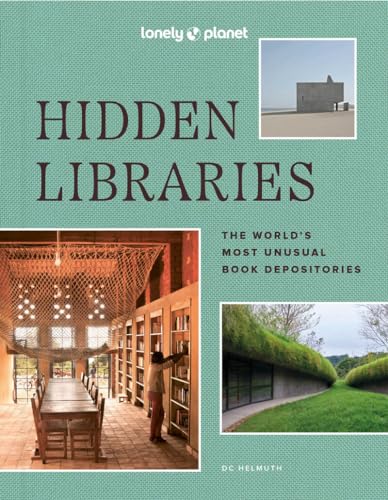
 Hidden Libraries: The World's Most Unusual Book Depositories by DC Helmuth, 208 pages.

This book catalogues 50 unusual libraries from all over the world, living and dead. Each library gets about 4 pages of full-color photographs and description, digging into the reasons for their existence and design. The book is organized by continent, and contains a truly astonishing breadth for what can be covered by the term "library."

This is pretty much the ideal of what I refer to as a "coffee table book." It is very good for picking up and casually reading a few entries at a time. It is informative without being difficult, and doesn't require any remembering from page to page, so you can easily start wherever you want. I nice, light read for people who love libraries (and really, who here doesn't?). 


Thursday, May 29, 2025

Brighter Than Scale, Swifter Than Flame

Brighter Than Scale, Swifter Than Flame by Neon Yang, 176 pages

When Yeva was 13, she slew her first dragon, a small creature that managed to corner her sister in the kitchen of their rural home. Soon after, she was sent to the capital city to become a guildknight, an elite force dedicated to eradicating dragons from Mithrandon. When she arrives, she's treated differently and finds that the only way to feel safe is to constantly wear her armor, including her golden mask, when in the presence of others, eventually becoming a legend in Mithrandon. When she's sent on a fact-finding mission to the dragon-worshipping kingdom of Quanbao, Yeva quickly learns that the armor that made her comfortable is now a barrier to fitting in, something she must do if she's to build a relationship with Lady Sookhee, the girl-king of Quanbao.

This short novel feels very much like a fairy tale in that it's somehow both epic and self-contained in a fully realized world that's both familiar and magically strange. I loved Yeva's growth and self-discovery, as well as the relationship she builds with Lady Sookhee. An excellent fantasy, perfect for someone who enjoyed Priory of the Orange Tree but would like a shorter read.


A Killing Cold

A Killing Cold by Kate Alice Marshall, 304 pages

After a whirlwind romance, Theo heads to meet her fiancé Connor's family for Christmas at their remote mountain getaway, Idlewood. But just before the trip, Theo starts receiving anonymous texts warning her to stay away from Connor and threatening to expose Theo's checkered past, part of which she has no memory of. When she arrives, Theo realizes that someone in Connor's uber-rich immediate family must have sent the texts, and between a sudden resurgence in disturbing nightmares and her suspicions about Connor's family, Theo's on edge for an already high-stress situation.

This is a twisty thriller that combines blackmail and manipulation, deeply buried family secrets, and the very real terror of meeting the future in-laws (though massively heightened, of course). There are a few things that push past the edge of believability, but as that fits the genre, it doesn't really bother me here. It's a domestic thriller that keeps the reader guessing.

Tuesday, May 27, 2025

Boy

Boy by Nicole Galland, 352 pages

An apprentice at the Globe Theatre, Alexander Cooke is one of the most famous actors in London, and he's made his mark by playing, and inspiring the creation of, some of Shakespeare's most complicated female characters. However, Sander is maturing, and soon he'll no longer be able to pull off the female roles, leaving him in a bit of a quandary about his future. Perhaps he can use some of his fame to secure a patron, such as the wealthy yet out-of-favor Earl of Essex. Meanwhile, Sander's closest friend, Joan Buckler, is yearning to earn an education and make a life for herself as a scientist and scholar, but the strict gender roles of the Elizabethan era block her from lectures and opportunities to expand her knowledge. However, when Sander makes the acquaintance of Francis Bacon, he hatches a scheme that he hopes might solve both their problems.

I loved the way that Galland took a real person about whom little is known (actor Alexander Cooke), paired him with the fictional Joan, and created a nuanced examination of gender roles and life in a story that never felt dull or dry. The sprinkling of true-to-life details with the real background characters added a bit of depth to the story, making me want to learn more about them. An excellent historical fiction with tinges of Allison Epstein's A Tip for the Hangman mixed with Shakespeare in Love.

Blood on Her Tongue

Blood on Her Tongue by Johanna Van Veen, 368 pages

Lucy has always been close to her twin sister, Sarah, so when Sarah's husband informs her that Sarah is unwell, Lucy rushes to her side. Once she arrives, she finds that Sarah's much worse than Lucy thought — she's on the verge of death, starving but refusing to eat, and ranting like a madwoman. However, as she attends to her sister, Lucy learns that this mysterious disease seems to stem from around the same time that a body was found in one of the peat bogs at Sarah's estate, making Lucy curious about the bog body as well as its effects on her sister.

Van Veen is a native of the Netherlands, and she has found a fantastic setting for her gothic historical horror novels in her homeland. Much like her first book, My Darling Dreadful Thing, Van Veen uses the landscape to create an appropriately creepy atmosphere in Blood on Her Tongue. By marrying the supernatural horror associated with the bog body with the true-to-life dangers of being a headstrong woman (or worse, a lesbian) in the 1880s and throwing in some truly gruesome body horror, Van Veen has created an excellently creepy and twisty novel. Recommended for fans of Dracula and Shirley Jackson who don't mind a wee bit of cannibalism.

Monday, May 26, 2025

The Vietnam War

The Vietnam War by Geoffrey Wawro (2024) 652pp

I finished reading this on Memorial Day and realized how ignorant I was about the day-to-day execution of the war. Wawro goes into excruciating detail on the military operations and more significantly on the political machinations. First is the lack of a strategy and a post-war plan. The Pentagon missed the lessons of the early observers (military advisors and the CIA) who stated plainly that “victory” could only be achieved with buy-in from the local population; without it, winning, let alone stability, would never be attained. Once Wawro explains this premise, the rest is a simple recitation of failure at nearly every level. Part of this failure was the inability of U.S. politicians and military to grasp the hatred in the previous imperial dynamic. The French had exploited Indo-China, retreated in the face of the Japanese occupation and left after attempting to reinstitute their rule. In 1954 the French left behind an incompetent elite, despised by the majority of the people and splitting the country in half. Historically this occurred as the Cold War was flourishing and the “menace of communism” was the big fear in the West. The domino theory - if one goes the rest will topple - was the prevailing wisdom. President Eisenhower resolved to shore up South Vietnam — not with all out war, but with a slow trickle of involvement. President Kennedy was aware of the futility of escalation, but was not able to stave off the political and military momentum in support of the war. President Johnson was given bad advice by his military and civilian advisors and gingerly increased the commitment in-spite of the obvious ineptitude of the South Vietnamese leadership. On the ground the generals flailed with a lack of strategic focus. The growing U.S. presence was predicated not on stabilizing the country, rural and urban, but on brute force. The enemy was not a powerhouse but was able to observe and adjust to the lumbering U.S. juggernaut’s tactics, turning the overwhelming force into a self-perpetuating vehicle of failure. Riding the post World War Two boom, the U.S. plunged ahead, justifying the spending and troop buildup with dubious statistical rationale, but with no strategic vision and few tactical accomplishments. As LBJ escalated the war (but resisted an all-out military onslaught fearing direct involvement by the USSR and China) the U.S. domestic support hemorrhaged (the part I remember as a draft age youth). LBJ limped away from the fracas, his Great Society program undercut by the cost of the war. President Nixon took over with a cynical ruthlessness and continued the slaughter with a vision of global hegemony polished by Henry Kissinger and company. Nixon took over with 30,000 soldiers killed and left office with at 58,000 dead and with nothing to show except a further decline in the effectiveness of South Vietnamese ruling elite. A military history, Wawro’s book goes into detail criss-crossing between the warring parties and the major and minor battles of the war and spares no leader from criticism. The North Vietnamese and the Viet Cong made many foolish tactical errors, terrorized civilians and conscripted several generations of soldiers — canon fodder. Nixon’s hubris and bizarre paranoia was reflected by the invasion of Cambodia and Laos and inhumane bombing. The preordained outcome would not change, defeat and a pox on all sides. Wawro notes in his conclusion that nothing was learned and the same errors were repeated in the twenty-year conflicts in Afghanistan and Iraq. 


Bonus Memorial Day read — With the Old Breed by E.B. Sledge (1981) 353 pp. A memoir of the unrelenting depravity of war. Sledge, a Marine in World War Two, fought in the Pacific and describes in intense detail fighting the Japanese on the islands of Peleliu and Okinawa. Perhaps the most horrifying aspect of  the story is the casual indifference to any sense of humanity by both antagonists. Truly one of the most stomach-churning reads ever.

Saturday, May 24, 2025

Volatile Memory

Volatile Memory by Seth Haddon, 176 pages

When Wylla receives a strange transmission promising a big payout to scavengers, she knows she has to be the one to grab the prize, an ultra-rare mask that has the ability to modify its wearer's abilities to some unknown quantity. Other types of masks that do the same thing are much more common — Wylla has a Rabbit mask that increases her situational awareness; someone she encounters has an Ox mask that makes him super strong — but this is one that Wylla has never heard of. And when she gets it, she soon realize there's a reason for that — this mask has a person's thoughts and memories and emotions trapped inside it, making it an odd amalgamation of human and machine. Once Wylla comes to terms with her discovery, she and the woman in the mask, Sable, embark upon a revenge-fueled quest to destroy those responsible for putting Sable in this condition.

For a pretty short book, the worldbuilding in this story is phenomenal, and left me wanting more in the best possible way. Wylla is a trans-woman and her existence paired with Sable's not-quite-human-anymore existence (and Sable's incredible abilities with the mask) brings up an excellent examination of autonomy, identity, and consent, all while taking the reader on a rollicking adventure. A word of warning to readers: the book is told from Sable's point-of-view as she's speaking to Wylla, so much of the book is in second person. It takes a minute to get used to that, but makes sense for the story, and is well worth the read.

*This book will be published July 22, 2025.

Automatic Noodle

Automatic Noodle by Annalee Newitz, 176 pages

When former military robot Staybehind and his mechanical coworkers wake up in a ruined restaurant, they quickly realize that the corporation that was running the restaurant has abandoned them. Determined to remain free and choose their own path, the robots embark upon their own restaurant venture, Authentic Noodles, hoping that nobody will realize that they don't have a human running things. What starts out great (fantastic online ratings, rave reviews about the tasty noodles) turns sour when they start to get review-bombed by anti-robot online trolls. They'll have to learn to lean on one another and give it everything they've got to survive.

Set in a post-war San Francisco — the war being that of California's successful fight for independence from the USA — this book is thought-provoking, heartwarming, and has the ability to make you crave noodles you've never tasted. Newitz created some amazing characters, and I would love to read more about Staybehind and his friends. Highly recommended.

*This book will be published Aug. 5, 2025.

Friday, May 23, 2025

The Next Day


The Next Day: Transitions, Change, and Moving Forward
by Melinda French Gates (2025) 162 pages

Melinda French Gates, even if she had never been married to Bill Gates, is an amazing woman in her own right. Gate's book, part memoir, part advice, goes into her past, finding areas where changes were underway, and shares how she dealt with these transitions. 

Both of her parents were very engaged with their children, and her father‒who worked on the Apollo space program‒especially encouraged Melinda to aim high in her life's calling. One of her transition times was her entry into college at Duke University, where she majored in computer science and economics, and also got an MBA.

Melinda also reaches into her married life to show more transitions there: motherhood and marriage issues. I am impressed with her way of speaking about her marriage, and 27 years later, her divorce, from Bill Gates. She talks about the reason for the divorce without giving too much detail, which I thought also spoke to her character.

This book is a quick, informative, personal, and reassuring read.

Thursday, May 22, 2025

Everything is Tuberculosis

 Everything is Tuberculosis by John Green, 198 pages.

Tuberculosis is the world's deadliest disease, killing 1.5 million people every year. This is especially staggering, because it is also generally completely curable. Tuberculosis is a very old disease (maybe even older than humans), and it has gone through many name changes throughout the years as human conceptions of the disease evolved. The term Consumption, tragically beautiful disease of poets, changed to Tuberculosis, highly stigmatized disease of the poor. 

John Green weaves both scientific and social histories together with the story of tuberculosis in the modern day. What emerges is a strong call for healthcare reform, as the neglect of the richest nations denies life-saving medicine to residents of the poorest parts of the world, enabling the truly staggering death toll of TB today. It is often clear that Green started as a novelist, as he has a gift for reminding the reader that these collection of facts also have real, tangible effects on people alive today. One of these people is Henry, a young tuberculosis patient from Sierra Leone, who Green met when traveling with Partners in Health, and who's story is a narrative anchor through the book. This is a very accessible (if focused) introduction to global health and healthcare reform, and I would definitely recommend it. 


Wednesday, May 21, 2025

How To Age Disgracefully

How To Age Disgracefully by Clare Pooley (2024) 337 pages

Daphne lives in an apartment that has a wonderful view of London, but she's tired of feeling imprisoned there by some secret from her past. It's been 15 years, but now that she has had her 70th birthday, she wants get back out and meet people. She is outspoken and feisty, and if she wants to make friends at this late stage of life, she's got some learning to do. 

Art is an actor who has been mostly out-of-work, but he finds himself stealing things without ever needing or using what he's taken, probably because of his own sad history. 

Daphne and Art, along with a handful of other characters who have their own odd stories, meet at a senior citizen program that Lydia has been hired to run. Poor Lydia is low on self esteem, and if she thinks these seniors are going to be happy making macramĂ© plant holders, she's got another think coming! When part of the ceiling collapses on the first day of the senior program, the building is at risk of being sold and torn down. The various groups who use the building‒a daycare, AA, and pregnant women‒are doing all they can to save the community center, with the seniors taking the lead. The seniors team up with the children in the daycare to get some good PR, which leads to their newfound group expanding. You can't go wrong with eccentric old people, babies, and dogs, can you? Fun story.

The Butcher's Masquerade

 The Butcher's Masquerade by Matt Dinniman, 707 pages.

It's the sixth floor, which means the hunters are here and it's time to fight. The hunting grounds is a lush jungle full of both normal dungeon dangers and hunters from outside the game looking to murder crawlers for this equipment. But this floor is also the only place where outsiders can truly die in the dungeon, and Carl intends to make them bleed for it. It's time to start fighting back. 

I really enjoyed this entry to the Dungeon Crawler Carl series. It is becoming increasingly obvious that this production is going off the tracks, as more and more elements from outside the game are becoming very relevant inside the dungeon. The alien corporation who runs Dungeon Crawler World is clearly losing control, and I'm very excited to see what kind of wild and chaotic plans can come out of that. I continue to find this series unbelievably addictive, and I'm looking forward to continuing it after what I'm sure will be a pretty short break.


Seek You

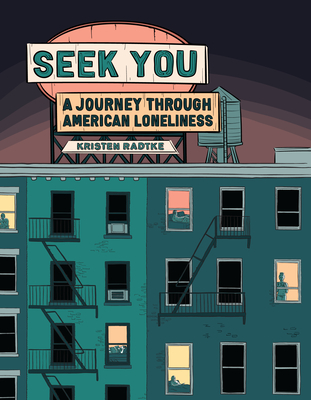
Seek You: A Journey Through American Loneliness by Kristen Radtke, 352 pages.

This graphic novel attempts to trace the broad and winding path of loneliness in all of it's manifestations through American history, and does a remarkably good job. This book includes elements of memoir, but also history, cultural analysis, and scientific studies. This is an extremely thorough book that never loses its emotional core under generous amounts of fact. 

I am really impressed by the execution of this book. It works in harmony with it's medium, and the images definitely make the words stronger, while still containing enough text to convey a lot of information clearly. I would definitely recommend this book widely, even to people who don't read many graphic novels. 


Tuesday, May 20, 2025

Thunderstruck

 Thunderstruck by Erik Larson, 463 pages.

In Larson's trademark style, he traces two separate men's histories that intersect in spectacular fashion. Dr. Hawley Harvey Crippen was described by everyone who met him as a kind, gentle man. Yet he almost got away with a sensational murder that held Edwardian England transfixed. Guglielmo Marconi was a man consumed by obsession. His obsession with developing a way to wirelessly send transmissions across the Atlantic was immense, and it would intersect with the manhunt for Crippen in a way that would forever alter both of their lives. 

Although running parallel, these narratives are less interwoven than those in Larson's more famous The Devil in the White City, and for most of the book they feel connected only by their setting. That being said, both pieces of the book were very interesting, and Larson has a very engaging, readable style. I also appreciate the thoroughness of his research, and his talent for taking disparate elements and combining them into something that feels expansive and cohesive. I especially found the examinations of science as an institution in Edwardian England very interesting. I don't know that I liked this as much as my first book by the author, but I still think it's worth a read, especially for anyone interested in the period. 


Lucky Day

Lucky Day by Chuck Tingle, 240 pages

On the same day that her book is due to be published, statistics and probability professor Vera finds a penny that is very likely one that she collected as a kid, and then at brunch with her friends, every unlikely thing in the world happens — Vera's mom gets instantly killed by a truck, a chimpanzee starts killing people with a typewriter, people are strangled (and then dangled) by the ropes meant to hold down a parade balloon, you name it. Officially named the Low Probability Event, the collection of unlikely things kills millions worldwide and sends Vera into a years-long depression. Four years later, a government agent knocks on her door, asking for Vera's help taking down a casino that he's convinced has something to do with the Low Probability Event, and much to her own surprise, Vera agrees.

Like much of Chuck Tingle's horror, this book is clever and gory and fun, though I'm not sure I'd categorize it as strictly horror — it's more super-gory science fiction/horror? It's like if John Scalzi's Starter Villain had an evil twin, this would be it. That's probably a horrible way to describe this, so please take this from it: this book is fun, funny, and weird, while still having the heart that Tingle's books have (I loved seeing a depressed main character dealing very slowly with her depression). Highly recommended.

*This book will be published Aug. 12, 2025.

Esperance

Esperance by Adam Oyebanji, 432 pages

When Chicago police detective Ethan Krol arrives at a murder scene, the last thing he expects to find is a father and son dead of drowning with sea water in their lungs, hundreds of miles from the ocean in a dry high rise apartment. Yet that strange crime scene sets Ethan on the strangest trail he's ever investigated, taking him across the country in search of some sort of rational explanation. Meanwhile, a strange-talking, not-quite-human being arrives in Bristol, England, where she partners up with young woman who helps her navigate the world in pursuit of the same murderer Ethan's tracking.

This is an intriguing mix of science fiction and police procedural, and while I like that mix and the characters (especially Bristol native Hollie), the way it comes together at the end is a little off. Honestly, I was disappointed in this, if only because Oyebanji's debut novel, Braking Day, was so stinking good. I'll definitely continue to read his stuff though, as I know he has it in him to completely wow me.

The Gate of the Feral Gods

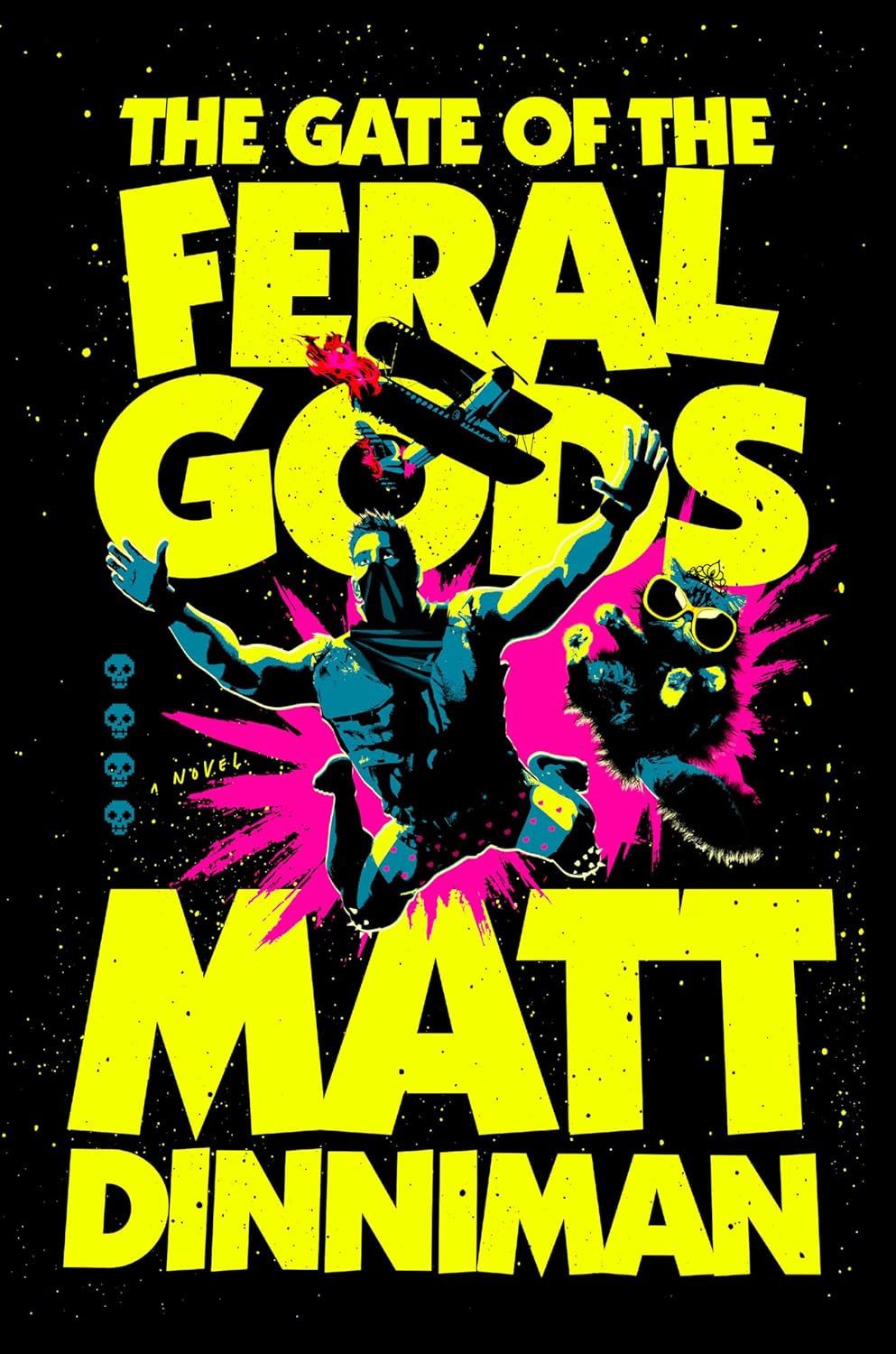
 The Gate of the Feral Gods by Matt Dinniman, 589 pages.

This is the fourth book in the Dungeon Crawler Carl series, you can read my review of the first one here. After the crawlers started getting a little too unified at the end of the fourth floor, the powers-that-be decided that this floor they would be randomly split apart into hundreds of bubbles, each with four castles that must be defeated before anyone would be allowed to leave the bubble and meet up with anyone else. While less complicated than the train puzzles of the 4th floor, nothing is ever easy on Dungeon Crawler World, and Carl will have to rely on the low level and minimally confident people in the bubble with him to get out alive. 

I continue really enjoying watching this series build on itself. Each floor presents something similar enough to the rest of the series to be a satisfying continuation, while also being new and different enough to present really interesting problems. On top of that, events outside of the dungeon are becoming increasingly visible and relevant. I don't know if this is my favorite book in the series, it's a little simple compared to some of the others, but I still thoroughly enjoyed it. 

The Saint of Bright Doors

The Saint of Bright Doors by Vajra Chandrasekera, 384 pages

Fetter was born and raised to be an assassin — specifically his scornful mother raised him to kill his father, who is the much-beloved head of a popular religious cult. Understandably, Fetter doesn't particularly want to do this, so when his mom sets him out on his own as a teenager, he wanders, eventually settling in a faraway city full of wanderers and impenetrable bureaucracy. While there, he manages to find a support group of other near-chosen ones from other religions, all of whom have abilities that are just beyond human (Fetter, for example, has no shadow and can float into the sky — really, he must work hard not to). Oh, and there are also the titular bright doors, which can be created out of any door that's closed in the city and draws Fetter to them like a moth to the flame. Through the support group, Fetter gets pulled into a revolutionary plot to disrupt the bureaucracy.

I'd heard so many wonderful things about this book (it won a Nebula Award and was nominated for a whole bunch of others), but I didn't really expect it to be this literary and dense. I liked the idea of it, and I LOVED the way it wrapped up, but I wish it was a little easier to wade through, a sentiment shared by many of those who discussed it in Orcs & Aliens last week.

The Moonstone

The Moonstone by Wilkie Collins (1868) 528 pages

I listened to the audiobook on Hoopla narrated by The Moonstone Cast. We hear from multiple people involved in the mystery of the lost Moonstone giving a written report. Wilkie Collins was a contemporary of Charles Dickens and like many of his stories this was released originally in serialized form. First there is a brief history about the gem being stolen from a Hindu god statue in India, but it was forgettable. The largest report of events is given by Betteredge, the head of staff at an English country summer home. He treats Defoe's novel Robinson Crusoe as a sacred text. His report with all the exposition takes up half of the total book. He introduces detective Sergeant Cuff, a precursor to Sherlock Holmes, about half way through his report. By coincidence, I watched the Netflix series The Residence with Detective Cupp around the same time. Weird name similarity. I almost quit a couple times through this first half. Betteredge is too long-winded. Part two begins with a report by Ms. Clack. Yay, I thought, a new voice. But she is a religious meddler, who also is too long-winded. I wish both these narrators had shorter reports. When Bruff, the lawyer or solicitor, begins his report the plot finally gets moving. We hear from Franklin Blake, a major suspect, a Dr. Jennings, and Sergeant Cuff amongst others. The twists and turns of the mystery are surprising here toward the end. To sum up, I just wish the exposition full of misleading details to misdirect the reader was not so long.
 

Sunday, May 18, 2025

Sandwich


Sandwich
by Catherine Newman (2024) 229 pages

Rocky and her husband Nick and their children have been taking a week's vacation in the same shabby little rental cottage on Cape Cod for years and years. She loves this time with her young adult children, who live away from home now. Rocky's relationship with her daughter is especially close. This novel chronicles their visit day by day one summer. 

Rocky is a perimenopausal 50-something, with hot flashes coming and going at all times, yanking her moods up and down with them. I resent it a bit that the most realistic depictions of women are in novels like this, which show all our foibles! So many times I laughed out loud: Newman's wording is so perfect. Rocky will agree in her mind with something her husband has said, and then when she opens her mouth to say it out loud, she is disagreeing with him!

Later in the vacation week, Rocky's parents join them at the cottage, and now we see where the title comes from - Rocky is the sandwiched generation and although her parents are kind and loving, they haven't been sharing their medical issues with her, which makes her feel concerned and extra squished by life.

Quick read. I liked it a lot.

Thursday, May 15, 2025

Lonesome Dove

Lonesome Dove by Larry McMurtry (1985) 857 pages

I was inspired to read this novel by a social media post of Peter Sagal, host of NPR's news quiz show. Sagal said he had detected some disapproval from a friend when the friend found out Sagal hadn't ever read the book. So he read it. As did I.

In this epic Old West tale set in the late 1800s, WF Call and Augustus McCrae decide to amass cattle and cowboys and horses and bring them from Lonesome Dove, their small border town, up to Montana, which is said to be wild, but which will situate them in the cattle business in that territory before others get there. The two men are longtime comrades, together in the Texas Rangers for a long time, with stellar reputations, but very different personalities.

The characterizations are golden, from the non-stop talker Gus and his more reticent partner Call, and to so many others. The story interweaves people from Texas to Arkansas to Nebraska and beyond. It's not just "Cowboys and Indians" kind of stereotypes, but much more nuanced. McMurtry integrates the reader into another world filled with adventure, hardship, kidnapping, and caring.

Tuesday, May 13, 2025

A selection of May graphic novels

 The Contract with God Trilogy: Life on Dropsie Avenue by Will Eisner (2005) 498 pages


The original publications of the three books in this set were in 1978, 1987, and 1995. Not a fan of the first three short stories in A Contract with God, even though they each have good moments. Loved "Cookalein" with its strong literary characterizations and bringing multiple threads with adult themes together in a satisfying way. Eisner explains in his preface that Cookalein is a Yiddish-English word that means "cook alone." Instead of bed and breakfasts, farms in upstate New York offered summer holiday stays with bed and kitchen. Multiple families had access to the kitchen so the mothers could cook for their own families. The second novel in this graphic novel trilogy, A Life Force, is excellent! It starts in the Great Depression and explores the meaning of life through Jacob Shtarkah's family and neighbors as well as his observations of a cockroach. Again Eisner is brilliant at probing the depth of characters. He brings the novel to graphic novel with many subplots on the side and real history affecting the characters at the center. All of these stories take place around the fictional Dropsie Avenue in the Bronx, NY. The third novel, Dropsie Avenue, traces the history of this neighborhood beginning in 1870 when this part of New York was still farmland. The story moves quickly through all the changes of ethnicities that call this neighborhood home throughout the century. It is an immigrant story and a microcosm standing in for many small towns that turned into big cities. The story is full of tearing down and building up, politics and business deals, tragedy and celebration, biases and prejudices. Year after year, decade after decade, with certain characters getting older, Eisner again illustrates our very real world.

Advocate: A Graphic Memoir of Family, Community, and the Fight for Environmental Justice by Eddie Ahn (2024) 208 pages


This memoir covers a lot as indicated by the subtitle. The author/artist strangely is a bit distant in revealing his personality. It comes through in certain moments, but in describing the facts of day to day work and repeatedly trying to explain his career to his parents, who do not understand, Eddie remains elusive. I liked the realistic art, which is like a photo album. The different color tints help distinguish different times and places. I wish the book went even more in depth about environmental justice efforts.


Orbiter by Warren Ellis with art by Colleen Doran (2003) 104 pages


Short and intriguing. Perhaps too short to let you really get to know the characters. Set in a dystopian near future that imagines NASA's space program ended after shuttle Venture burned up on launch. Inspired by the loss of Challenger. But 10 years later the shuttle reenters the atmosphere and crash lands near the Kennedy Space Center. Scientists whose careers ended are put on the case by the military to solve the mystery. There is a lot of science-y speculation to explain the condition of the shuttle and the one surviving astronaut. Pretty fun adventure like a Michael Crichton thriller. Somewhat dark and gritty art.


And Mankind Created the Gods: A Graphic Novel Adaptation of Pascal Boyer's Religion Explained by Joseph Behe (2024) 368 pages


This is dense with a lot of complex ideas. Fascinating to think about. It is based on Pascal Boyer's book Religion Explained. Pascal appears in the graphic novel leading a philosophical dialogue. Picture Plato exchanging ideas with a group of people. For visual learners the black and white illustrations of the dinner party conversation, world cultures, and the workings of our minds are very helpful. It is difficult to sum up. You just have to dive in and explore with Pascal's dinner guests yourself.

Monday, May 12, 2025

My Friends

My Friends by Fredrik Backman, 448 pages

Twenty-five years ago, a teenage artist created a painting that would go on to become a priceless work of art, making the artist famous around the world. It's a painting that's ostensibly of the sea, but to troubled orphan Louisa, it's obviously a painting of the three friends sitting at the end of a pier, laughing uncontrollably, even though those three figures are barely noticeable to most people who view the painting. When the painting unexpectedly comes into Louisa's possession, she learns from the artist's close friend Ted the truth about those figures, and the deep transcendent power of friendship and art.

Given that this is a story about an orphan who has just aged out of foster care and just lost her only friend, and a group of teens whose friendship was the only refuge from their poverty-stricken and abusive homes, this book is incredibly uplifting and funny. The way that Louisa and Ted bond over sharing their stories, the way that they see something in each other that most people would overlook... something about it is magical. And I really really wish the painting described in this book was real, because I'd love to see it and connect it to these characters. What a wonderful story from Backman. Highly recommended.

The Lotus Shoes

The Lotus Shoes by Jane Yang, 368 pages

When she was small, Little Flower was sold into slavery by her mother to the wealthy family of Linjing, a young girl to whom Little Flower would be a lifelong handmaiden. Little Flower was talented at embroidery and had the bound feet (or "golden lilies"), two attributes that Linjing lacked and was massively jealous of. Due to their master and servant relationship, as well as Linjing's envy, the two young women's lives become inextricably tied through thick and thin, as they both try to make their way in a world that is immensely limited for women.

While this book gives an in-depth look at the insane limits and impossible standards of women in 1800s China, it became increasingly frustrating to read, especially as, even when their fortunes take a dive, Linjing mulishly refuses to see Little Flower as anything other than her servant, despite evidence to the contrary — and Little Flower lets her! As frustrating as that is, it IS realistic, something that cannot be said about revelations that occur late in the book. An intriguing book, but not exactly my favorite.

Murder by Memory

Murder by Memory by Olivia Waite, 112 pages

Mentally alive for hundreds of years on an interstellar generation ship, Dorothy Gentleman is shocked when her consciousness is unexpectedly thrown into a new body during a solar storm affecting the space ship, just as another passenger is found murdered. Given that most people were hunkering down during the storm, it's quite possible that Dorothy's new body belongs to the murderer, and as one of the ship's detectives, Dorothy's now in the tough spot of trying to investigate while wearing the body of a prime suspect.

This is a very short and creative science fiction murder mystery, and my main complaint with it is that I wish it was longer. The complex storage and body-hopping of passengers' minds really needs much more than this slim book was able to offer, especially with the amount of financial crime and murder that's also detailed. Fun, but a bit too short.

Friday, May 9, 2025

Alice Isn't Dead

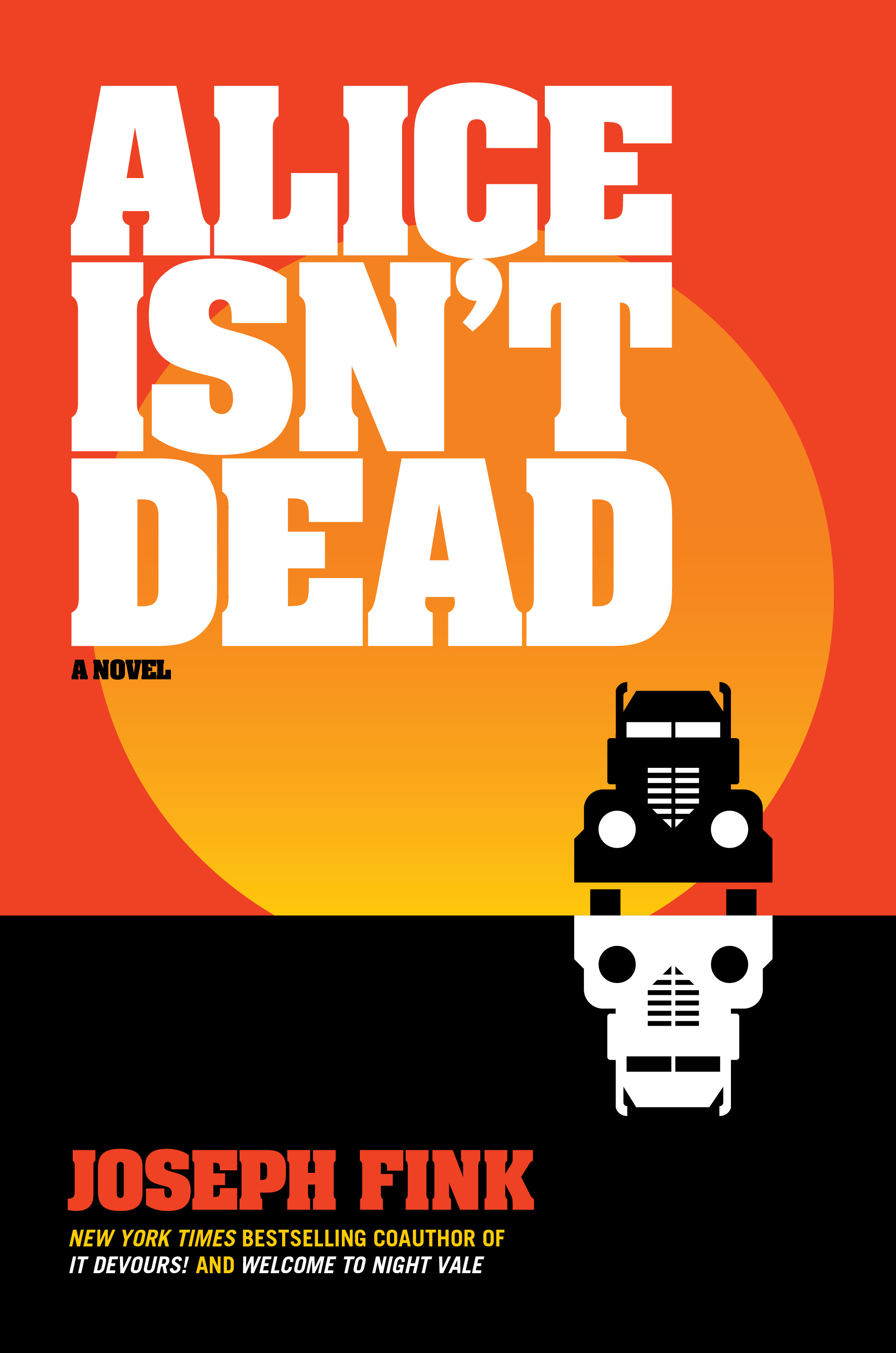
 Alice Isn't Dead by Joseph Fink, 323 pages. 

After Keisha's wife disappeared, the grief nearly destroyed her. When she starts seeing her in background of news reports across the country, looking into the camera at disaster sites and tragedies, Keisha decides that the only thing that matters is finding Alice. So she becomes a truck driver and scours the country for her wife, finding herself quickly sinking into a conspiracy of monsters.

This book was written by Joseph Fink, one of the co-creators of the hit podcast Welcome to Nightvale, and is based on a podcast also called Alice Isn't Dead. It was this podcast link that made me think this may be a good audiobook choice for me, but to be honest it mostly made me curious about the original podcast. That being said, I did still like this book. Keisha has anxiety, and the way it was handled was unusual and interesting. There are also some interesting, if not extremely original, meditations on the nature of hatred and collective action. I liked this book, but I'm not sure it's high on my recommendations list, and I suspect it's not better than it's source material. I suspect people who enjoy horror set on highways and in liminal spaces would enjoy this treatment of the topic. 


Sunrise on the Reaping

 Sunrise on the Reaping by Suzanne Collins, 387 pages.

Haymitch Abernathy makes the most of a hard life: doing chores for is Ma, spending time with his girl, and hoping not to make enough trouble to be noticed by the peacekeepers. Then he makes himself too visible and ends up in the 50th Hunger Games, sentenced to fight to the death with 49 other kids. Haymitch is determined not to let them turn him into their propaganda, but some things are so much bigger than him.

This was a very solid edition to the Hunger Games series, and I liked it much better than the last prequel. It was very thematically consistent, and felt sharp and cutting. Collins was considering very literally the political principles of David Hume, in a way that still made a compelling novel. This book did, however, suffer from a problem common in prequels of popular series. It felt like it was filled with as many characters from the original books as possible, which often creates connections that strain believability to believe weren't mentioned in the original source material. That being said, none of these cameos cause any problems at all within the novel itself, and I almost like this book more in isolation than as part of a series. I would definitely recommend this novel for fans of the original series, but also for anyone who's looking for some less than subtle criticism of tyrannical government. 


Monday, May 5, 2025

JOHN AND PAUL

 John & Paul: A Love Story in Songs by Ian Leslie, © 2025, 448 pgs.


Love the Beatles but never really read a book about them before. This is less a 'Beatles' book and focuses more on the friendship of the chief songwriters, John and Paul. Each chapter is named after one of their songs and talks about what was going on for the group at the time and what the dynamic was between Lennon and McCartney. Lots of good takeaways here, but as close as the two were, they also had a continuous game of trying to out-song the other--John wrote Strawberry Fields, Paul wrote Penny Lane. Paul wrote Yesterday, John wrote In My Life. They were constantly inspiring and feeding off each other, which resulted in them becoming the greatest American songwriting duo since the Gershwin brothers. When you think about it, the amount of time they wrote together and how many hits they produced were unheard of at the time--they single-handedly changed the face of rock and roll and celebrity within a decade--they still hold the record for most number one hits on the Billboard 100. The author is very empathetic to both artists, dismantling some of the misleading myths that came to dominate the press while also detailing their struggles with drugs and depression. At it's core, this is very much a book about male friendships. Really loved this book, well-written and researched--couldn't put it down. 

Friday, May 2, 2025

The Buffalo Hunter Hunter

 The Buffalo Hunter Hunter by Stephen Graham Jones, 448 pages.

A Lutheran pastor in remote Montana receives a strange visitor who has an even stranger confession. Over the course of weeks the strange Blackfeet man spins a tale of tragedy and revenge on the American frontier at the end of the 19th century, a tale which it becomes increasingly obvious intersects with the pastors own sins, decades past. His visitor has confessed to killing many, many people, and he feels his own dread grow as he wonders what fate awaits him.

I wanted to like this book more than I actually liked it. I thought the story was solid, and I enjoyed the pastor's journal as a framing device for the story. I also thought that the nature of the revenge story was very effective, and I quite like vampire stories with a social justice aspect. Unfortunately, the sum total felt sort of emotionally sterile, which is the last thing you want in horror. I found the atmosphere entirely lacking, and it made it a little difficult to really get into the story. This had the potential to be a really great  book, but unfortunately it didn't quite work for me. 


Seen and Unseen

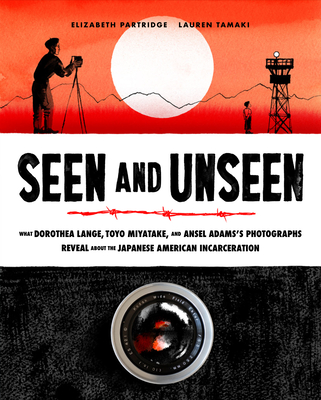
Seen and Unseen: What Dorothea Lange, Toyo Miyatake, and Ansel Adams's Photographs Reveal About the Japanese American Incarceration by Elizabeth Partridge, illus. Lauren Tamaki, 132 pages.

This short work of nonfiction combines illustrations, photographs from the photographers in the title, and written information on the incarceration of Japanese Americans into a fresh perspective on the topic. The three photographers were all coming from different backgrounds, working towards different ends, and reporting to different people; so, taken together, they present a much more nuanced and complete view of this historical injustice. 

I didn't initially realize when I added this book to my reading list that it was written for younger readers. That being said, I think it's still a valuable book for anyone. It has a good depth of topic, while still being very easy to understand and digestible. I do wish that there were more photographs, which seemed a little lacking given that they were allegedly the topic of the book, and that they were more clearly credited in the text, and not just in the notes at the end. Still, this is an interesting and informative book on a topic that is unfortunately feeling very relevant lately. 


The Hunger Games Trilogy

 The Hunger Games, Catching Fire, and Mockingjay by Suzanne Collins, 1155 pages.

Every year two children are selected from the twelve poor and exploited districts that surround the luxurious capital of Panem. These 24 children are then sent into televised death matches where one winner will receive fame and fortune, and everyone else will just die. Katniss Everdeen volunteers, not because she thinks she will win, but to save her little sister from having to go. Acts of survival are interpreted as acts of rebellion until they become exactly that, and Katniss finds herself the figurehead of a long-overdue revolution. A revolution that may still cost her everything. 

I first read these books fifteen years ago, and I was a little surprised how remarkably well they still held up this much later. Suzanne Collins had a lot to say about systems of power and control, as well as plenty of other political issues, on a more complex level then you would expect from books written for teenagers, and especially books that are regularly marketed as a girl caught between two boys. Also, on a narrative level, these books are still emotionally devastating on a reread. I would definitely recommend them to anyone who passed them up because they're outside of their usual genre, or because they were unimpressed by the many imitators that came later. 

April Totals

Annie: 4 books, 1592 pages

Byron: 10 books, 1856 pages

Jan: 7 books, 2012 pages

John: 3 books, 836 pages

Kara: 9 books, 3088 pages

Regan: 15 books, 5400 pages


Totals: 44 books, 13,192 pages


Thursday, May 1, 2025

The Merriest Misters

The Merriest Misters by Timothy Janovsky (2024) 305 pages

Patrick and Quinn have been together since college, now married less than a year. Quinn is a second grade teacher who is starting to feel annoyed at his school administration. Patrick is an architect who has just gotten fired for taking on outside work. Their relationship had already been struggling because of Patrick's long work hours. Quinn doesn't yet know that Patrick has been fired; there's just never a good time to mention that, especially when Patrick wants to host his family for Christmas at the last minute, knowing that Quinn would do all the work to get ready.

On Christmas Eve, Patrick finds Santa in their kitchen, eating the cookies that Quinn had set out. Not believing in Santa, he beans him with a frying pan. While Santa's crumpled on the floor, Patrick fetches Quinn, telling him that he thinks he just killed a man. Turns out that Santa is not actually dead, but he quits! Well, that sets off a year-long adventure, as the men realize that they need to save Christmas.

The story has magic, along with realistic relationship issues, not only with each other, but also with each of their parents and with Patrick's brother. Even as life at the North Pole brings Patrick and Quinn back together again, there are still issues that seem too tough to resolve.

A fun read, even though we're not in the holiday season.