Showing posts with label music. Show all posts

Friday, April 10, 2026

Sorcery and Small Magics

 Sorcery and Small Magics by Maiga Doocy, 416 pages.

Despite his father's aspirations, Leovander Loveage is a writer of only small magics, minor charms to cause fireworks or change people's hair color. Any time he has tried to work great magic it's backfired spectacularly, so he has sworn it off for good. A conviction that is shaken when a magical mix-up involving forbidden magic leaves him compelled to follow the orders of longtime rival and perpetual stick-in-the-mud Sebastian Grimm. As the spells magic tightens the two grow increasingly desperate to break the spell, even as their forced cooperation seems to be irrevocably changing something between them.

This book grabbed me completely right from the start. The magic system, which relies on one person to write magic and someone with different capabilities to do the actual casting, leads to some fascinating character possibilities and world building ideas. I also found Leo to be a really compelling character, expertly balancing humorous deflections with genuine emotional feeling. The adventure is fun, while giving enough of substance to chew on to be really satisfying. I'm only sad that there is no release date for a sequel yet. I'm really looking forward to discussing this one with Orcs & Aliens on Monday!

Thursday, March 19, 2026

Do Not Sell at Any Price

Do Not Sell at Any Price: The Wild, Obsessive Hunt for the World's Rarest 78 rpm Records by Amanda Petrusich, © 2014, 288 pgs.


This was a fun read for the Rn'B book group. Petrusich is a freelance music writer working on a story about the rise in vinyl sales (at the time in 2014 they were trending up; in 2025 they reached a billion in sales) when she's tipped off to a sub-sub genre of record collector--the 78 collector. For the unvitiated, 78s were the original records, made of shellac, very heavy and very fragile--if you dropped it on the floor it would shatter like a plate. These records spin at 78 revolutions-per-minute (or rpm's) and were typically played on the only players available at the time, the victrola. Millions of 78s were sold in the 20s and 30s before the techonolgy improved and turned to the vinyl records we know today. When that happened, 78s fell by the wayside, collecting dust in basements, attics and landfills. But in the 60s and 70s, a rag-tag group fell in love with them, particularly the 78s that were recorded by some of the earliest blues players. In fact, many of the recordings we have today of these musicians were sourced directly from the collections of 78 enthusiasts. Blues artists like Ma Rainey, Charlie Patton and Skip James would be lost to time. The author takes a deep dive into the materials, catching the 78-collector bug and begins trying to find her own rare blues records. 

Monday, February 2, 2026

BURNING DOWN THE HOUSE

Burning Down the House: Talking Heads and the New York Scene that Transformed Rock by Jonathan Gould, 512 pgs. © 2025


Is it art? Is it music? For the Talking Heads it's probably both. This is a great book for music lovers. Probably the definitive book for the band but also a nice dive into the late 70's New York art scene and how influential it was for musicians trying to escape the old ways of traditional rock and roll, which was starting to become so bland that it was sometimes referred to as 'conservative' rock and roll. I live for this kind of nonfiction--it's well written organized, packed with great research. You come away with a greater understanding of how tight-knit the NY art community was and how this band come out of nowhere to carve their own unique niche in the new wave landscape. Gould did very well in this endeavor, even without interviewing anyone in the group today. Gave me a greater appreciate of Stop Making Sense, one of the greatest live concert docs of all time. 

Monday, December 15, 2025

YOU NEVER GIVE ME YOUR MONEY

 You Never Give Me Your Money: The Beatles after the Breakup, by Peter Doggett, 2012, 386 pgs

Fab four? More like drab four. If you're a fan, this book is sure to take the group down a notch or two on your "greatest bands ever" list. Very in-depth and well-researched, Doggett's focus here is how The Beatles became less of a band and more of a corporate entity--one that they were not really ready to handle, seeing how they had little experience in business to begin with. After Sgt. Peppers, the group's solidarity is starting to fray, mostly due to creative differences, but also due to the fact that three members (minus McCartney) are doing copious amounts of drugs. Lennon seems to lose a sense of self that his best friend Paul cannot fill the void for. As a result, Lennon finds creativity and meaning in his relationship with avant-garde artist Yoko Ono. Towards the official end, the group gets a new manager that McCartney does not want. Egos get petty, insults get personal (and published in tabloids). Subsidiaries of Apple Corps are created, shell companies to help them ease the tax burden and earn more on royalties than they have before. Eventually, the friendship is in such disarray that everyone essentially goes their own way, trying to create solo music and rebuild a singular identity separate from The Beatles--which proves extremely difficult. Their entire lives, the four men are bombarded with questions about reunions. This book also helps to dispel some of the 'John as saint' myths after he was murdered outside the Dakota building where he and Ono had been living. Harrison sort of grew to despise the group, even denying the possibility for new material to be released (until he needed money from the Taxman, of course). I've often thought that they if the would have compromised in 1969--they could have stayed as The Beatles, but just release 4 solo albums all together in one package--sort of like OutKast did with Speakerboxx/The Love Below. It's fun to imagine, but it was not to be. They were the biggest band in the history of pop music, even to this day, but they still could not escape the machinations of money, lawyers and ultimately, themselves. 

Wednesday, August 27, 2025

Mood Machine

Amazon.com: Mood Machine: The Rise of Spotify and the Costs of the Perfect  Playlist: 9781668083505: Pelly, Liz: Books 

Mood Machine: The Rise of Spotify and the Costs of the Perfect Playlist by Liz Pelly (2025), 236 pgs. 

In today's age of technology, much of the world's music is available to stream anytime--with just a subscription and a click. Is this system actually working for music discovery though? Is it fair to musicians? Is it ethical? Liz Pelly, music journalist and commentator, tackles these questions and more in this deep dive into Spotify, the Swedish streaming giant. Pelly uses interview accounts from artists, music industry bigwigs, and Spotify employees alike to chronicle the changes the platform has made to music industry practices in the face of a constantly transforming system. 

This book is very dense, each page jam-packed with good information--often from interviewed sources. As a Spotify user since 2015, I was really surprised to see how well my own experiences with the platform fit into the narrative Pelly laid out. I got to see the story behind why different songs and different playlists have popped up in my recommendations over the years. This book very persuasively explains why Spotify is set up the way it is and why its algorithm works the way that it does. 

Tuesday, August 12, 2025

The River Has Roots

The River Has Roots by Amal El-Mohtar, 144 pages

Esther and Ysabel live in a small village near the edge of Faerie where they tend to the magic willows that border the river, singing to them and thanking them for their magical blessings. However, when Esther spurns a powerful suitor for her lover in Faerie, the suitor doesn't take kindly to her rejection, throwing Esther, Ysabel, and their family's livelihood into danger.

This was a short and lovely fairy tale, one that somehow seems both brand new and well-worn. El-Mohtar's language and the beautiful woodcut art in the book work to create a book that can be treasured. Highly recommend this book!

Thursday, July 17, 2025

Dreams

 Dreams: The Many Lives of Fleetwood Mac by Mark Blake, 432 pgs. © 2024

It took me a bit of time to get used to the structure of this book--it's not written as a narrative history of the band but more as episodes and vignettes of the band members and the songwriting that came about--of course, filled with anecdotes about the absolute dysfunction of the group as a whole. Really, there were two Fleetwood Macs--in the mid 60's they were doing what everyone in Britain was doing at the time, chasing the American blues sound. That was before their guitarists left the band and were ultimately and, pretty much on a whim, replaced with Lindsey Buckingham and Stevie Nicks, two LA-based songwriters who were strapped for cash and looking to make it musically. Along with Christie McVie, there were now three official songwriters in the group. The band became so well known for their romantic entanglements with each other (and the copious amounts of cocaine they ingested) it's a miracle they were able to maintain the group the way they have over the decades. At a certain point, it's obvious that the band members are really just enamored of the money and lifestyle they've been able to achieve and each subsequent album and tour was really a call-to-arms for making cash, as opposed to creating something of artistic value. Be that as it may, the band were able to consistently recreate pop hits well into the late 80s. It was interesting to learn about Stevie Nicks--such a polarizing figure. I don't know how you write songs for a living when you can't play any instruments. But her voice was and is so unique--it's one of the voices you recognize immediately when you hear it. Her kitschy mysticism routine was inspried by both Jimi Hendrix and Janis Joplin. Throw in Buckingham's need to push the musical envelope and you have had something different entirely from anything else on the radio in 1977. 

Friday, May 30, 2025

MOOD MACHINE

Mood Machine: The Rise of Spotify and the Costs of the Perfect Playlist by Liz Pelly, 288 pgs. © 2025


This was a great book, lots of in-depth reporting and reminiscent of Naomi Kline's writing style--Mood Machine dives headfirst into the the machinations of Spotify to disrupt the music industry--and to extract wealth from it. We've all heard that Spotify doesn't pay artists enough, and in some cases they don't bother paying them at all. But that's only the start of it--for the last decade Spotify has struggled and connived it's way to the top of the music streaming food chain by encouraging artists to create similar music that is popular or tending on the app--resulting in a "flattening" of the culture. While Pelly doesn't explicitly uncover any actual criminality, she does call for government agencies to shine lights into this organization and asks the reader what kind of streaming service would be better for everyone involved. She paints a damning portrait of yet another tech-bro company run-amok that cares little about how it affects creatives, artists and even paying subscribers. The wealthy have turned streaming music into an asset class to be used to generate even more income, leaving actual songwriters with even less. Other music streaming companies are just as complicit but Spotify stands out because it's essentially an advertising company masquerading as a music streaming company. I really wasn't using Spotify before and I definitely won't now. 

Monday, May 5, 2025

JOHN AND PAUL

 John & Paul: A Love Story in Songs by Ian Leslie, © 2025, 448 pgs.


Love the Beatles but never really read a book about them before. This is less a 'Beatles' book and focuses more on the friendship of the chief songwriters, John and Paul. Each chapter is named after one of their songs and talks about what was going on for the group at the time and what the dynamic was between Lennon and McCartney. Lots of good takeaways here, but as close as the two were, they also had a continuous game of trying to out-song the other--John wrote Strawberry Fields, Paul wrote Penny Lane. Paul wrote Yesterday, John wrote In My Life. They were constantly inspiring and feeding off each other, which resulted in them becoming the greatest American songwriting duo since the Gershwin brothers. When you think about it, the amount of time they wrote together and how many hits they produced were unheard of at the time--they single-handedly changed the face of rock and roll and celebrity within a decade--they still hold the record for most number one hits on the Billboard 100. The author is very empathetic to both artists, dismantling some of the misleading myths that came to dominate the press while also detailing their struggles with drugs and depression. At it's core, this is very much a book about male friendships. Really loved this book, well-written and researched--couldn't put it down. 

Monday, February 24, 2025

Respect Yourself

 Respect Yourself: Stax Records and the Soul Explosion by Robert Gordon, 480 pgs. 

This book was a hoot! I’ve been listening to some of these records and artists for so long but had no idea the kind of cultural relevance they had—the twists, the turns—Atlantic records stabbed them in the back and stole their back catalog! Zelma Redding co-wrote Dreams to Remember! (I’ve always been partial to the Toots and the Maytals version). Aretha Franklin was almost a Stax artist?! Unreal.

This was the second book for our 2025 Rhythm n' Books group and it was well-received by everyone who read it. It covers the very beginning of Stax in Memphis and follows their tumultuous and rapid growth during the civil rights movement. As much as it is about the bands and the music, it also reads as a great business book--at one point, Stax artists were so popular that the company had visions of being a major competitor to CBS--but bad business decisions kept that dream at bay. Check out the 4-part mini-series on HBO to watch it all come alive. 


Wednesday, January 22, 2025

Musicophilia

 Musicophilia: Tales of Music and the Brain by Oliver Sacks, c. 2007, 425 pgs.


This was our first book of 2025 for the Rhythm n' Books music club. I'd read this before a long time ago--I don't usually read a title more than once--but a lot more seemed to stand out to me here. Book discussion was good overall, most were kind of 'eh' on the book as a whole. I thought they might like it more than the Levitin book we read because that book focused more on the science and this was written very down-to-earth. The entire book is a collection of Sacks' encounters with neurologically induced, music-related maladies, some minor, some life-altering. Brain worms that never go away, pianists who suffer from dystonia in the hands (a muscle disorder), musical hallucinations, aphasia (loss of speech by brain damage) and more. All of these case studies are tragic in their own ways, but in his observations, Sacks sees the plasticity of the brain adapt to this challenges. I love the way he kicks it off with a man who survives being struck by lightening--only to awaken with an intense, inescapable newfound passion: to learn how to play piano. Overall, the message is that the science and understanding of music as a working treatment for many ailments in life deserves much more study. There was a recent documentary at Sundance called Alive Inside that talks more about these treatments and even features interviews of Sacks before his death in 2016. 

Tuesday, January 7, 2025

Between Two Sounds

 Between Two Sounds: Arvo Part's Journey to his Musical Language by Joonas Sildre, 2024, 224 pages


In my research for the Rhythm n' Books club, I came across this new graphic novel about a modern composer I had never heard of, Arvo Part. The author spent years researching and collaborating with Part to bring this book to life. Born in Estonia in the 1930s, Part developed a natural inclination for the piano and began composing and working in classical music circles early. Estonia was invaded and occupied by Germany during the war and eventually annexed by the USSR, not gaining their independence until the 90s. The novel tracks Part's life and health issues as he tries to find the freedom to create his own music, which was constantly censored and banned by the Soviets. Eventually, he and his family were made to leave the country. In time, he finds the musical voice he's been looking for, developing minimalist compositions with a holy perspective. Interesting to learn that, during certain years, Part has been considered to be the second most performed living composer, after John Williams. The illustrations are black and grey scale with thick stroke lines and the author does a very cool thing with representing music as black dots that vary in size and direction. Neat stuff. I really kind of like the graphic novel as a non-fiction vehicle for biographies, it's a great use of the format. 

Monday, November 18, 2024

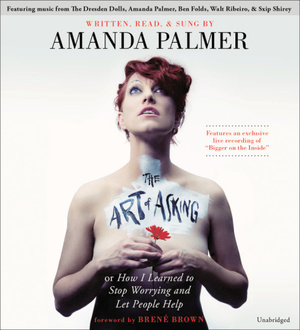
The Art of Asking

 The Art of Asking; or, How I Learned to Stop Worrying and Let People Help by Amanda Palmer, 339 pages.


This book, which is part memoir and part self improvement guide, is based on the TED Talk of the same title. I was a fan of Amanda Palmer's music, both with The Dresden Dolls and as a solo performer, as well as her blog writing, and both put together made me think that this book (read by the author) would be worth my time. 

It definitely was. In addition to being a very open look at Palmer's life, this is a book about vulnerability. It's a book that believes deeply in the goodness of people, and the power of community. It's the kind of book that encourages courage. I would recommend it widely, and especially the audiobook (which feels like an especially strong recommendation coming from me, who usually struggles with audiobooks). The thirteen minute TED Talk is a great place to start, and if you find yourself interested, consider treating yourself to this book. 

Friday, October 18, 2024

This Is Your Brain On Music

 This Is Your Brain On Music: The Science of a Human Obsession, by Daniel J. Levitin, 333 pages

I think I read this maybe a decade ago, but thought it would be a good intro to the science of music to our reading group. Now it's twenty years old and, while still a good introduction, the book could stand an updated re-issue. Other than being too clinical at times or not enough far-reaching, most folks appreciated the "nuggets" of interesting information. For example, the area of a violin players brain that is responsible for left hand coordination will be slightly larger than a non-player--due to their constant practice.  There was some debate as to music being more than just a series of sensory inputs interpreted by the brain--specifically how music also has far reaching effect on other systems in our body--but most of that is missing here. The first chapter is a quick tutorial on how music theory actually works. This is primarily how our brains process music and where in our brains we think it lives. I think some of the questions this book raises are probably answered now or at least we have some good theories about them. For example, the author mentions that they could take MRI's of a performers brain during a performance (because they have to move when they perform) but we can definitely do that now. But at the time, this was probably the best book on the subject designed for popular reading--musicians and non-musicians alike. We don't think about sounds hitting our ears as vibrating molecules but that's exactly what they are--vibrating to certain frequencies that our ears pick up and our brains interpret. Still, as a reader and musician, I was able to pick-up on concepts in this book that I missed out on the first time. Recommended for adults and science-savvy older teens. 

Wednesday, October 9, 2024

The Ballad of Perilous Graves

The Ballad of Perilous Graves by Alex Jennings, 480 pages

Music = magic in this amazing book of dual New Orleanses. (Is that the plural of the city? I'm going with yes.) I first read and blogged about this creative debut novel last summer, and I just reread it for Orcs & Aliens next week. While I have a couple reservations about the timing of this read and discussion (the giant cosmic storm in the book seems a bit ill-timed with Helene and Milton hitting the southeast right now, but how was I to know that when I scheduled the discussion), my thoughts on the overall book haven't changed at all. In fact, discovering the existence of the book's companion Spotify playlist (thanks, Regan!), greatly enhanced my reading of it this time around. Can't wait to see what the Orcs & Aliens think of it on Monday.

Thursday, October 3, 2024

The Ballad of Perilous Graves


The Ballad of Perilous Graves by Alex Jennings  456 pp.

First I want to acknowledge Kara's review of this book. I listened to the audiobook version which is amazing with the narrator embracing the patois of New Orleans beautifully. Perilous "Perry" Graves, his sister, Brendy, and their friend Peaches live in a version of the city where there are sky trolleys, dead cabs, graffiti comes alive, and haints dance in the streets to the music of haint musicians. Doctor Professor, a haint piano player enlists Perry, Brendy, and Peaches with saving the city by saving the music that is rapidly disappearing along with other parts of the city. They find themselves up against some of the songs themselves, like Stagger Lee. If the music is lost, the city will die in a storm that is coming. Perry must learn to use music to combat the evil that is trying to destroy them. This book is confusing, amusing, a little scary, and I loved it. It is rare to read a book with so much life in it (even though a lot of the life is already dead). Now I want to visit New Orleans again. 

Tuesday, September 3, 2024

DELIVER ME FROM NOWHERE

 Deliver Me from Nowhere: The Making of Bruce Springsteen's Nebraska by Warren Zanes, 298 pgs. 

The story of how this seminal work came to be is one for the ages. Fresh off The River tour in 1981, which garnered his first top ten hit for the song "Hungry Heart," Springsteen had a slew of new material to work out for his next record. He wasn't quite sure what it was going to sound like, but he knew he had something he wanted to say. 

At the time, he was working his way through a deep depression, reviewing the trauma of his childhood and taking interest in stories about the darker side of Reagan's America, who had been newly elected President in 1981. Nebraska would become Springsteen's response to Reagan's optimist "Morning in America" messaging. The rocker took some cultural clues and blended them with his own influences: chiefly, the film Badlands by Terrence Malick and the short stories of Flannery O'Conner. 

To record his demos, Springsteen rented an hold farmhouse in New Jersey and set-up a new TEAC 144 Portastudio--the first portable, multi-track mixer to use a standard cassette tape. Springsteen recorded his songs alone and sent the tape to his manager. The songs were dark, far darker than anything the artist had written at the time. When Springsteen got the band together to record the new material, the sound wasn't working--"nothing seemed to capture the spirit of the cassette recordings." 

The artist tried to re-record them solo, in a nice studio with good equipment, but even then, the characters in the songs were getting lost. It wasn't until his manager suggested that, maybe he should just release the demo tape as is. Then the book pivots to the struggle to get the best possible sound signal from the cassette tape onto the vinyl record, which was another major headache and almost never happened. Ultimately, the critically acclaimed Nebraska would become one of Springsteen's most revered albums and cement his legacy as a true artist--to this day, he still cites it as the best thing he's ever done. 

Wednesday, August 21, 2024

Open Up and Bleed

 Iggy Pop: Open Up and Bleed, by Paul Trynka pg. 371


Our first book in the Rhythm n Books book club was a David Bowie book, so it seemed only fitting to end our summer reading list with a bio about Bowie's estranged friend and sometime collaborater, the Godfather of Punk himself, Iggy Pop (aka Jim Osterberg). 

This was a pretty good deep dive into Iggy's entire life, starting out in his childhood in Detroit, Michigan where he was voted most likely to succeed in school--yes, Iggy Pop was a pretty straight-laced young person before he heard the call of rock n' roll music. As his first offical group, The Stooges, started picking-up steam, Iggy realized he could really wow audiences with his high energy, violent and weird performances. They got people talking and that got the word around about how they were a great group to see, eventually garnering the attention of the starman himself, Bowie, who took Iggy under his wing and tried to help him create a long lasting music career, which in some very real ways, he did. But the addition of drugs into his life made him more erratic and brazen, which over time only fueled the very legend he was trying to construct. The book even delves into his 80's period, when he was trying to clean-up his act. Incredible that as strung out and awful as Iggy could be, girlfriends, friends, radio execs, kept giving him chance after chance to succeed. In the 2000's with song royalties finally coming in, his band reformed, a growing back catalog, and a new generation of listeners, punk enthusiasts finally gave Iggy Pop his due as the Godfather of punk. Adults only. 

Friday, August 16, 2024

Scattershot

Scattershot: Life, Music, Elton & Me by Bernie Taupin (2023)  400 pages

Bernie Taupin grew up in a rural area in northern England, but found his way to London where he met Reg Dwight (later known as Elton John) at age 17. Eventually, after their music takes off, they live in Los Angeles, but also spend time in New York City, Paris, and the Caribbean. I love the way Taupin describes the cities in the 1970s and indicates how so much has changed ‒ he remembers the restaurants and bars and music venues, along with the people who owned them, who played music there, and those who frequented them. 

His knowledge of music keeps one Googling the names of old time musicians from the blues, country western, and pop, and the songs that they wrote and/or sang. Taupin shows reverence for those whose music helped define the various genres, and he is thrilled when he has a chance to meet some of those great old musicians. Taupin is also a voracious reader and collector of books, and describes a chance meeting with one of his most-beloved authors. He is also floored by Frank Sinatra when he meets him, finding himself unexpectedly in awe of the man.

So many names, people ‒ besides Elton John ‒ that Taupin counted as his close friends: Alice Cooper, Rod Stewart, Robin Williams, John Lennon, to name a few. So many stories about the songs that he and Elton wrote. There are also a few digs at musicians that Taupin didn't like, but it's rare.

Drugs and alcohol are prevalent throughout, and Taupin touches on how he and Elton (and others) were affected by their use of these substances. 

Taupin's experiences put him into contact with countless musicians, actors, authors, and artists. This book would be even better with an index. However, an index for the density of people and places mentioned would probably double the length the book!

Monday, July 22, 2024

Dilla Time


Dilla Time: The Life and Afterlife of J Dilla, the Hip Hop Producer who reinvented Rhythm, by Dan Charnas, 460 pgs. 


I loved this book, it is so well-researched. I'd heard rumors of J Dilla's greatness and listened to his now iconic Donuts album, but really hadn't understood why he was held in such high esteem until now. This book goes into great detail about Dilla's life and influence on hip hop and rap that has made him a worldwide name for producing beats. I loved the second chapter, which delved into the history of Detroit, his hometown, and the off-kilter design of the street system, giving the reader a good touchstone for the way he made beats. There are also fun beat grid exerices for the reader to stomp and clap to, in order to help readers get a sense of the kind of timing Dilla was working from. So many albums I love from back in the day had his signature style on them, including artists like Common, Erykah Badu, D'angelo, Tribe Called Quest and so many more. His unique approach to timing and micro-rhythms helped usher in a new era of soul and R n' B. His life was tragically cut short by a gruesome blood disease that left him scrambling to produce and create as much music as he could before he passed away. The book goes into his legacy post-death, highlighting the many struggles of non-profits and agencies trying to celebrate J Dilla, while others try to make money off his name. His signature instrument, the AKAI MPC 3000 drum machine, now sits in on display in the National Museum of African American History and Culture in DC. The New York Times even released a short documentary called "The Legacy of J. Dilla" that is a great compendium to the book. Required reading for anyone interested in music, hip-hop or beat production.