Showing posts with label sci-fi. Show all posts

Wednesday, March 18, 2026

Murderbot Diaries #2 and #3

 Artificial Condition by Martha Wells (2018), 158 pages

Rogue Protocol by Martha Wells (2018), 159 pages

I am loving this series. You really just need to read them. Both of these books (entries?) find our intrepid explorer continuing on his quest to figure out his murderous past while reluctantly trying to stop evil corporations from destroying the universe. Much to his dismay, he is becoming more and more human like and can't shake his need to protect them. I particularly like his snarky interactions with other Artificial Intelligences. Murderbot never fails to let you know exactly what he thinks and it is hilarious. 


Monday, March 2, 2026

The Murderbot Diaries - All Systems Red

 All Systems Red (The Murderbot Diaries #1) by Martha Wells (2017), 160 pages

I am late to these books, but I am loving them so far. Admittedly, I watched the TV version first and was hooked. I know people always say the book is better, but I think the TV series did a pretty good job of capturing the first book. Murderbot (self-named) is a SecUnit who has managed to hack his programming so that he is no longer beholden to the company that controls him. He has gone rogue, but in a subtle way. He is still doing his security job, but with a bit more internal attitude. He is also addicted to watching Space telenovelas. He has ended-up on a security detail with free-thinking explorers who treat him more like a human than an android. This has him conflicted. The book follows the team’s planetary explorations and Murderbot's evolving relationship to himself and to the crew. Included in this is a good amount of snark. 


Tuesday, February 17, 2026

Unwieldy Creatures

 Unwieldy Creatures by Addie Brook Tsai (2022) 296 pages

"Unwieldy Creatures, a biracial, queer, gender-swapped retelling of Mary Shelley's classic novel Frankenstein, follows the story of three beings who all navigate life from the margins." So starts the synopsis that caught my interest. I love the cultural influence Mary Shelley's Frankenstein has had, but it was a novel I didn't finish in high school. I made slow progress through this retelling. The style and method of three people telling us the story is very similar to how Shelley's novel is presented. Dr. Z's dangerous ambition takes up the most pages. Plum, the protege, commands considerably fewer pages. And Ash, the creature, only shares their voice briefly toward the end. Tsai includes some bilingualism with Mandarin characters in Plum's story, so I had to flip to the end of the chapters for translation footnotes. The author also lifts some sentences straight from the original Frankenstein novel. The story is set now, or in the near future, so the science is more up-to-date involving in vitro gestation. However, there are still plot holes that didn't totally make sense to me. I'm glad this version exists. The rejection faced by some queer people from their families is a theme that fits well in this "creature feature" framework. Themes of estranged parents and children still resonate in this context. Tsai writes like the Romantic writers of Mary Shelley's era, and this is the part I struggled with the most. There is a lack of energy moving the plot along in the later part of this book.

Monday, February 2, 2026

Ardent Violet and the Infinite Eye

 Ardent Violet and the Infinite Eye by Alex White, 452 pages.

This sequel to August Kitko and the Mechas from Space follows several months after the first book, as Gus, Violet, and the other conduits continue trying to find someway to stop the seemingly evil AI who nearly exterminated humanity with giant robots. But this time they have help! A whole lot of aliens with a shared enemy and giant robots of their own are here to help; although alien politics is a whole other complication, and one there isn't much time to solve.

This book is as self-indulgent and fun as the first one! I enjoyed the dual perspectives between Gus and nonbinary pop star Ardent Violet. The aliens were very creative and diverse, which is something I always enjoy with Sci-Fi. I do think the pace of this book dragged a little compared to the first book, and it definitely feels like the middle book in a trilogy. That being said, I am excited to read the conclusion and see how everything comes together! These books are a great example of the kinds of things space opera can do, and I would definitely recommend them for anyone interested in the genre. 

Wednesday, January 28, 2026

The Tea Master and the Detective

 The Tea Master and the Detective by Aliette de Bodard, 86 pages.

The Shadow's Child is a mindship, a sentient spaceship made with alchemy. After a traumatic event in Deep Spaces, she becomes a tea master, responsible for brewing teas that chemically alter the brain for easier long distance space travel. She is struggling to make rent on her office space, so when a mysterious woman asks her to go back into Deep Spaces for quite a lot of money, she has little choice but to accept. Soon she is pulled not only into the mysteries of her strange customer, but also of a dead woman.

This was the Orcs and Aliens book for last month, and I'm afraid the consensus wasn't very positive. While the Vietnamese-inspired sci-fi setting is new and interesting, the world building was thin enough to leave me constantly confused about basic aspects required to understand the plot. The mystery was also very lacking. Long Chau, the strange customer, is a Sherlock Holmes pastiche that feels derivative rather than interesting. This is pitched like a sci-fi mystery, but the mystery is so deprioritized by the book there are very few clues to engage with, and it doesn't even feel like the most important thing going on to The Shadow's Child. This is my second book read in this universe, and I don't believe I'm likely to try a third. 

Thursday, January 8, 2026

Patternist #3-4

Clay's Ark by Octavia E. Butler (1984) 241 pages

Patternmaster by Octavia E. Butler (1976) 208 pages


I continued the series with audiobooks on Libby. I did not like this second half of the series as much as the first. Both have a tenuous connection to book 1 and 2 of the series. Clay was a character introduced in Mind of My Mind. I expected Clay's Ark to continue his story. That expectation was totally wrong. Instead we are in a near future dystopia when a father and his two daughters are kidnapped from their car and taken to a strange isolated colony of people living in the desert. The people appear to be diseased and, in fact, are contaminated with an alien organism that gives them telepathic abilities and strength that is vaguely similar to the powers of Doro's ancestors in the earlier part of the series. The organism is clearly extraterrestrial though and the people give birth to children that are physically described like cats or sphinxes. I'm reminded of the shift in zombie movies. There are early movies with zombies based on Haitian voodoo customs. Then Romero's 1968 movie Night of the Living Dead shifts most future zombie movies to giving a possible alien virus explanation. I'm not saying these books are about zombies. It just seems odd that a foundational shift happened in the middle of this series from something ancient to something alien. Butler's Clay's Ark approaches closest to the horror genre, which I don't read often. Patternmaster pushes further into the future with barely any un-powered humans left alive. The Patternist and Clay's Ark groups fight for resources and power. It is mainly about two sons of a distant old Patternmaster competing to rule. Butler, I think, is using speculative fiction to explore concepts connected to slave narratives, which is a noble pursuit. To "flip the script" and make readers consider the impact of slavery is worthwhile. However, again there wasn't enough connecting this book to the first two. In both books 3 and 4, I was not captivated by any characters. I struggled with the lack of intriguing character development too. I'd recommend just reading the first two books of the series unless your goal is to read Octavia E. Butler's complete works.

Friday, December 5, 2025

Patternist #1-2

 Wild Seed by Octavia E. Butler (1980) 321 pages 


I listened to both of these as audiobooks on Libby narrated by Robin Miles. I finished Wild Seed back in September, but the second book just this week. This is a series where the series order is different from the order in which the author wrote them. Butler writes Wild Seed to sound like ancient myth with gods and mortals. It is more fantasy than sci-fi, but like the other books I've read by Butler holds close to reality. Doro is an immortal spirit that has possessed many human bodies over thousands of years. His possessions are described in terms of a predator eating his prey. His children, originating from Africa at first, but later through all races, have various telepathic abilities. Latent abilities sometimes become active. It is interesting how Butler imagines all sorts of special superhuman powers as beginning with abilities in the mind. Again, picture most of these powers as being hidden unless the person wants to be accused of being a witch of some sort. There are no masks or capes or action-heavy fist fights. Still, my imagination made comparisons to X-Men comics/movies without the heroics. Most of the book is about the relationship between Doro and a distant descendant Anyanwu. She has healing/shapeshifting powers and may be immortal like Doro. Doro plans to strengthen his descendants through selective breeding, which brings concepts around eugenics to mind. This story progresses from 17th century Nigeria to 19th century America. There is a huge power struggle between Doro and Anyanwu, but also a shaky romance. (Are they equals?) Anyanwu eventually raises generations of telepaths for Doro as America is founded.

 Mind of My Mind by Octavia E. Butler (1977) 228 pages


It took a long time for me to figure out when this second book is set. There are very few historical markers, which is not a bad thing. It makes the story timeless. In fact, it is set roughly in the 1970s when Butler was writing the novel. It flows smoothly from Wild Seed, so it surprised me to learn it was written earlier. Anyanwu has changed her name to Emma. She and Doro are still around. But this story focuses on one of her granddaughters, Mary. Doro moves Mary, who has incredible telepathic abilities, to California. Mary's power develops as the "Patternist" that gives the series its name. She is able to link the minds of less than a dozen active telepaths at first. She builds and strengthens a community of hundreds of telepaths and some unpowered humans until she becomes a threat to Doro's power, and a competitor to his master plan. Butler's writing is so good at the drama of relationships and the inner working of peoples' minds. At the end, there is something close to an action scene out of a superhero comic book, but it is powerful because of Butler's character development over these two books.


Friday, September 12, 2025

Countess and The Last Count of Monte Cristo

Countess by Suzan Palumbo (2024) 168 pages 

I listened to the audiobook on Hoopla narrated by Chante McCormick. The opening of the synopsis, "A queer, Caribbean, anti-colonial sci-fi novella, inspired by the Count of Monte Cristo" grabbed my attention right away. It keeps the basic ingredients of Dumas' story, but moves right along at a fast pace without so much flowery language or so many subplots and minor characters. The Haitian Revolution led by Toussaint Louverture is a major inspiration to Palumbo and Louverture is mentioned many times. In outer space, in the future, colonial powers remain problematic with people of color subjugated to labor for commodities that prop up the colonizers. Virika Sameroo follows a similar path to Dumas' character Dantes, but takes on a bigger fight against an Empire rather than simply seeking revenge against the individuals responsible for imprisoning her. I enjoyed this a bit more than the following graphic novel.

The Last Count of Monte Cristo by Ayize Jama-Everett with art by Tristan Roach (2023) 154 pages 

I'm fairly familiar with Dumas' story. I've listened to the novel and Tom Reiss' nonfiction The Black Count. This graphic novel holds very closely to Dumas' story. If memory serves, some of Dumas' phrases are incorporated in the script here. There is a large cast of characters including many characters who appear in disguise under aliases. Having the familiarity that I do with the story was very helpful for understanding the complicated plot. I imagine readers would be confused going into this with a blank slate. Focusing on African characters works well. The solar punk future with major climate change is only a veneer that does little to affect the core of the story. The future tech, really only the way characters are able to disguise themselves, is cool. The colors of the art are bold, but action and dialogue and foreground to background details are sometimes too much to take in. A little more focus could have helped.

Friday, August 29, 2025

A selection of August graphic novels

 Middlewest: The Complete Tale by Skottie Young with art by Jorge Corona (2021) 560 pages

I first encountered Skottie Young's work as an artist in the Marvel Oz adaptations. When I saw the story synopsis of this adventure Young wrote I knew I would enjoy it. There are multiple homages to the land of Oz. Middlewest could be Kansas. There's a deep level and a surface layer. The story explores generational trauma and men with anger issues. But visually it is a thrilling fantasy world, not quite like our own. Abel's closest confidant is a talking fox, there are diesel-punk flourishes, and a found family in a traveling carnival. By about half way through, the story ventures in its own direction with less obvious Oz references. There is human trafficking of children as farm workers. As more characters become involved in the story, and with multiple characters who turn into violent storms, there are wide shots with a lot of chaos where it is hard to keep track of all the moving parts. However, the art by Jorge Corona with color by Jean-Francois Beaulieu really pops the majority of the time.

Climate Changed: A Personal Journey through the Science by Philippe Squarzoni (2012) 467 pages

Through references to films and other books the author let's us into his thought process on how to begin, end, and present compelling arguments in graphic non-fiction form. It is part memoir, but still the bulk of it is presenting the facts about human technology and its effect on the Earth's environment. The author is French and he interviews several experts from France, but they represent international nonprofits or governmental advisory boards in many cases. Climate change is true. It is time to stop denying it. We must reduce greenhouse gas emissions! But will Capitalist powers in the industrialized world get behind changing our way of life? There is a metaphor that the author describes about a parachutist who forgot his parachute that is very impactful. At over 450 pages, there are so many facts and figures, as well as sociological concerns to take in. The strongest message that Squarzoni conveys is that we are running out of time to stop or reverse the damage done to this ecosystem we share.

A Girl Called Echo Omnibus by Katherena Vermette with art by Scott B Henderson (2023) 224 pages

Issue #1 feels too short. You spend quite a bit of time with Echo in the real world, not just time traveling back to the 19th century. There isn't a fantasy or sci-fi method to her time traveling. It is more like she has a great imagination and a good history teacher. Echo seeks out other books about the Pemmican Wars period in her school library rather than just relying on the class's textbook. She's a good student although she has a hard time making friends. She loves rock music and has a shaky relationship with her mom. The art is good, but not super exciting. In issue #2, Echo begins to make friends in middle school and falls in love with a boy back in the 1800s. The Metis fight for their right to govern themselves when their territory is sold to Canada. Again with the history lesson we are given very brief highlights of major events, but I wish it was more in depth. I wish we learned more about the people and how they lived. I did not fully understand the political maneuvering. There are a couple pages that act as montages, but the writer and artist are trying to pack too much information into those pages. They should have been given more pages to tell the story. Issue #3 spends less time in Echo's modern day life with more pages devoted to 1885. The history is the real selling point and we get some continuity between issues 2 and 3. I like that the authors acknowledge the emotional trauma that Echo is experiencing as a witness to history. The resistance fighting can lead to death and loss, but it is necessary. The writer connects Echo to her ancestry directly in this one. Issue #4 is a pretty strong conclusion that wraps up the loose threads. Echo gains more control of when she travels back and forth in time. US history and Canadian history are fairly similar in constantly taking land from Indigenous people. There are no big surprises in this issue, but Echo is shown by people in her life (past and present) that despite the anger and pain her people have survived and have a future.

Star Trek: Strange New Worlds - The Scorpius Run by Mike Johnson and Ryan Parrott with art by Angel Hernandez (2024) 128 pages


Fun adventure. This takes place sometime before the current third season, which is airing as I read this. Good art of new characters and old. The villain seems to have god-like powers. The full Enterprise crew, plus newly introduced aliens, all have important parts to play. A dangerous spaceship race is set up in this new Scorpius Sector and Captain Pike must figure out how to unite the competitors.


Stitches: A Memoir by David Small (2009) 329 pages

A blurb on the back cover from a critic at the Washington Post is spot on.      "[Small] employs angled shots and silent montages worthy of Alfred Hitchcock." The author's ability to show us his dreams and nightmares is amazing. His real life is so full of angry silences and repressed emotions. One dream while visiting grandma with Jesus on a crucifix repeating his grandma's words, "He was a Durn Little Fool!" is especially memorable. Alice in Wonderland provides some meaningful symbolism through Small's young life too, including his therapist being the white rabbit. The many surprise revelations of his troubled family are tough, but somewhat relatable.


The Faithful Spy: Dietrich Bonhoeffer and the Plot to Kill Hitler by John Hendrix (2018) 176 pages

Good coverage of Dietrich Bonhoeffer's life and some German history. I like the visuals too, a combination of realistic and symbolic. The rise of Hitler is described in detail. Then we learn about Dietrich's rebel seminary as Nazi's were coming to power and the German spy agency Abwehr (pronounced UP-fair) that contained many agents who were conspiring to stop Hitler. Each of three attempts to assassinate Hitler are described with high suspense. The author says, "This story is not primarily a work of scholarship but a work of art," but I commend his research. Very successful graphic nonfiction.

Tuesday, June 17, 2025

The Martian Chronicles


 The Martian Chronicles by Ray Bradbury (1946-1950) 182 pages

I listened to the audiobook on Hoopla narrated by Mark Boyett. This is a series of short stories that are loosely connected around Earth people colonizing Mars. Some short stories I would give 4 out of 5 stars, some I would give 3 stars, and some 2 stars. In my opinion it averages to 3 out of 5 stars. "There Will Come Soft Rains" is often considered a top example of Bradbury's work here. It reminded me of Percy Shelley's "Ozymandias" poem. In an automated home the owners and neighbors are gone. There is no one left to fix the technology or stop the flames when a fire starts. I got a kick out of the story "Usher," which is a homage to Edgar Allan Poe and Karloff, Lugosi, and Chaney. A wealthy man loves these horror books and movie that have been banned by those "protecting" civilized society. Fans of Tim Burton creations will enjoy this dark tale too. Some of the other stories express interesting thoughts about colonization. Some are quite dated. There are evidently editions of this that push the years that these stories happen back thirty years. This audiobook used the original text. So, all these events are imagined to take place from 1999 to 2026.

Friday, May 30, 2025

Another selection of graphic novels read in May

My Time Machine by Carol Lay (2024) 168 pages


IN A WORLD, where H.G. Wells' book is nonfiction and the 1960 movie is a documentary, "Carol Lay's My Time Machine is serious and funny, a sly cautionary political satire." It was a fairly quick read that I read in one day. I loved the pop culture sci-fi references as the author's stand-in and her engineer ex discuss theories about time travel and build a working time machine. Survival and exploration and a concern for our future are all reasonably realistic. It is a fun adventure with solid art.


Laika by Nick Abadzis (2007) 205 pages


This is only around 200 pages, but it is jam packed with story panels. Unless you are cold-hearted, you will cry. It is such a sad story. There are moments when Kudryavka "Little Curly" later renamed Laika "Barker" is treated with kindness, but also neglect as if expendable. We follow Chief Designer Korolev of the space program and Yelena the dog handler hired by the medical department as well. Yelena truly cares, Korolev is ambitious to prove Soviet technological supremacy. Kudryavka's voice and inner imagination is also brought forward. She just wants to be free and in a loving home. I finished it while cuddling with one of my cats with kleenex close by.


On a Sunbeam by Tillie Walden (2018) 537 pages


This combines coming of age, a found queer family, and two timelines. It is difficult to describe, but I do love sci-fi and fantasy being mixed. Sunbeam is the name of the fish space ship that Mia's found family flies to restoration jobs. We meet Mia post-high school starting a new job with this crew that does building restorations through outer space. Five years earlier, we see Mia's experiences in a girl's boarding school where she befriends Grace. Through games, work and learning, and through mischief, pain and challenging relationships, Mia discovers herself. Finding out how past and present converge feels so satisfying. I love the art! The limited color scheme works and even delivers some beautiful nature shots and awe inspiring galaxies and nebulas. Floating buildings and creatures that take on gaseous forms are magical too. As the primary color of different sections change it does sometimes take a moment to recognize who is who, since some of the main characters have similar haircuts. But it is not a problem often. The mystery of where Grace comes from and the serious trouble Mia goes to to reunite with her makes for a heartwarming conclusion.

Tuesday, May 13, 2025

A selection of May graphic novels

 The Contract with God Trilogy: Life on Dropsie Avenue by Will Eisner (2005) 498 pages


The original publications of the three books in this set were in 1978, 1987, and 1995. Not a fan of the first three short stories in A Contract with God, even though they each have good moments. Loved "Cookalein" with its strong literary characterizations and bringing multiple threads with adult themes together in a satisfying way. Eisner explains in his preface that Cookalein is a Yiddish-English word that means "cook alone." Instead of bed and breakfasts, farms in upstate New York offered summer holiday stays with bed and kitchen. Multiple families had access to the kitchen so the mothers could cook for their own families. The second novel in this graphic novel trilogy, A Life Force, is excellent! It starts in the Great Depression and explores the meaning of life through Jacob Shtarkah's family and neighbors as well as his observations of a cockroach. Again Eisner is brilliant at probing the depth of characters. He brings the novel to graphic novel with many subplots on the side and real history affecting the characters at the center. All of these stories take place around the fictional Dropsie Avenue in the Bronx, NY. The third novel, Dropsie Avenue, traces the history of this neighborhood beginning in 1870 when this part of New York was still farmland. The story moves quickly through all the changes of ethnicities that call this neighborhood home throughout the century. It is an immigrant story and a microcosm standing in for many small towns that turned into big cities. The story is full of tearing down and building up, politics and business deals, tragedy and celebration, biases and prejudices. Year after year, decade after decade, with certain characters getting older, Eisner again illustrates our very real world.

Advocate: A Graphic Memoir of Family, Community, and the Fight for Environmental Justice by Eddie Ahn (2024) 208 pages


This memoir covers a lot as indicated by the subtitle. The author/artist strangely is a bit distant in revealing his personality. It comes through in certain moments, but in describing the facts of day to day work and repeatedly trying to explain his career to his parents, who do not understand, Eddie remains elusive. I liked the realistic art, which is like a photo album. The different color tints help distinguish different times and places. I wish the book went even more in depth about environmental justice efforts.


Orbiter by Warren Ellis with art by Colleen Doran (2003) 104 pages


Short and intriguing. Perhaps too short to let you really get to know the characters. Set in a dystopian near future that imagines NASA's space program ended after shuttle Venture burned up on launch. Inspired by the loss of Challenger. But 10 years later the shuttle reenters the atmosphere and crash lands near the Kennedy Space Center. Scientists whose careers ended are put on the case by the military to solve the mystery. There is a lot of science-y speculation to explain the condition of the shuttle and the one surviving astronaut. Pretty fun adventure like a Michael Crichton thriller. Somewhat dark and gritty art.


And Mankind Created the Gods: A Graphic Novel Adaptation of Pascal Boyer's Religion Explained by Joseph Behe (2024) 368 pages


This is dense with a lot of complex ideas. Fascinating to think about. It is based on Pascal Boyer's book Religion Explained. Pascal appears in the graphic novel leading a philosophical dialogue. Picture Plato exchanging ideas with a group of people. For visual learners the black and white illustrations of the dinner party conversation, world cultures, and the workings of our minds are very helpful. It is difficult to sum up. You just have to dive in and explore with Pascal's dinner guests yourself.

Tuesday, March 25, 2025

The Murderbot Diaries #6-7

Fugitive Telemetry by Martha Wells (2021) 168 pages 


System Collapse by Martha Wells (2023) 245 pages

 
As of now, this is the conclusion of the series. I continued with the same GraphicAudio editions with a full cast. I really enjoyed book 6. It is the most straightforward murder mystery of the series. The Sec Unit uses his skills to be a detective on Preservation Station with help from many returning characters. The security staff on the station does not often have to solve murders, so his surveillance and analysis skills are very helpful. Book 7 has the return of the AI ship system ART, who I suddenly realized was missing from the murder mystery adventure previously. This is the first time we really get to see what the Preservation crew does as they go on a planet survey mission. There are colonists, who have faced a dangerous alien contamination incident. Then they learn of a separate colony that the first colony has lost contact with. A small Preservation party travels across the planet to investigate. It becomes a competition to convince the people there that Preservation's humanitarian goals in connection with a University are better for them than the corporation Barish-Estranza's aim to enslave them. The corporation does not present their deal in those terms. Preservation's crew puts together a documentary. It has the excitement of "let's put on a show," but, of course, is more how do we present the most compelling facts to unselfishly help these isolated survivors. A good message to close this series, but I could see this series continuing.

Tuesday, March 4, 2025

The Murderbot Diaries #4-5


Exit Strategy by Martha Wells (2018) 163 pages

Network Effect by Martha Wells (2020) 350 pages

As I mentioned, I'm continuing with the GraphicAudio editions on Hoopla narrated by David Cui Cui and a full cast. Book 4 Exit Strategy is my favorite so far. Instead of constantly introducing new episodic characters, characters from Book 1 return. Murderbot, the Sec Unit, has grown in his ability to maintain relationships somewhat. He's still anxious and cynical though. The book still has the same formula with action and futuristic corporate maneuvers. It feels good to check in with Dr. Mensah and her Preservation crew of non-corporate scientists. On audio the first four books are all under three hours. Book 5 Network Effect is over eight hours. The first full-length novel continues to have the Preservation crew working with MurderBot and developing deeper bonds together. Dr. Mensah's daughter is a major character. Plus ART, the AI of a spaceship, who might be "in love" with MurderBot, returns. More pages allow for more twists and turns in the plot with alien remnants and the constant threat of evil corp GrayCris. It is enjoyable, but doesn't quite reach the heights of Book 4.

Friday, February 14, 2025

The Murderbot Diaries #1-3

All Systems Red by Martha Wells (2017) 152 pages

Artificial Condition by Martha Wells (2018) 159 pages

Rogue Protocol by Martha Wells (2018) 150 pages

I really like the GraphicAudio dramatized adaptations available on Hoopla. They are narrated by David Cui Cui with a full cast of actors providing the other character voices. I'm going to make my way through the whole series because they are each short and that works for my commutes. Murderbot is an unnamed construct (part robot, part organic) Security Unit. Corporations are still very much in charge in this future. He was contracted for Security on a certain planet and under mysterious circumstances he murdered many people. After an attempted memory-wipe and going rogue, he is a free-agent Sec Unit with a lot of guilt. Murderbot is what he calls himself. No one else does. As a character, he is coded as being neurodivergent. He is always anxious and prefers watching media, particularly sci-fi serials, to in-person interactions. Each of these three novels contain some futuristic corporate intrigue and a couple scenes of laser gun action. Murderbot has a quirky way of looking at the world. He is the only recurring character. These three all feel a bit expositional. There is a larger hinted corporate conspiracy that may have major reveals in the fourth book, and characters from book one may return.
 

Tuesday, November 26, 2024

Snapshot

 Snapshot by Brandon Sanderson, 100 pages.

Davis and Chaz are officers who specialize in Snapshots, investigations that take place in perfect physical recreations that replicate a certain day. Within the Snapshot they're the only people who are real, giving them power to do essentially whatever they want there. They decide to use this power not only for their assigned "find the murder weapon" assignment, but also to hunt a serial killer that seems to be being covered up for some reason. As the stakes climb higher, it becomes more and more uncertain if they will both make it back to reality alive.

This was an interesting little sci-fi novella. It played with familiar tropes in a way that was creative and still exciting. There wasn't a whole lot that totally blew me away, but I did have a fun time throughout following where the plot was going. This is also a little on the introspective side for a sci-fi detective novella, which I found refreshing. A fun, quick read for people who like a detective story with a twist. 


Tuesday, April 9, 2024

Micro

 Micro by Michael Crichton with Richard Preston (2011, 563 pages)

As I read more Michael Crichton, I realize some parts of the story are predictable. His characters are a little flat, and he clearly has a problem with greedy authority. But his science is incredible.

A group of graduate students are lured to a biotech company, Nanigen Microtechnologies, in Hawaii, with the idea of potentially hiring them out of grad school. It seems too good to be true. The students are shown incredible micro-computer technology they didn't even think possible.

Unfortunately, the horrors of the Hawaiian jungle are closer than they thought. Thankfully, they're biology students and can use their knowledge of flora and fauna to navigate. But knowledge can only get you so far when hostile ants are bigger than you, spider webs aren't easily shaken off, and hawks fly above.

It actually gets pretty scary at times -- the small things creeping around the Hawaiian jungle that pose no threat to us at our size, are terrifying and deadly at micro-human size.

Would have been four or five stars for great sci-fi, but lost stars for characters. If you liked Jurassic Park, you'll probably like the concepts in this book!

★★★☆☆


Thursday, February 29, 2024

Cold Storage

Cold Storage by David Koepp (2019) 308 pages

I listened to the audiobook on Hoopla narrated by Chris Messina. This is a book I do not recommend. Perhaps if you have read every book by Michael Crichton and are desperate for another bioterror thriller this will fill your need. When I heard about this back in 2019 I had just read Crichton's The Andromeda Strain and its sequel The Andromeda Evolution by Daniel H. Wilson. Koepp has had a long career as a screenwriter, including often adapting books for Spielberg movies. In fact, Koepp adapted Jurassic Park and The Lost World. This is his first novel. I had high expectations that were not met. The first hour of the audiobook, which takes place back in the late 1980s felt the most like a Crichton sci-fi thriller. I didn't like most of the characters. I don't read horror often, so I was very disturbed by the disgusting, revolting, sickening fungal growth and explosions. There is something too cynical about the way the characters luck into saving the day.
 

Tuesday, February 13, 2024

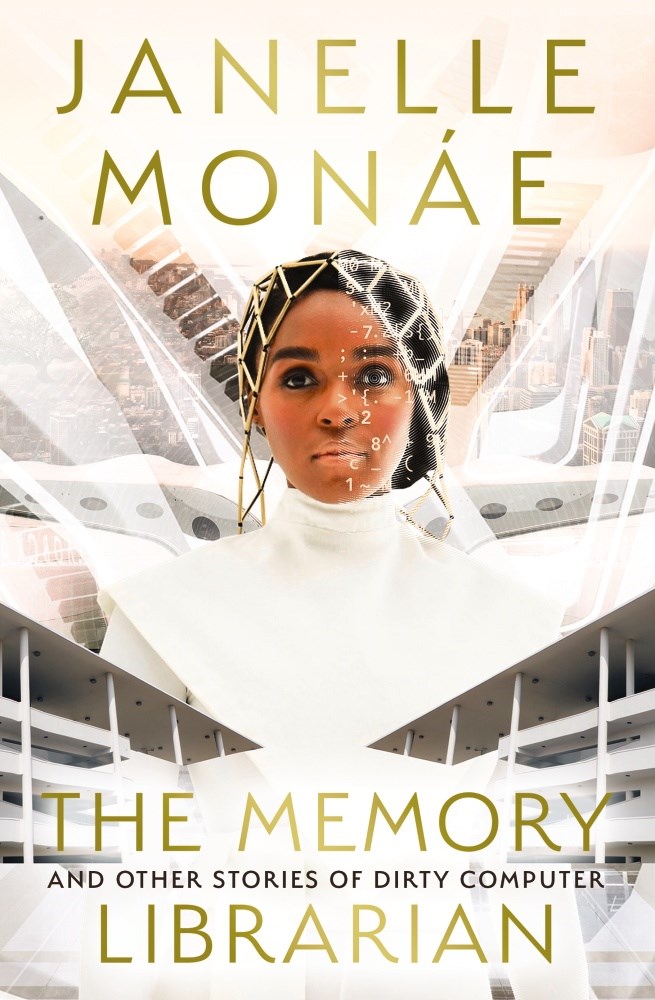
The Memory Librarian


 The Memory Librarian: And Other Stories of Dirty Computer by Janelle Monae (2022) 321 pages

This could almost be called a short story collection, except the stories are loosely linked. There are five contributors listed on Goodreads that helped Janelle Monae put each part of the story on paper. I listened to the audiobook with the first part narrated by Janelle Monae and the rest narrated by Bahni Turpin. Fans of The Handmaids' Tale would probably enjoy this. The stories take place in a near-future totalitarian state. Even though there is less overt religious involvement in the regulations of public and private life, all the main characters are labeled "Dirty Computers." Janelle Monae's third album was titled Dirty Computer. I had seen their series of music videos that form an "emotion picture" for this album when it was released about five years ago. In this world, Dirty Computers have there memories erased to force conformity. This totalitarian state targets queer people of color. Concepts of Intersectionality are explored in each story. It is suggested, but not made completely clear, that each story advances in time and involves characters from the previous story living their re-invented life after their memory wipe. There is sci-fi tech controlled by the state for surveying the population and very little power left to the ordinary person. I don't read short stories very often. Just as you get invested in one, it is over. I wish the separate stories were more connected like chapters of a whole. I became a bit frustrated trying to guess how each connected to the previous one. And I wish there was more world building description that referenced the visual design of the music videos.

Thursday, January 18, 2024

Sphere

 Sphere by Michael Crichton (1987, 385 pages)

I picked this book up because I had just finished Twenty Thousand Leagues Under the Sea  by Jules Verne and heard Sphere pulls heavily from it. In this sci-fi mystery, a group of scientists is pulled together to investigate an airplane crash in the middle of the ocean. The list comes by the recommendation of psychologist Dr. Norman Johnson when the U.S. Navy asked him for a report on human responses to potential alien contact.

The story becomes claustrophobic as the scientists and Navy personnel live solely in a cramped underwater habitat. They have to don diving suits to access the underwater crash-- which they identify as American-made, but nothing they recognize. It becomes a little thriller-y when the human psyche is pushed to the limits of underwater living. Mysterious creatures show and events start happening after the discovery of a large polished sphere on board the crash site. A lot less dense than Jules Verne books, and a lot more mystery, but it does incorporate a few Vernian ideas.

I tend to love Michael Crichton books, and this one was interesting but left a lot to be desired. In my opinion, this book is for those who enjoy the fiction part more than the science part of science fiction. It has the mystery thriller part of Crichton's Andromeda Strain but fewer explanations and more focus on human interaction.