Showing posts with label Africa. Show all posts

Friday, December 5, 2025

Patternist #1-2

 Wild Seed by Octavia E. Butler (1980) 321 pages 


I listened to both of these as audiobooks on Libby narrated by Robin Miles. I finished Wild Seed back in September, but the second book just this week. This is a series where the series order is different from the order in which the author wrote them. Butler writes Wild Seed to sound like ancient myth with gods and mortals. It is more fantasy than sci-fi, but like the other books I've read by Butler holds close to reality. Doro is an immortal spirit that has possessed many human bodies over thousands of years. His possessions are described in terms of a predator eating his prey. His children, originating from Africa at first, but later through all races, have various telepathic abilities. Latent abilities sometimes become active. It is interesting how Butler imagines all sorts of special superhuman powers as beginning with abilities in the mind. Again, picture most of these powers as being hidden unless the person wants to be accused of being a witch of some sort. There are no masks or capes or action-heavy fist fights. Still, my imagination made comparisons to X-Men comics/movies without the heroics. Most of the book is about the relationship between Doro and a distant descendant Anyanwu. She has healing/shapeshifting powers and may be immortal like Doro. Doro plans to strengthen his descendants through selective breeding, which brings concepts around eugenics to mind. This story progresses from 17th century Nigeria to 19th century America. There is a huge power struggle between Doro and Anyanwu, but also a shaky romance. (Are they equals?) Anyanwu eventually raises generations of telepaths for Doro as America is founded.

 Mind of My Mind by Octavia E. Butler (1977) 228 pages


It took a long time for me to figure out when this second book is set. There are very few historical markers, which is not a bad thing. It makes the story timeless. In fact, it is set roughly in the 1970s when Butler was writing the novel. It flows smoothly from Wild Seed, so it surprised me to learn it was written earlier. Anyanwu has changed her name to Emma. She and Doro are still around. But this story focuses on one of her granddaughters, Mary. Doro moves Mary, who has incredible telepathic abilities, to California. Mary's power develops as the "Patternist" that gives the series its name. She is able to link the minds of less than a dozen active telepaths at first. She builds and strengthens a community of hundreds of telepaths and some unpowered humans until she becomes a threat to Doro's power, and a competitor to his master plan. Butler's writing is so good at the drama of relationships and the inner working of peoples' minds. At the end, there is something close to an action scene out of a superhero comic book, but it is powerful because of Butler's character development over these two books.


Friday, September 12, 2025

Countess and The Last Count of Monte Cristo

Countess by Suzan Palumbo (2024) 168 pages 

I listened to the audiobook on Hoopla narrated by Chante McCormick. The opening of the synopsis, "A queer, Caribbean, anti-colonial sci-fi novella, inspired by the Count of Monte Cristo" grabbed my attention right away. It keeps the basic ingredients of Dumas' story, but moves right along at a fast pace without so much flowery language or so many subplots and minor characters. The Haitian Revolution led by Toussaint Louverture is a major inspiration to Palumbo and Louverture is mentioned many times. In outer space, in the future, colonial powers remain problematic with people of color subjugated to labor for commodities that prop up the colonizers. Virika Sameroo follows a similar path to Dumas' character Dantes, but takes on a bigger fight against an Empire rather than simply seeking revenge against the individuals responsible for imprisoning her. I enjoyed this a bit more than the following graphic novel.

The Last Count of Monte Cristo by Ayize Jama-Everett with art by Tristan Roach (2023) 154 pages 

I'm fairly familiar with Dumas' story. I've listened to the novel and Tom Reiss' nonfiction The Black Count. This graphic novel holds very closely to Dumas' story. If memory serves, some of Dumas' phrases are incorporated in the script here. There is a large cast of characters including many characters who appear in disguise under aliases. Having the familiarity that I do with the story was very helpful for understanding the complicated plot. I imagine readers would be confused going into this with a blank slate. Focusing on African characters works well. The solar punk future with major climate change is only a veneer that does little to affect the core of the story. The future tech, really only the way characters are able to disguise themselves, is cool. The colors of the art are bold, but action and dialogue and foreground to background details are sometimes too much to take in. A little more focus could have helped.

Wednesday, January 8, 2025

Masquerade

Masquerade by O.O. Sangoyomi, 340 pages

Òdòdó has followed in her mother's footsteps, becoming a blacksmith in Timbuktu, despite the social shunning and poor living conditions that come with the vocation. After the city is conquered by the king of Yorùbáland, Òdòdó is kidnapped and only realizes when she arrives in the capital city that she's been picked to be the king's wife. Her rapid escalation from the bottom to the top of society is not a popular change among many (including the king's mother and many of his advisors), but Òdòdó is determined to make the most of it without losing track of her past.

Very loosely based on the myth of Persphone, Masquerade is a fascinating tale that brings to life western Africa before the transatlantic slave trade. As with all books that take place so far in the past, and in a culture with which I'm not particularly familiar, I wonder how much of this is based on actual traditions and events, but really, it doesn't detract from the story at all. It's an excellent book, and I highly recommend it. 

(Note: why this book was ever marketed as fantasy is beyond me. Is it just because it's non-Western and the names are hard to pronounce and spell for us? I hope not.)

Thursday, August 29, 2024

African Trilogy


Big Book Challenge: The African Trilogy
by Chinua Achebe 562 pp.

Things Fall Apart: This book takes place in the late 1800s in the southeastern region of what is now Nigeria. The main character, Okonkwo, is a powerful leader of his Igbo clan. He worked hard to create a new life after having a weak and lazy father who left him no inheritance. After the death of a young man by Okonkwo's hand, things begin to go wrong. The arrival of Christian missionaries to the area creates further conflict as the missionaries lure the people away from their traditional beliefs. As problems among the people escalate Okonkwo realizes that the society he once knew was lost. He commits suicide which is against the indigenous beliefs, leaving the white Christians to deal with his body. The parting shot by the colonizers was the comment that this story will make a nice paragraph in the book he is writing about area.

Arrow of God: This novel takes place in colonial Nigeria in the 1920s. It concerns Ezeulu, the chief priest of the god Ulu who is worshipped by several Igbo villages. Ezeulu comes in conflict with the white, Christian colonizers who want him to abandon his beliefs and lead the villagers toward believing in Christianity. After being imprisoned by the colonizers for failure to cooperate, Ezeulu returns home to wait for guidance from Ulu. Following the death of his son, the people begin to turn away from Ezeulu because he will not allow the yam harvest because he has received the message from Ulu. The missionary steps in and urges the people to have their harvest and dedicate it to the Christian god. It's a further progression in the move to control by the white missionaries. This book struck a nerve in me because of the attitude that non-Christian beliefs should be wiped out. But I think this was the best one of the three.

No Longer at Ease: This installment centers on Obi Okonkwo, grandson of the protagonist in the first book and takes place in the late 1950s prior to Nigerian independence. It begins with Obi standing trial for bribery and then flashes back to the events leading up to the trial. Obi was sent to England to attend college with a grant from the local Union of villagers who have settled in the city of Lagos. When Obi returns he has a job with the agency that gives scholarships for study in England to the local young people. He soon learns that his salary isn't quite enough to live in the style expected of him while paying back his college loan, paying rent, and car expenses. However, he refuses bribes he is offered by those wanting scholarships. Obi begins a romance with a young woman named Clara who is considered an outcast by the Igbo and wants to marry her. However, the objections of his parents conflicts with his plans. Things get worse when Clara gets pregnant and Obi must find the money for an abortion. Clara leaves him afterward. When Obi's mother dies he choses to use the money he would need for travel to the funeral to help fund the funeral expenses and doesn't attend. At this point he decides that the only way for him to make it in the city is to become one of the officials who accepts bribes. He gets caught which results in him being tried.

Tuesday, February 20, 2024

His Only Wife

 His Only Wife by Peace Adzo Medie, 288 pages.

Afi is an amateur seamstress living with her mother in a house owned by the biggest businesswoman in her small Ghanaian town. Her whole life quickly changes when that same businesswoman asks her to marry her son. Elikem Ganyo is considered quite a catch; he's handsome, rich, polite, and good to his family. But he is also in love with a woman his family doesn't approve of, and they are desperately hoping that if he marries a respectable woman he'll finally leave his mistress. So Afi, knowing all of this, marries him in absentia and is determined to be the best wife possible, although she doesn't actually see her new husband until weeks after their wedding, and even then only rarely.  Yet somehow falling in love only makes everything harder.
Something I found fascinating about this book is that Eli only actually appears in a fairly small portion of it and the mistress, who I believe appears on the cover, is almost not shown at all. This means that the entire book is very focused on Afi and her development as a character. I also thought this book was fascinating as a snapshot into modern Ghana. The setting feels very significant in all aspects of the book, and I absolutely never forgot where we were, but enough context was provided that no prior knowledge of the country is required going in. This isn't normally a genre I read, but there were enough really interesting elements to keep my attention throughout, and I suspect that readers who enjoy the contemporary/literary genres more would like this book even better. 


Friday, December 8, 2023

River of the Gods

River of the Gods by Candice Millard, 349 pages

In this fascinating history, Millard dives into the western world's search for the source of the Nile River. Specifically, it looks at the troubled expedition of two British explorers, Richard Burton and John Hanning Speke, which took place in the late 1850s and was beset by illness, abandonment of local guides, and some pretty violent bandit attacks. It didn't help that Burton and Speke were opposites in every possible way, from their temperaments and looks to their approach to research and exploration. River of the Gods spends the bulk of the book focusing on that exploration, though given the extended animosity between the two, it continues well past their return to England, showing how their relationship further devolved until Speke's untimely death just before a planned debate between the them.

As much as the strong personalities of Burton and Speke dominated this book, I was equally fascinated with the logistics of a mid-19th century exploration, the horrific opinions Brits had of Africans, and the research, notes, and subsequent publication of manuscripts related to the expedition. There were times that Speke in particular caused me to roll my eyes hard enough to incite mild headaches — for example, his insistence that the local guides' suggestions to wear native clothing was nothing more than an attempt to make him look silly by "lowering himself to their status" — but altogether it was an interesting book.

An additional note: I listened to the audiobook, which was read by Paul Michael, and I cannot recommend it enough. It seems that there is no accent Michael cannot do, and do very well, and he absolutely nailed this audiobook narration.

Wednesday, September 6, 2023

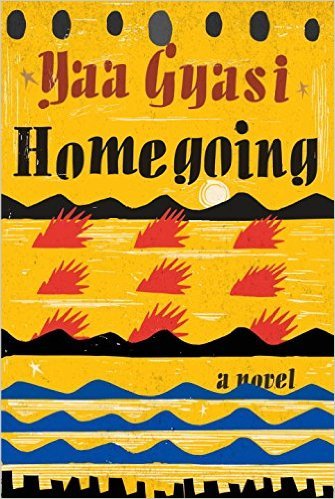
Homegoing


 Homegoing by Yaa Gyasi (2016) 305 pages

I loved this novel. I listened to the first half as an audiobook then had to switch to print. It is an epic multi-generational saga that in some ways is fourteen separate, but connected, coming-of-age tales. "Two half-sisters, Effia and Esi, are born into different villages in eighteenth-century Ghana" on Africa's southwest coast. One stays in Africa and the other is sold into slavery in America. The chapters alternate between Effia's and Esi's descendents. This is historical fiction through a range of historical time periods. The historical details and variety of lived experiences of the African Diaspora are described with such liveliness. There are stories of love, of suffering, of labor, of grief, of colonization, and of discovering a black person's place in the world. 

Thursday, April 20, 2023

Everfair


 Everfair by Nisi Shawl (2016) 381 pages

After finishing King Leopold's Ghost, I saw a list of steampunk books. When I was reminded that Everfair is set in the Congo in the same period of time, but with an alternative steampunk history, I had to move it up in my reading list priorities. Nisi Shawl acknowledges the inspiration she found from Adam Hochschild's history book. 

Unfortunately, the author provides a single page of historical background, which is not nearly enough. I have an advantage of being familiar with the people and events associated with this history, since I have read the above book, but I was still lost as this book jumps between time, place, and such a large cast of characters. I can only imagine the confusion of a reader that does not know something of the true history. The most clear parallel between historical person and alternative character is George Washington Williams, the black American minister who embraces African languages, and Thomas Jefferson Wilson, the black American minister character who "goes native." The author does not spend enough time setting the scene, describing the societies that the characters come from. Most chapters are quite short and deal primarily with one or two main characters. It takes awhile for these characters' storylines to interconnect. I question why the author chose to create certain main characters (the Poet) who seem to not be that significant to the story, or to the advancing events of the alternative history. Other characters (Lily and Jackie with his Fabian Society) are developed significantly only to be eliminated from the story. I wished other characters were developed more. Unfortunately, many of the African natives still have less agency than the Americans and Europeans and one Chinese engineer. I loved the steampunk aspects. The zeppelin "aircanoes," mechanical limbs for those with war wounds or those who lost hands during Leopold's rule, and arrow guns were great. Other futuristic tech was not described in a way that gave your mind a clear picture. I appreciated the alternative history with three major wars: the war against Leopold, WWI, and a civil war between the African ruler of the region reclaiming his power and all the colonists. Multiple characters are described as doing espionage work, but the story was lacking actual descriptions of intriguing spy craft. I repeatedly wanted certain chapters to continue and give me more, but they would be interrupted by four to five plodding chapters checking in on other characters. Maybe two interesting storylines would be running at a time with other characters making frustrating decisions in between. I'm glad I stuck with it, but it was not a favorite.

Tuesday, March 21, 2023

Spare

Spare by Prince Harry, Duke of Sussex, 410 pages

Amid his contentious separation from the British royal family, Prince Harry has published his memoir, which he hopes will explain exactly why he had to make the choices he did (he spells this goal out pretty clearly in the prologue). The memoir details his childhood where it was clear he was the "spare" to his older brother's "heir," his grief and disbelief at the death of his mother when he was 12, his tumultuous teen years, the way he found himself in the British Army, and finally finding a life partner in his wife, Meghan Markle. Throughout it all, he is abundantly clear about the role that the British press has played in all of the most difficult moments of his life, and — perhaps more surprisingly to those of us outside the Commonwealth — the role that his dysfunctional family has played in those moments.

While Prince Harry is certainly telling his side of the story, one that certainly won't match up with the story told by his family (and has just as certainly caused additional conflict between them), it's refreshing to read something in which Harry controls the narrative, when it's clear that that has never been the case in the past. He's frank, he owns up to his past mistakes, and at times gives a bit too much information (I really didn't need to know about ALL the locations where he got frostbite on a trek to the North Pole). While there are some who will complain that he's a prince, and what's he got to complain about, it's hard not to feel sympathy for someone whose life has been so strictly dictated and limited, even if that cage is gilded. I honestly wasn't sure what to expect going into this book, but I truly enjoyed reading this open and deeply humanizing memoir of one of the most famous royals in the world.

A final note: I listened to the audiobook, which was read by Prince Harry, and I highly recommend it. He's an excellent narrator who does a fairly good American accent for a Brit.

Thursday, March 16, 2023

King Leopold's Ghost

King Leopold's Ghost: A Story of Greed, Terror, and Heroism in Colonial Africa by Adam Hochschild (1998) 442 pages

A friend planned a Jolabokaflod event around New Year's this year. It was my first time participating in the Icelandic Yule book flood tradition. This history book was gifted to me as a recommended read. 

This is about the exploration and colonization of the Congo. The Belgian King Leopold's rapacious rule for resources such as ivory and rubber caused the many indigenous African peoples to be enslaved, traumatized, and killed. There were a few journalists and missionaries who protested despite efforts by the state to silence them. 

It was well-researched and revealed how rarely the Africans' experience was given voice by Europeans and Americans. It was fascinating and disturbing history. Yet there were heroes highlighted in the Congo reform movement. E. D. Morel, Roger Casement, George Washington Williams, William Sheppard, and Hezekiah Andrew Shanu each are revealed to have achieved something in the fight against Leopold's human rights crimes.
 

Wednesday, June 16, 2021

Remote Control

Remote Control by Nnedi Okorafor, 159 pages

In a futuristic Ghana, a young girl named Sankofa wanders the countryside, bringing Death with her. While stories about her precede her, none of them are really true. Remote Control is the story of how she came went from being a malaria-stricken girl named Fatima to the deadly and sometimes-green-glowing Sankofa and the few kind people she meets along the way.

This is a short, science fiction fable that's as much about how we treat those we do not know or understand as it is about a girl's grief and confusion. Okorafor's writing is absolutely beautiful, and I'd love to see more of this world in the future.

Monday, March 8, 2021

How to Catch a Queen

How to Catch a Queen by Alyssa Cole, 371 pages

When Sanyu's father dies, he is both king of Njaza and husband to Shanti, the queen that was chosen for him at the last minute. For Shanti, it seems like a dream come true, as she's always wanted to be a queen so that she could help inspire change and lead her people. But tradition in Njaza puts the queen in a quiet corner of the palace, leaving everything up to the king, who must rule with an iron fist and show nothing but strength, something that intimidates Sanyu nearly as much as his late father's advisor, Musoke, does. With just a four-month marriage trial, Shanti has a short deadline and a long to-do list to make her mark on Sanyu and Njaza's outdated traditions.

I generally love Cole's royal romance novels, so the relative lack of chemistry between Shanti and Sanyu was fairly disappointing this time around. Perhaps that's due to the separation that takes place between the characters for a large portion of the book, but this just didn't live up to Cole's previous romances. Their individual problems felt relatable, but there was just no sizzle. *sigh*

Saturday, March 28, 2020

The Pure Gold Baby / Margaret Drabble, 291 p.

Globe-trotting Jess comes of age in postwar London, when the world seems to be opening up to young women.  But when the result of an affair with her anthropology professor is her beautiful, golden daughter Anna, things change.  Anna is sweet and happy, but as she grows it becomes clear that she has intellectual delays.  So Jess turns away from the wide world and devotes herself to mothering her child.  Softly plotted so as to be just barely a novel; still, it's an affecting meditation on difference.  Along the course of Jess' life, she interacts with a group of people in an experimental psychiatric hospital, as well as classmates of Anna's with various cognitive deficits, and through all of these encounters she examines their worlds with an anthropologist's eye.

Wednesday, May 15, 2019

Shuri vol. 1

Shuri [vol. 1]: The Search for Black Panther by Nnedi Okorafor, art by Leonardo Romero and Jordie Bellaire, 113 pages

I know this is supposed to be a book review, but indulge me for a minute as I talk about a movie. When Black Panther came out last year, I was grossly unaware of the Wakandan king and protector. But the movie was awesome, and my favorite part was T'Challa's brainy, bold, and funny as hell little sister Shuri. Whatever happened after that movie, I wanted more Shuri!

So imagine my sheer delight when I found out that the brilliant Nnedi Okorafor was writing a Shuri comic! I love Okorafor's Binti trilogy (and I love following her and her cat on Twitter), so I had high hopes for this dream team pairing of an awesome writer and an awesome character. Thankfully, this volume (which collects the first five Shuri issues) lives up to my expectations. Shuri is as brainy as ever, and I loved her interactions with other Marvel characters, particularly the sequence in which she astral-projects into Groot. (Sounds weird, I know, but just go with it.) I will definitely be reading more of this series. It's fantastic!

Thursday, October 26, 2017

The Atlas of Forgotten Places

The Atlas of Forgotten Places by Jenny D. Williams, 361 pages

When idealistic aid worker Lily suddenly goes missing in Uganda, her aunt Sabine must travel to a region beset by civil war in attempt to track her down. At the same time, Rose, an Acholi woman living in Uganda, is working as a translator for a Swiss anthropologist when her boyfriend, Ocen, also disappears. These two searches eventually combine, leading Rose, Sabine, and Christoph (the Swiss anthropologist) on a dangerous trek that forces them all to confront their pasts and their assumptions of the present.

When I first picked up this book, I was afraid it would be incredibly depressing, bloody, and bleak — after all, it is set against the backdrop of the very real Operation Lightning Thunder, a 2008 bombing initiative against the Lord's Resistance Army that failed massively (it led to the deaths of nearly 900 civilians). Instead, the book strikes a more hopeful tone, illuminating the universality of loss while still respecting the horrific experiences of those who live near conflict. I ended up really enjoying this book.

Monday, April 17, 2017

Deadly Sky

Deadly Sky: The American Combat Airman in World War II by John C. McManus  480 pp.

This is another excellent book on World War II by Dr. McManus. This time he covers all aspects of the experiences of bomber and fighter crews in the European, African, and Pacific theaters. Every facet of this book is taken from primary sources, either interviews with the airmen, or taken from their writings, journals, and letters home. Their stories disabuse any notions created by movies and the media of flying in wartime as glamorous. The hardships most faced were real and many times horrendous. Many of the stories are heart-wrenching as crews dealt with the loss of fellow crew members and other flyers in their units. In spite of the seriousness of the topic there are the occasional amusing anecdotes as well. As always, McManus has written a readable account while still including lots of facts and information.

Sunday, March 27, 2016

A Song for the Brokenhearted

A Song for the Brokenhearted by William Shaw, 403 pages

London detective Cathal Breen is recovering from an on-the-job gunshot wound and is slowly going insane at his friend Helen Tozer's remote family farm. No wonder then that he starts investigating the bizarre unsolved murder of Helen's sister, who was found mutilated on the family farm four years earlier. The investigation soon picks up when another body turns up, and soon Breen is going undercover at drug parties and delving into British colonialism in Africa, all in the hopes of catching the killer.

This is the third book in Shaw's Breen and Tozer series, though I've not read the first two. Doesn't really matter though. By-the-books Breen and women's libber Tozer are are interesting match, and I love the feel of the late 1960s that comes alive in this book. Still not sure why the book has the title it does, but hey, it's a good book.

Monday, March 21, 2016

The Man from Beijing

The Man from Beijing by Henning Mankell  365 pp.

What starts out as an intriguing murder mystery about a brutal mass murder in a small Swedish village veers into an unbelievable plot about revenge for one man's evil one hundred years prior. Judge Birgitta Roslin becomes involved in the crime investigation when she realizes that two of the victims are her foster grandparents. After subsequent brush-offs by the police, Roslin begins investigating on her own during the time she is conveniently off work due to a heart condition. Her investigation takes her to China before the story then moves to Africa. This novel is a far cry from Mankell's Wallander novels and I found it very disappointing.

Saturday, November 7, 2015

Tram 83

Tram 83 by Fiston Mwanza Mujila, 211 pages

An always-open, always-busy bar, Tram 83 serves as the hub of an unnamed seceded African city, the place at which miners come to drink beers and meet prostitutes after work, the place where both legitimate and below-the-table business deals are reached, the place where you can find anything and everyone you might be looking for. The plot of this short novel revolves around three people: Lucien, a penniless writer who has returned to the city-state to write his stage-play; Requiem, a kingpin of the city-state's underground who lets Lucien stay with him, despite holding a grudge against him; and Malingeau, a publisher and foreigner who keeps changing the terms under which he'll publish Lucien's text. And then there's Tram 83, which serves as the setting for most of the scenes in the book and gives the book life through the ever-present refrains from prostitutes, waitresses, miners, and tourists.

Reading this book is not easy, and is more akin to reading a jazz song. There are familiar refrains that pop up throughout the book, mixed in with long comma-filled sentences that feel something like an instrumental solo. So while it's a relatively short book, I found it best to approach it in small portions; it may be best read out loud, in a cadence that might be found at a poetry slam. This certainly isn't a book for everyone, but for those who care to brave it, the lyricism and rhythms of Tram 83 (both the book and the business) create an experience that isn't often found in books.

Thursday, June 11, 2015

Copper Sun

Copper Sun by Sharon Draper, 302 pages
2007 Coretta Scott King Award Winner
2015 Edwards Award Winner

Amari's life is changed irrevocably when pale-faced men attack her African village and drag her off to be sold into slavery. Between witnessing the murder of all her family, the indignity of being owned and used by someone else, and being forced to assimilate to a new culture, Amari doesn't have a lot to be hopeful for. But everyone around her reminds her that hope is all any of them have left, and it's better to hope than to give up. Polly, an orphan, is stuck serving out her parents' indentures for the next fourteen years. When her indenture is bought by Mr. Darby, a rice plantation owner, she feels like she will at least be able to put the skills her parents taught her to use and work in the big house. Much to her chagrin, she finds herself stuck with Amari, doing the types of jobs that slaves do. What begins as a begrudging acceptance manages to bloom into a friendship as the two girls survive life on the Darby plantation. But when they find themselves in the middle of a terrible situation, the girls must find the courage to survive.

I liked this one more than some of her other books I've read. Sharon doesn't shy away from the realities of being a woman and a slave during those times. Amari was purchased as a present for Mr. Darby's teenaged son, and it doesn't take much to figure out what a teenaged boy would want with a female slave. There are some moments that seem a little too coincidental, like when Amari crosses paths again with Besa, the man she was betrothed to back in Africa, or when (spoiler alert) Clay manages to find the girls, even though they had been traveling for a week by that point (admittedly, by foot, so maybe my perception of time is wrong). Despite that, it's a really good book that further drives home the realities of slavery and the atrocities slaves faced, and the downright horribleness of that period of American history.

(Read as part of YALSA's Hub Reading Challenge.)