Showing posts with label African culture. Show all posts

Wednesday, September 6, 2023

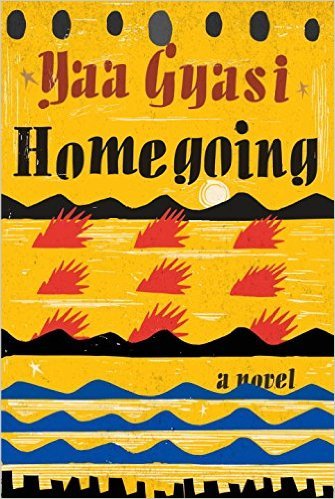
Homegoing


 Homegoing by Yaa Gyasi (2016) 305 pages

I loved this novel. I listened to the first half as an audiobook then had to switch to print. It is an epic multi-generational saga that in some ways is fourteen separate, but connected, coming-of-age tales. "Two half-sisters, Effia and Esi, are born into different villages in eighteenth-century Ghana" on Africa's southwest coast. One stays in Africa and the other is sold into slavery in America. The chapters alternate between Effia's and Esi's descendents. This is historical fiction through a range of historical time periods. The historical details and variety of lived experiences of the African Diaspora are described with such liveliness. There are stories of love, of suffering, of labor, of grief, of colonization, and of discovering a black person's place in the world. 

Monday, May 8, 2023

The Night Masquerade (Binti #3)

The Night Masquerade (Binti #3) by Nnedi Okorafor (2018) 208 pages


I finished the trilogy. The third audiobook on Hoopla was consistently narrated by Robin Miles. The second book left us with a cliffhanger when Binti received devastating news. I was a bit frustrated that this third one did not resolve this cliffhanger right away. Binti is deep in the desert with the Enyi Zinariya, the tribe of her father and grandmother. She is becoming close with Mwinyi, who is teaching her the ways of their unique harmonizing. She spends awhile in a trance-like state before returning home to find the destruction of her home. It turns out I was right to feel that the resolution at the end of the first book, which involved a treaty between the majority culture on Earth and the Meduse, was too easy. The antagonism between the two groups is not so simple to sweep away. The title The Night Masquerade refers to a mythical creature (actually a ceremonial role played by a Himba elder), who appears to Binti's people to signal societal change. In the Himba tradition, usually only men have a vision of the Night Masquerade, but Binti sees it three times. Using this as the title suggests an importance to this role, which I do not think was very successful. Characters are coping with death multiple times through the story and are moved to action for good or for ill because of it. Tribal clashes continue. Battles are threatened. Diplomacy seeks peace. Feelings of triumph and grief are mixed in a strange concoction. Then we are back in space and Binti's DNA goes through more modifications. Math continues to be a meditative and energizing force. Miracles are performed in ways you only see in fantasy/sci-fi. Ultimately Binti becomes a combination of skills and parts from all the different sources that have influenced her being. And aren't we all like that.

Friday, April 28, 2023

Home (Binti #2)


Home (Binti #2) by Nnedi Okorafor (2017) 176 pages

I continued the series with the next audiobook narrated by the same person, Robin Miles. I love the artwork on the cover of this one. Binti's former adversary Okwu, a Meduse, is now a good friend, almost a sibling. I did not grasp the change that happened to Binti near the end of the first novella, but it is clear now that she has been injected with some Meduse DNA, and her dreads are now freely moving Medusen tentacles. Binti and Okwu have spent a year at University building new lives amongst many different aliens. Binti feels called to return home for a cleansing pilgrimage. This middle part of the trilogy is really about how going away to college changes you and your home is not the comforting place you once knew. I relate to Binti's character so much. Meanwhile, the alien technology that Binti found when she was eight that came in so handy in the first book, which she has been learning to use at University, breaks. Binti's family is generally polite, but they still think of Okwu as a monster. Binti also learns about her family's bias against the more "savage" people who live in the desert hinterland. They are her father's people and they have different "harmonizer" abilities to communicate over great distances using alien nano-technology. There are some external plot developments, but we really delve into Binti's internal life, the rejection she feels from her family, the confusion she feels about her path.

Wednesday, April 19, 2023

Binti


Binti by Nnedi Okorafor (2015) 96 pages

I previously read Okorafor's memoir Broken Places & Outer Spaces: Finding Creativity in the Unexpected about her personal experience as a teen star athlete who becomes paralyzed and finds purpose as a writer of science fiction, specifically africanfuturism.

I listened to the audiobook, the start of a trilogy, on Hoopla. It is narrated by Robin Miles. It is super short and sets up the characters and world in a way that leaves me wanting to find out what happens next. This is a story of diplomacy and stopping a war between alien species. Binti is from a desert community in Africa on Earth. Her peoples' culture and habits seem foreign to the Western majority culture. She loves mathematics and wants to go to the prestigious Oomza University on another planet. She is accepted, but all her friends and family discourage her because they think she will never truly be accepted as representing the larger Earth culture, so she runs away. The spaceship is a sort of living giant shrimp thing with hollow spaces for the humans to inhabit. Binti's new Uni life is interrupted en route by a Medusen attack. There has been a long-standing armed conflict between Earth's majority culture and the Meduse. I picture the Meduse as human-sized jellyfish. Binti's position as an outsider even among humans, coming from a long line of diplomats called "harmonizers," and an alien piece of tech that she does not completely understand makes her unique in position to stop more violence when the spaceship arrives at the University. We meet more diverse alien species at the University, and the resolution happens a bit too quickly. But, perhaps, it is the diversity that leads to quickly accepting the wrong that has been done, apologizing, and ending the war.