Monday, September 21, 2026

Please Enjoy Your Stay

Please Enjoy Your Stay by Tara Goedjen, 320 pages

When Mia was a child, her cousin was murdered while they stayed at a remote Austrian inn. Mia's aunt was a true crime writer planning a book about the inn's sordid history when it happened, and while Mia's testimony put the killer behind bars, the court of public opinion pinned the blame on Mia's aunt. While things have died down over the past several years, a new true crime podcast is reopening the case and casting doubt on Mia's testimony. In an attempt to shield her aunt from further scrutiny, Mia finagles her way into a job as a nanny for the influencer who is renovating the inn, hoping that by being back at the scene of the crime, she can find some more proof.

As with a lot of thrillers, there's a serious disconnect between reality and the high-stakes antics of the plot. Most of them, I can forgive. However, the one that I just can't buy is that the helicopter mom influencer would hire a woman with ZERO childcare abilities as the new nanny in a construction zone. It was a good escape, but nothing amazing.

Sunday, September 20, 2026

Whistler


Whistler
by Ann Patchett (2026) 295 pages

Daphne and her sister Leda are extremely close. They have careers and husbands they love. When Daphne and her husband chance upon their mother's second husband Eddie in a New York City museum, all sorts of feelings come flooding back to Daphne after 40-something years apart. What follows is a series of visits and conversations mostly about how special Eddie was to the girls for the couple of years that Eddie and their mother were together. Eddie and Daphne were in a car accident when she was nine, which seemed to result in the end of their mother and Eddie's marriage, but why? The various relationships between the family members, including Daphne and Leda's mother and father, as well as Daphne's stepdaughters and Leda's son, all mesh beautifully into a book that is hard to set down. And why is there a horse on the book's cover. Read and find out! Highly recommended.

Saturday, September 19, 2026

This Kingdom Will Not Kill Me

This Kingdom Will Not Kill Me by Ilona Andrews, 480 pages

Maggie has woken up naked, cold, and dirty in an alley, which she quickly learns is Kair Toren, the central city of her favorite book series. Then she promptly dies. Next thing she knows, she's waking up again in the same state as before, only this time, she's determined to survive. While it takes a few more life reboots to achieve her goal, she's soon ensconced among the dangerous and elite of Kair Toren, positioning herself as a seer by using her knowledge of the series. The only problem is that the series is unfinished, so there's definitely a limit to how much she can know, and if she changes things too much, well, that's pretty rough  too.

The fantasy trope of waking up in a favorite fictional world is an increasingly popular one (it's official name is "isekai," as it started as a common manga trope), and this is definitely a good example of the subgenre/trope, with the protagonist waking up in a vaguely Game of Thrones-esque world. However, as we never learn how Maggie got there or why she keeps reviving after her various deaths, it feels a bit unfinished. Similarly, the readers are told about the upcoming events only by Maggie's POV recollections of the books, so it feels like we're just along for the ride instead of becoming fully immersed in the world. I would've loved to get a bit of backstory before Maggie was deposited in Kair Toren, just to give us a glimpse of outcomes in the unaltered book-within-a-book. As it is, the plot meanders with no arc that is clear to us. That said, I'll definitely read the next book in this series, as I am curious as to where it all goes. But there are plenty of other isekai books I'd recommend first.

The Redemption Center Is Closed on Sundays

The Redemption Center Is Closed on Sundays by Andrea Hairston, 416 pages

Oona the St. Berdoodle is known throughout the neighborhood, either as a loveable and smart pal or as a pesky and smart annoyance. When Oona and her current owner Zsuzsu start to investigate the death of a local celebrity, Oona's ability to travel between universes becomes a necessity to finding the killer. Unfortunately, the killer knows who Oona is, and the dog and her humans have to work fast to stay ahead of the murderer.

This is quite possibly one of the strangest and most scattered books I've read in a while. The characters are vibrant, but the plot is confusing, and a couple months after reading it, I still have no idea what I read. I may give it another go at some point, but that first go-round was a doozy.

Ode to the Half-Broken

Ode to the Half-Broken by Suzanne Palmer, 416 pages

Thirty years after a war that has left humans and robots on generally bad terms — most robots are afraid of humans and vice versa, so they stay away from each other as much as possible. As this book starts, an old robot who was involved in that war (but has purposely tried to remove himself from the dystopian world he helped create) has woken up with his systems rebooting and a leg missing, and there's only a chatty cyborg dog around to offer help. As he heads out to track down his leg, he soon discovers that tensions are again rising, and teams up with a human mechanic and a handful of other damaged bots to stamp out the source of the problems.

This is a lovely found-family story that, at its heart, gives us hope that the titular half-broken individuals can do powerful things when they come together. It's also a route to self-discovery and healing from the mental trauma of war, which exists no matter what role you played in the conflict. I loved this book, and I highly recommend it to fans of Becky Chambers and Annalee Newitz.

Friday, September 18, 2026

Girl's Girl


Girl's Girl by Sonia Feldman, 241 pages

A suburban Midwest summer from the eyes of a 15 year-old girl and her two best friends. As girlhood fades away, Mina struggles with the boundaries and tensions in her friendships with Margaret and Eleanor, while also grappling with her sexuality and a complex relationship with her mother. 

This book paints a beautiful and painful picture of girlhood, reminiscent of how big every emotion can feel at 15. There is definitely a specific audience for this book, and those who grew up queer in the Midwest might find themselves in this audience, but it will not speak to every reader. 

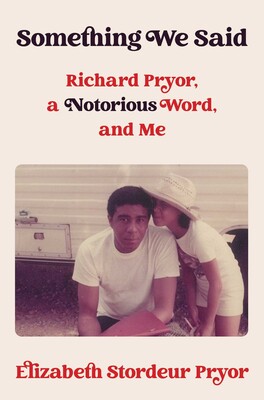
Something We Said: Richard Pryor, a Notorious Word, and Me by Elizabeth Stordeur Pryor

Something We Said: Richard Pryor, a Notorious Word, and Me by Elizabeth Stordeur Pryor, 304 pages

Richard Pryor's daughter interweaves stories about her experiences as a professor of African American History, childhood memories, and historical information from her research. After repeated attempts to address the use of a slur in her classroom, she researches its history and finds that she cannot avoid acknowledging how her father profoundly changed its use and with it, American culture.

This was excellent! I didn't know much about Richard Pryor as a person before this, but loved that you feel like you really get to know him through her stories. Of course parts were difficult to read, but Stordeur Pryor is an outstanding writer. Beyond the interesting elements of her father's celebrity and her teacher stories, this has that ability of any great memoir to lead the reader to recall what it's like to be 5 years old (or 13, or 21, etc.) I couldn't put it down, I have found myself recommending it to just about everyone. It's easily one of my favorites for this year.

If you liked school, you'll love work

If you liked school, you'll love work
by Irvine Welsh (2007) 391 pages

This gritty short story collection by Scottish author Welsh is perhaps too irreverent. Best known for Trainspotting, which was adapted to a movie, Welsh is not shy describing drugs, depravity, and dinginess. Here he sets out five stories which are very different from one and other, but are consistent in their bad taste. The first four are not remarkable – a few clever twists – but they feel like he is just writing to shock. The last story, largely written in Scottish dialect, is more nuanced. The tongue-in-cheek small-town saga (offensive to delicate readers) reveals the depth Welsh has for portraying the outrageous nature of the mundane and the interplay of Scottish nationalism and class conflict.

Thursday, September 17, 2026

Poison for Breakfast


Poison for Breakfast by Lemony Snicket, 158 pages.

After finishing his carefully prepared breakfast, author Lemony Snicket finds a note telling him that he had poison for breakfast. What follows is an oddly leisurely investigation into his breakfast ingredients in an attempt to get to the bottom of his own murder, thinking thoughts all the while. 

This is a truly baffling book, which Snicket would take as a compliment. It is a thoughtful little book that I think is truly all-ages, which is a rarity. The ending ties the whole thing together in a way that is unexpected, and I can't say more without giving everything away. Classic Snicket, it was nice to go back to his characteristic voice as an adult. 

Murder at the Grand Alpine Hotel

Murder at the Grand Alpine Hotel by Lucy Foley, 304 pages

Miss Marple rides again in this murder mystery set at a remote Swiss lodge, full of the rich, the famous, and the notorious. When a man boards a gondola alive, well, and alone, but arrives at the other end dead and still alone, it's obvious that he's been murdered. As a blizzard has cut off police access to the titular hotel, Miss Marple must find the killer before they strike again.

This book was written with the full support of the Agatha Christie estate, and it's exactly what it says on the tin: a new Marple mystery. Which is great for those who loved all of Christie's original books. Does it break new ground? Nope. But it's fun!

When Lemons Give You Life

When Lemons Give You Life by Anna Johnston, 384 pages

Griff Barlow is ready to die. His husband has died, his career as a Michelin-starred chef is over, and he's stuck in a neglectful dementia care facility where the high prices do not match the lumpy goo the residents are forced to eat. Also, he does not have dementia, even though everyone thinks he does (including the sister that annoys him, but occasionally visits), so he's quickly going insane at the senior home. Death, he decides, is the only way out. But before he overdoses on the sleeping pills he's socked away, Griff is determined to eat one last lemon tart and sneaks into the kitchen to bake one. But when a fellow resident wanders into the kitchen, convinced that his long-dead mother has made the tarts he loved as a child, Griff realizes that he can maybe stick around a few more days.

During the first bit of this book, Griff is a really unlikeable character. We know he lied about having dementia, that his restaurant had a scandal, and that he doesn't like most people, not even his scatterbrained but still caring sister. But as we learn more and more about Griff's life, it becomes clear why he is the way he is, and why he is where he is. We also learn about why his sister is the way she is as they slowly work toward a better relationship. It's an excellent book that explores relationships, trauma, grief, and family in a way that is at times humorous and at others, pulling at our heartstrings. Highly recommend this one.

Wednesday, September 16, 2026

Seek the Traitor's Son

Seek the Traitor's Son by Veronica Roth, 432 pages

Elegy is a soldier in the rebellion against the Talusar, a powerful country that worships a Fever that kills everyone it touches...and then brings half of them back to life and blesses them with powerful gifts. However, both Elegy and her ruthless enemy are both given a prophecy that one of them will lead their people to victory over the other, and Elegy is told that a man she'll fall in love with is the linchpin to success. At the same time, Theren, a refugee from Talusar, is conscripted to be a servant to Elegy and her royal mother, a job at which he fails almost immediately, as Elegy's mom is killed and Theren kidnapped. When fate brings Theren back into service for Elegy, trust, loyalty, and potential love is all on the line as Elegy seeks victory.

This is definitely a compelling book with plenty of romance, action, and scheming, but it's honestly hard for me to say whether it's science fiction or fantasy. It's futuristic and has spaceships and space stations, but the prophecy and the Fever — especially the way it brings people back to life and gives them new powers — lean fantasy for me. But I'll definitely give the next book a read, as this one ends on a crazy cliffhanger.

Tuesday, September 15, 2026

Dreadful


Dreadful by Caitlin Rozakis, 344 pages.

I wrote about this book a couple of years ago, and rereading it I definitely stand by my original post. My only additional note is that on a reread I was very struck by how intentional the execution of the books themes on perception vs identity were. Still a delightful book, and it was a lot of fun to discuss with Orcs & Aliens last night!

Lady Eve's Last Con


Lady Eve's Last Con by Rebecca Fraimow, 368 pages.

Ruthi has been looking after her younger sister her whole life, taking them from cardsharking as kids to small-time cons on the interstellar cruise line circuit. Then Jules falls in love with a mark, who leaves her pregnant and heartbroken, and Ruthi swears revenge. She makes herself a debutante disguise and goes to glamorous New Monte, where the rich and privileged live it up to a degree only possible in this kind of glitzy sci-fi. But the mark has a sister, and Sol Mendez-Yuki is much sharper than her brother (also less self-absorbed, and much hotter), and it doesn't take long for Sol to sense something off. Ruthi will have to choose wealth and revenge or her heart, and the choice isn't nearly as easy as she would hope. 

There's a lot of character decisions in this book that weren't particularly plausible, but it was just so darn stylish. Anti-grav operas, Venetian-style fashion rebreathers, and a tiny beach satellite held together by gravity sell a very specific flavor of sci-fi that I find very fun, and I had a great time reading this book. Everything is over-the-top in a way that feels totally unselfconscious, and I think it really works. Definitely recommend for anyone looking for some fun, silly sci-fi.

Monday, September 14, 2026

Strangers: A Memoir of Marriage


Strangers: A Memoir of Marriage by Belle Burden, 237 pages

In this memoir, Belle Burden recounts the shock of her husband leaving her and her children at the start of the COVID-19 pandemic, after 20 years of marriage. She revisits the early days of their marriage, their family dynamics, and warning signs she might've missed. She also writes about picking up the pieces after he leaves, dealing with lawyers and divorce court, financial troubles, depression and raising her kids during the pandemic. 

I will admit, as a young person who has never experienced marriage, I was probably not the target audience for this book, however I did enjoy reading it for the most part. Belle writes her story with grace and honesty. I particularly enjoyed her journey to finding her own voice as a single woman after being controlled for so many years by her husband. I think her privilege as a white woman with generational wealth makes this a hard read at times, especially when she is describing her financial and living situations, it can be hard to empathize for her. 

The Disappearers

The Disappearers by Marlon James (2026), 640 pages 

This book is A LOT. It is not an easy read. The novel follows several men after they are brutally attacked in 1980s Jamaica. I have not read Marlon James before, but have heard this is his writing style - incessant, gritty, and a no-holds barred look on life as a gay man. James definitely conveys what it feels like to be a gay man in 80s Jamaica; from the homophobia, hatred, moral struggle, ostracization, and violence to the very real fear of contracting AIDs and what it means to be HIV+.  He does not hold back in describing all of it in very intimate details. The novel explorers the different ways the men handled the brutal attack and how they moved forward (or not) in processing it. My one small quibble is the ending. I won't spoil it, but I don't believe it would have happened like that. He meant too much to him. 

Carls' Doomsday Scenario (Dungeon Crawler book #2)

 Carl's Doomsday Scenario by Matt Dinniman. 400 pages. © 2026


These books are a wild ride. I feel like I've been reading them forever and I'm only on the second book! There's so much going on in this series, these books are crammed with weirdo alien creatures, weirdo alien creature talk shows, hobgoblin dynamite, magic spells--it almost seems like too much, but somehow everything still works. This second book is starting to get into some world-building once Carl and Princess Donut get past the training levels and start getting an intergalactic following even though Carl seems determined to smash the system from within. Hopefully by the 8th book that happens. And no, I have not finished the Veiled Prophet book yet, but I'm almost done :) 

The Chronicles of Doom

 The Chronicles of Doom: Unraveling Rap's Masked Iconoclast by S.H. Fernando Jr. 352 pgs. © 2024


This was a great introduction into a fascinating figure in modern hip hop. Doom was born Daniel Dumile and was the anti-rap performer--he didn't want notoriety, he didn't want to be recognized on the street or flash a bunch of cash and expensive cars everywhere he went. He grew up on a steady diet of cartoons and comic books and Japanese monster movies. His first music project with his brother Subroc was KMD in the late 80s/early 90s. When Subroc died young and the record label abandoned the group, Doom adopted his favorite comic book villain as his namesake and donned a eerily similar looking mask to that of Victor Von Doom, aka Doctor Doom from Marvel Comics. The mask gave Dumile anonymity but more importantly, it gave him a mysterious presence that was missing from the genre. Much of Doom's creative contributions to hip-hop include using old cartoon samples for his beats while rhyming in the third person. He played the villain for everything he could, even booking shows and having other people pretend to be him during the performances, infuriating promoters and concert goers alike, but his fan base never seemed to falter from hanging on his every word. 

Sunday, September 13, 2026

The Daisy Chain Flower Shop


The Daisy Chain Flower Shop
by Laurie Gilmore (2026) 364 pages

A florist in a small resort town is considered by her townspeople to be cursed because of bad luck in her lovelife: a broken marriage and more recently, a broken engagement. She loses the biggest money-making part of her business‒weddings‒because no one wants to have her curse ruin their marriage. (Mind you, the story is set in modern times.) This florist, Daisy, is from a line of Daisies working in this shop: her mother, her grandmother, and so on. She's afraid her buisness will not survive.

Enter Elliot, a shy man who has moved to this town to get away from New York, where he had lived with his wife until she abruptly left him. His self confidence is shot. His mother and brother are worried and constantly checking up on him, even a couple of years later. If he had a relationship with someone else, his family would not fret so much.

Daisy, who is also fearful of another bad relationship, comes up with the idea of them having a fake relationship, thinking that the townspeople might think her curse is over and that they can trust her with their weddings again. All of this lead-up feels so contrived. But. If you want a light read and can just accept the implausible, it's not a bad story, even if its outcome seems obvious.

Friday, September 11, 2026

Strange Girls


Strange Girls by Sarvat Hasin, 307 pages

Aliya and Ava develop a close friendship during their years at University in London, a friendship that is formed on their shared interest of creative writing. They spend every minute together, staying up late intertwined on the couch watching movies, bringing each other coffee in the morning, and planning a future as drifting writers together. From their friends and families perspectives, they are too close and are becoming increasingly codependent on each other. As things get more intense, their time at University comes to a close, and their lives take different paths. 

What I loved about this story is the narration. Each chapter switches between the past, told by Aliya, and the present told by Ava. The present chapters follow Ava in adulthood, as she is back in London for a weekend to stay with Aliya for their mutual friends bachelorette party. Aliya's chapters talk about their time at University, focusing heavily on Aliya's fascination with Ava and the mental toll this takes on her. Neither character is necessarily likable, but it is interesting that the narration twists together these two characters as the story unfolds. 

I had a few small qualms about this book, mostly because the trope of characters in literary fiction can get worn out and that is how I felt during parts of this book. It made some parts feel too predictable and scripted, although other aspects of the story made up for this. 


Thursday, September 10, 2026

The Pirate Queen


The Pirate Queen by Ariel Lawhon, 528 pages.

Gráinne Ní Mháille (or Grace O'Malley, as she is better known to English speakers) was born in Ireland in the 16th century, coming of age right as the English crown decided to strengthen their claim to Ireland. Grace was the daughter of a powerful chief, leader of a sea-faring clan, and all her life she longed not only for the sea, but for the independence her dominance could offer her. Her political control of many of the clans of Ireland, combined with her fearless piracy, rendered her the most powerful woman in Ireland, someone bold enough to appear before Queen Elizabeth herself. 

There isn't really a way to make the story of an anti-colonial pirate queen boring, so I can grant that this book had interesting parts, but I don't believe the style it was written in does it any favors. The chapters rotate between Maiden, Mother, and Matriarch, following Grace through various stages in her life. Unfortunately, what I found this did in effect was kill any possible momentum the book was building. The structure already often felt like a series of vignettes, which makes an amount of sense when trying to cover nearly six decades of a life, but the sense of disconnect was strengthened by having long stretches of events that occurred decades before whatever exciting thing was interrupted. I had a hard time remembering what was happening when by the end, as the three timelines began to join together.

There were a few other writing choices I found minorly frustrating, such as the narration usually referring to the protagonist as Grace to appeal to the recognizable historical figure, even though every time she is called Grace by another character it is taken as an insult; the somewhat two-dimensional supporting cast; or the sort of over-saturated "girl power" tone it sometimes took. I did appreciate that Lawhon did a good job of setting the scene for 16th century Ireland. Despite how interesting the subject is, I don't know that I'll be recommending this book. 

The Grandmother Plot


The Grandmother Plot
 by Caroline Cooney (2021) 269 pages

Freddy lives in his grandmother's house and visits her frequently in the memory care facility where she now lives. She doesn't always call him by the correct name, but she seems to recognize him and she likes it when he pushes her in her wheelchair on walks. He's solicitous of her wellbeing. But he also smokes a lot of weed when he's not with her. He barely makes a living creating glass beads and glass bongs. To complicate everything, somehow he has gotten himself on the wrong side of a crook who has sent his muscle to find Freddy.

Meanwhile, a woman who lives in the memory center with Freddy's grandmother has died, and the police say it was murder by smothering. Freddy's sisters, who are all out of town, are after him to get Grandma out of the center, but they can't help and they don't realize that Grandma couldn't safely live in her house anymore. Freddy's in a panic about what to do about his grandma and he is also worried about a couple of his friends who were arrested after being set up. Could he be next?

Although this novel is somewhat depressing, there are enough characters who grabbed my interest, including a dog named Snap, who has a reputation for biting, and Mrs. Maple, whose aunt is in the same facility. Freddy is likeable, even as he makes questionable choices. A final thought: the author really knows people who live with dementia and what it's like inside a memory care facility.

I Gave You Eyes and You Looked Toward Darkness


I Gave You Eyes and You Looked Toward Darkness by Irene Solà trans. Mara Faye Lethem, 176 pages.

In a small farmhouse deep in the Guilleries mountains, an impossibly old woman is about to die. Long ago, longer than should be possible, her great grandmother made a deal with the devil, a whole man for a husband in exchange for her soul. A trick leaves Joana with her soul, but the generations who will live and die in the house are not unaffected, as everyone born in the house is born lacking something essential, and even now their spirits prepare a feast to welcome Bernadeta to their number. 
 
I picked up this strange book in Barcelona knowing very little about it, and while I'm still not quite sure what to make of it, I'm definitely glad I did. The author started as a poet, and you can definitely tell from how visceral the prose is. The book often transfers seamlessly from the past to the present, and it is often hard to tell if the character we are following is alive or dead. This makes for a slightly confusing reading experience, but definitely an interesting one. This reminded me quite a bit of One Hundred Years of Solitude by Gabriel García Márquez, with the strange insular family and the magical realism. This book is undeniably weird, but it packs a real punch for such a little novella, and I think it's definitely worth reading. 


The Slow Burn

The Slow Burn by Ali Rosen, 316 pages

After superstar chef Kit's trendy restaurant burns down and her restaurant financier boyfriend dumps her, Kit has nowhere to turn. So she takes her friend's advice and decamps to a tiny town in Italy to work for her friend's pasta-making nonna. While she's there, Kit is forced to slow down, rethink her methods in everything from communicating to cooking, and embrace the small community. What she doesn't expect, however, is to fall for olive oil producer Nico, who's dealing with plenty of emotional baggage of his own.

This book is billed as a romance novel, and while yes, it is (and the title gives you a solid hint as to the type of romance to expect), I'd argue that the stronger story lies in Kit's personal growth and how she comes to understand her own faults while building a strong community around her. It's book that, more than anything, made me hungry for some fresh pasta and long for a trip abroad.

Wednesday, September 9, 2026

Rivers of London

Rivers of London by Ben Aaronovitch, 376 pages

This was our July Orcs & Aliens title, and since I'm just now getting around to writing about it, I'm going to 100% phone it in and simply link to previous posts by Regan and Cindy (who wrote about it way back in 2011, when it was first released in the U.S. as Midnight Riot). I generally love urban fiction, but yeah, the problems that both of my review predecessors point out are real. You can get the same vibe from Jim Butcher's neverending Dresden Files series (except Chicago instead of London). There are better urban fiction titles out there.

The Women in White

 The Women in White by Sarah Pekkanen (2026), 291 pages

Riley is a recently divorced, living out of her car caregiver. Betty is a wheelchair bound octogenarian who is in need of help. They click instantly and Riley soon discovers there is a lot more to Betty's story. 

I am on the fence about this one. The novel follows two-timelines: the 1960s and present day. I really enjoyed the parts of the novel based in the 60s, especially the relationship between the four central women who became part of a scientific study looking into parapsychology. Unfortunately, the rest of the novel fell flat. I think I expected more exploration into their supernatural cognitive abilities and was disappointed that didn't happen. The present-day relationship between Riley and Betty felt incomplete and rushed. The ending also wrapped up too quickly. It was an interesting read, but I felt it could have been more fleshed out. 

Tuesday, September 8, 2026

The Life Impossible


The Life Impossible by Matt Haig, 324 pages.

Grace Winters has been living her life with a sense of numb detachment since her husband died, and if she's being honest she's been living that way for decades since she lost her son. Then an acquaintance she shared one meaningful Christmas with long ago leaves Grace her home in Ibiza, and Grace thinks this might finally be her chance to start over. But when she gets to Spain she finds things are not only stranger than her life as a retired math teacher ever prepared her for, but more wonderful as well.

The way this starts reminded me a startling amount of The Correspondent, which I read earlier this year. Both are written as correspondence by old women who have spent decades of their lives not really getting over the death of their son by tragic accident, an accident they feel responsible for due to negligence. However, The Life Impossible takes a sharp turn into science fiction with alien superpowers. That being said, the novel never really feels like it is about the powers, it always instead stays fairly focused on the question of what it means to live a good life. I really enjoyed this book. I found it meaningful and cohesive, and I believe I will think about it often. 

More Than Enough

More Than Enough by Anna Quindlen, 256 pages

Polly's book group has been with her through thick and thin, including her harrowing (and so far, unsuccessful) attempts to get pregnant. But when they jokingly give her a DNA test kit for a genealogy website, a pile of strangers show up as relatives, and she's not sure how much to share with them. Before long, a teenager who's convinced she and Polly are related turns up, so Polly and her closest friend from book club travel to learn the secrets of Polly's past. 

I read this book a while ago and I've been putting off blogging about it, not because I disliked it, but because I can barely remember it. I remember the vague info above, plus a couple other spoiler-y things, but really, other than having a vague "yeah, this was good" feeling, there's not a lot that sticks out to me. If you like Quindlen's other books, you'll enjoy this one. (I guess that's helpful?)

Friday, September 4, 2026

Women of a Promiscuous Nature

Women of a Promiscuous Nature by Donna Everhart, 368 pages

In 1940s North Carolina, Ruth was walking to work at a local diner when the local deputy picked her up, accused her of "promiscuity" and drove her to the health clinic. And from there, he took her to the State Industrial Farm Community for Women, which is full of dozens of other young women who are unmarried and living alone, or have the audacity to argue with their husbands, or were impregnated by an abusive family member. All of them institutionalized, drugged, and forced to work against their will and with no way out. Based on a very real group of such institutions, this book follows Ruth, 15-year-old Stella, entrepreneur Josephine, hard-living Maude, and the possibly-not-as-crazy-as-she-pretends-to-be Frances as they deal with the harsh realities forced upon them by superintendent Dorothy Baker.

It's sometimes horrifying to read this book, especially when you stop to think that this is what was happening to young women while "the boys" were off at war. There were a few times in the book where the writing got a bit clunky, but all in all, this was an interesting, if at times hard, book to read.

August Totals

This month we say hello to new blogger Margaret!

Annie: 8 books, 1840 pages

Byron: 1 book, 532 pages

Jan: 4 books, 1261 pages

John: 1 book, 352 pages

Kara: 12 books, 4569 pages

Kevin: 3 books, 1488 pages

Margaret: 2 books, 727 pages

Regan: 7 books, 2391 pages

Sarah: 4 books, 1355 pages

Tracey: 9 books, 3213 pages 

Total: 51 books and 17,728 pages 

Thursday, September 3, 2026

The Secret Dinner

The Secret Dinner by Raphael Montes, translated by Zoe Perry, 352 pages 

Four friends find themselves struggling to cover their rent in Copacabana, Rio, Brazil. They are young, broke and really don't want to go back to the rural countryside they fled. A solution presents itself. That solution? Secret "seagull" meat dinner parties. And by seagull, I don't mean seagull. Montes does an excellent job of capturing the protagonists’ desperation and their moral (and immoral) quandary as they try to make it in the big city. 

I enjoyed this book. Parts of it were certainly uncomfortable to visualize, but the characters were well done and I did like the final twist. I will say that I am very glad that I am a vegetarian and do not have to ever worry about being unknowingly fed "seagull" meat. 


Wednesday, September 2, 2026

Country People by Daniel Mason

Country People by Daniel Mason, 320 pages.

A married couple of English professors and their children move to rural Vermont, where they encounter local semi-supernatural phenomena that mirror the folklore that our main character studies. Along the way, we enjoy the quirks of the titular country people, as well as the academic people and the married and parenting people.

I don’t want to say much more lest I spoil it, but I really liked this one! It was funny and sweet and celebrated weirdness in a way that I really dug. If you liked Welcome to Nightvale, the Netflix series The Chair, or the novels of Taffy Brodesser-Akner (though this is considerably lighter) you’d probably like County People.

The Maidenheads

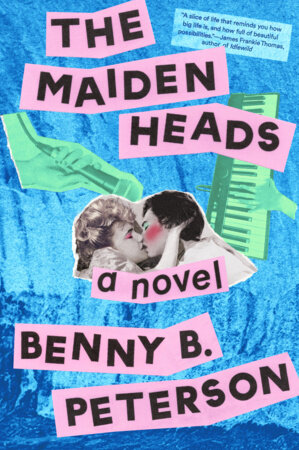
The Maidenheads by Benny B. Peterson: 9798217047147 |  PenguinRandomHouse.com: Books 

 The Maidenheads by Benny B. Peterson, 336 pages

 A story about music, finding yourself in queerness, and rekindling a first love. 

This book will probably not be for everyone, it is messy, the protagonist is largely unlikable and the relationship that the novel follows is disheartening. However, I loved this book as it felt like a very accurate and honest depiction of being queer and navigating relationships. I thought the writing was beautiful and I felt like I was inside the main characters head, for better or for worse. 

Keeper of Lost Children

 Keeper of Lost Children by Sadeqa Johnson (2026), 464 pages

I loved this book. You should go read it now. 

The historical novel follows three stories revolving around the left behind multi-racial children in post-war Germany. This is a topic I had never really thought about and was surprised on how big an issue it was. Many African American service members had relations with white German women. Due to various issues, a lot of their children ended up in orphanages in Germany. It is loosely based on the real-life story of an African American woman, Mabel Treadwell Grammer, whose husband was stationed in Mannheim and how she (almost) single-handedly adopted and found homes in the US and Germany for hundreds of orphans. It is a fascinating part of history and Johnson does an excellent job of telling the story from various points of view, helping you to grasp the full consequences of these relations and adoptions. 


Tuesday, September 1, 2026

No Matter What


No Matter What 
by Cara Bastone (2026) 312 pages

Roz, her husband Vin, and Vin's brother were all in a terrible accident about a year ago. They all lived together after the accident because Roz and Vin felt that Vin's brother shouldn't be alone while recovering. Ultimately, the brother‒who is Roz's best friend, by the way‒moved out on his own, but Roz and Vin no longer connect. Roz gets hints that Vin wants to leave her and she's desperately sad, but she can't tell him, and she won't tell his brother, either. She ends up taking up figure drawing, which brings her new friends, new confidence, and a great distraction from her worries and her PTSD.

As often happens, I can't figure out why no one is really communicating what they've thinking, even to the people they love the most. Maybe that's why the book worked for me: far too often that's what happens in real life. I wanted to see what was going to happen.