Sula by Toni Morrison (1973) 174 pages

Sula by Toni Morrison (1973) 174 pages
Rusty Brown by Chris Ware (2019), 356 pgs.
Loneliness. Sadness. Snow.
Rusty Brown, our titular character, is a young boy attempting to escape his isolation and bullying through his love of superheroes--namely Supergirl. Other characters we see facing their own struggles with belonging include Woody Brown, Rusty's father; Joanna Cole, Rusty's teacher; Chalky White and his sister Alison, the new kids at Rusty's school; and Jordan "Jason" Lint, Rusty's bully. This graphic novel is defined by its particular art style and dark themes.


As COVID-19 starts ravaging the world, so do the racist allegations that Chinese people (and all Asian Americans, by association) are to blame. It's against this backdrop that Cora Zeng witnesses her sister get pushed in front of a subway car, one of many officially ignored deaths of women in Chinatown in 2020. And Cora would know, as she's a crime scene cleaner tasked with removing all traces of these women and their gruesome deaths (all ruled suicides, incidentally) from their apartments. However, while dealing with the gross details of her job and the grief over her sister, Cora doesn't have time for traditions like the Hungry Ghost Festival. But ignoring the hungry ghosts is a mistake, as Cora soon learns.
This is a fantastic horror novel that combines supernatural horror with the very real horrors of racism and sexism in a terrifying and creative way. An excellent book for fans of The Eyes Are the Best Part or the works of Stephen Graham Jones.

I listened to the audiobook before I read the book. As I read, I could hear Coates' lyrical voice in my head again. The book is written to his then-15-year-old son. He wants to share his life and thoughts with him. It's not exactly "the talk" that a young Black male needs to hear, but much more than that.
Coates talks about growing up in Baltimore. As a child in a family that read books, he feels that he was slow to learn to navigate the streets, but once he learned, he realized how easily he could lose his life, whether by gangs or by the police. Coates is cynical about his boyhood education, but later, when he attended Howard University, he found it to be a Mecca, a "crossroads of the Black diaspora." At Howard, a Black didn't need to "represent to other people"; one could study and write and live in a world away from those who "think that they are white." Coates seemed especially intrigued with the writings of Malcolm X, but numerous others as well.
The safety of the Black body is uppermost in Coates' mind, whether considering himself or his son or his friends. He lists out the names of Blacks who have been killed by police who were not held responsible; his son is now seeing the injustice in these murders, as well.
This small, powerful book addresses the tightrope that Blacks navigate in our society and much more.

Korean American college student Ji-won is still dealing with the aftermath of her father abruptly abandoning his family when her mom gets a new boyfriend. George is white, brash, and casually racist, but Ji-won's mom seems to love him, so what choice does Ji-won have but to go along with it? Meanwhile, Ji-won's struggling at college, as she's lonely and doesn't have the great grades she's used to from high school. As George's rudeness escalates, Ji-won's mental state deteriorates to the point that she becomes fixated on his bright blue eyes and all of the hatred they represent to her.
This is a really fantastic twist on psychological horror, seeing the villain's descent into madness from her own point of view. It's also a great example of social horror, seeing how all of the microaggressions affect Ji-won's mental state. As you could expect from the title and cover (which will likely be fueling my nightmares for months to come), there's a bit of cannibalism in this book, and while it's not something you want to read while eating, it wasn't nearly as stomach-churning as I feared it would be. I was pleasantly surprised by this one!
This book will be published June 25, 2024.
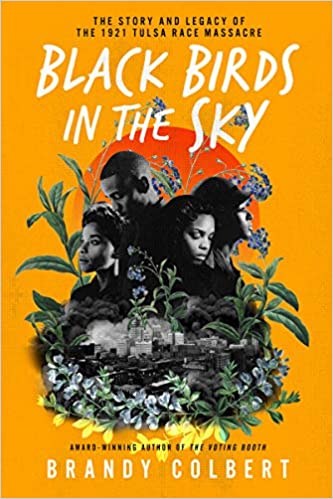
Black Birds in the Sky: The Story and Legacy of the 1921 Tulsa Race Massacre by Brandy Colbert, 224 pages.
Urn Burial by Kerry Greenwood (1996) 187 pages

Others in attendance are a Major who mistreats his wife, two young men, a woman trying to match up her athletic daughter with one of the men, a woman who is a romance writer, a poet, and two old women. There are a number of servants and employees, as well as an eccentric old guy named Dingo Harry, who likes to travel freely on others' properties, including the massive caves underneath.
Suspicious things continue to occur: Phryne, riding a horse on a path her host usually took, getting thrown when the horse runs into a trip wire; warning letters to the host; small urns being left in the some of the guests' rooms; and then a servant strangled to death (but the body removed before anyone but Phryne had seen it). What is going on? Phryne teams up with Lin Chung this time, with the added intrigue of the house being cut off by floodwaters, and a large group trip into the nearby caves.

This fictionalized historical graphic novel contains some characters that are amalgams and some that are real people. One real life black officer given some focus in the story is jazz band conductor James Reese Europe. Max Brooks explains at the end that he originally wrote a screenplay to tell the story of this African American regiment that fought in WWI. When no studios or producers bought it he eventually turned it into this graphic novel. It is exciting like a good historical movie. Life and death for the soldiers in the trenches and no man's land of France is, of course, gruesome. Racism is faced throughout their training in America and assignments "Over There." The popular song of the period How Ya Gonna Keep 'em Down on the Farm is sung by the soldiers many times, and it got stuck as I heard it in my head. The song takes on special meaning as the men think about how they will be treated when, or if, they return to America. The Harlem Hellfighters fought separately, but under French command, as top American military personnel routinely worked to repress them. The narrative structure of this story kept reminding me of the Civil War movie from 1989 Glory. This regiment in WWI fought valiantly and achieved much that sadly has often not been taught in American history.
Jackal by Erin E. Adams, 352 pages.
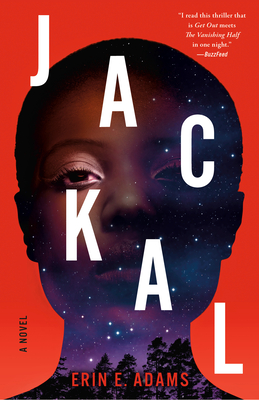
Liz Rocher returns to her hometown in Johnstown, Pennsylvania only very reluctantly. But it's her best friend's wedding, and after a traumatic breakup in New York she has to prove to herself she can still trust her own judgement. Then her best friend's daughter (who is also her own beloved stepdaughter) goes missing in the woods the night of the wedding, and the only sign is a bloodstained scrap of her dress. In the desperate search for the little girl Liz learns that she is not the first little black girl to go missing in those woods, and if she ever wants to find her Liz is going to have to get to the bottom of dozens of disappearances and deaths stretching back decades, including an encounter from her own youth that left her scarred.
This book is a really compelling piece of social horror, and an engaging mystery. For the first half of the book or so I wasn't even certain what genre it was going to turn out to be. And there is just so much plausible evil in this book that I wasn't certain who the villain was until the book revealed it. This was a really interesting read, and I would definitely recommend it for fans of the genre.
The Perishing by Natasha Deón, 304 pages.
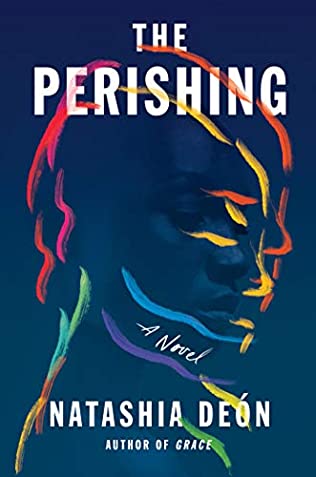
Lou is a young Black woman who wakes up with no memories and no clothes in an alley in Los Angeles in the 1930s. She winds up in a good foster home that teaches her to value her education and works to make friends in her community and become a journalist, despite her unknown origins and a few strange abnormalities (like having to conceal the fact that she heals very, very quickly). We, the readers, know Lou is some sort of immortal because there are chapters narrated from a future life of hers, but Lou herself has no idea.
I think I may have liked this book better if it's synopsis wasn't so misleading. Most of the cool science fiction stuff that drew me to it only happens in the last 5%-10% of the novel, so it's mostly just historical fiction with occasion intercessions from the future that mostly felt like they gave the author an excuse to soapbox about various issues from a character with more perspective for a few chapters at a time. As a historical fiction novel it's alright, although even I (with know particular specialization in the 1930s) caught a few minor inaccuracies. Overall I'm just not entirely sure what this book wanted to be, and I'm not sure I would recommend it to someone else.

With a title that starts with "how to," one would expect this book to read like a self-help guide. It doesn't. Instead, Kendi unpacks the ways in which racism impacts the world around us in this book, providing clear definitions and examples of racist and antiracist policies and ideas. Intertwined with these essential history and civics lessons are stories from Kendi's personal story, explaining the ways that he is continuing to uncover the racist ideas that have permeated his own life and strive toward an antiracist life in the future. By doing so, he makes this goal a realistic one for his readers.
This is one of those books that was on my "yeah, I really should read that" list for quite a while. I still feel like I should have read it before now, but I listened to the audiobook of this (available through Libby, and read by the author), which was released this year. It's based on the paperback version of the book, which is filled with revisions, notes, and additional insight that wasn't available when the book was originally published in 2019. So, in that sense, I'm glad I waited to hear these additions, which really do bring more context to the world in which we live.

This second half of Jemisin's Great Cities duology (after The City We Became, which you REALLY need to read before picking up this one) finds the living avatars of New York and its boroughs struggling with being a newly alive city, one with a supernatural Lovecraftian horror still looming over Staten Island and threatening to destroy the newborn New York. In a less supernatural horror, a fearmongering mayoral candidate who aims to "Make New York Great Again" is stirring up fascists, and threatening to destroy what really makes New York great: it's diversity, creativity, and individuality.
Jemisin writes in an afterword that she intended this to be a trilogy, but when she started it, she didn't see COVID-19 on the horizon (but who did?), nor did she realize how close to home this series would hit. So two books is where this ends. But you know what? While it does hit disturbingly close to home, it's also an excellent duology, and this is a fitting end. I enjoyed it, and I loved that it had all of the Lovecraftian horror while fighting all of Lovecraft's hatred. A great duology, and I can't wait to read what Jemisin writes next.
Nine Shiny Objects by Brian Castleberry (2020) 319 pages

Most of the characters highlighted are fully fleshed out with a compelling storyline. Often I jot notes as I read, but I didn't this time when it would've helped me make more connections between characters and events. After finishing the book, I immediately reread it. Liked it, but would definitely benefit from a group discussion!

Nella is the only "professional" black employee at Wagner Publishing when Hazel is hired. They end up sharing cube and Nella is relieved to have an ally. But is Hazel what she is looking for? Hazel inexplicably takes several stances that seem to undercut Nella, Maybe part of the problem Nella's jealousy that Hazel seems to be involved in all kinds of cool projects and has caught the bosses eye. When notes telling Nella to leave he company show up anonymously on her desk, is is possible Hazel is behind this? The situation evolves into Nella distrusting Hazel but then some new information becomes known and the distrust turns into something closer to a conspiracy.
For me, the book started out as one thing but then shifted gears in the middle. I'm not sure I really followed it but I did enjoy the question that sticks with me...how is progress made in the area of racial equality?

White Fragility has started me on a journey that I don't think I can do justice describing. First, the definition of racism used by author Robin DiAngelo is different from what I expected. A white person, like herself (and myself), cannot avoid being a racist. Being a racist doesn't necessarily make one a bad person; it's an inevitable result of growing up white in our society. DiAngelo, a diversity trainer and consultant on racial and social justice issues, sees her own shortcomings even after working on this issue for over 25 years. She says it's necessary for whites to learn to move along the continuum to become less racist, a mission always in progress. White fragility is a force that tries to keep the status quo between whites and people of color. White fragility causes whites to become confused, defensive or indignant when our racism is pointed out. DiAngelo gives examples of behavior and words that a white person wouldn't instinctively know are racist, explains why these are racist, and gives us examples of how to combat our racism.
The book is well-footnoted, with good resources for additional reading.


 The New Jim Crow: Mass Incarceration in the Age of Colorblindness by Michelle Alexander, 312 pages.

