Showing posts with label graphic biography. Show all posts

Monday, March 30, 2026

Will Eisner: A Comics Biography

 Will Eisner: A Comics Biography by Stephen Weiner and Dan Mazur (2025) 300 pages 


Having read some of his autobiographical graphic novels (or autobiographical notes included in books that are not autobiographical works) I knew about his WWII service and his daughter dying leading to his crisis of faith. Otherwise, I wish there was more here. Eisner's youth and early career were full of interesting stories. I ate that part of the biographical comic up! Chapter 4, going into his business partnership with Iger, also kept the behind-the-scenes nuggets very interesting. Beginning with Eisner creating The Spirit, a private detective hero without a circus costume, the details become more slim. Through his later life, having a wife and kids and inventing the term "graphic novel," I wanted to know more, much more! The art style does a great job of giving multiple homages to Eisner.

Monday, March 23, 2026

Josephine Baker and Orlando

 Josephine Baker by José-Louis Bocquet with art by Catel (2017) 568 pages

I like that this writer/artist pair make hefty graphic bios. I previously read their graphic biography about Alice Guy. They are able to include so many details and episodes from Josephine's life. I've previously read the biography about Josephine's espionage work for the British and French Resistance during WWII. This graphic book provides a lot more depth about her early life and her work as an entertainer. The WWII period, by contrast, is quite brief. Her later life related to her raising the "Rainbow Tribe" of orphans was fascinating too. The biographical notes at the end on secondary historical figures that crossed paths with Josephine are extensive. In fact, I thought some did not need to be included, since they barely played a role in her story.


Orlando adapted by Susanne Kuhlendahl (2026) 224 pages

I really enjoyed Sally Potter's movie version of Orlando. And this is one of two graphic novel adaptations of Virginia Woolf's queer story coming out this year. I had not read any Woolf novels in school, so it is only through recent Wiki research that I learned Woolf is part of the Modernist literary movement with "stream of consciousness" passages. Kuhlendahl's adaptation definitely keeps this style front and center. However, instead of Orlando breaking the fourth wall like in the movie, Woolf, the "biographer," is present on the page and comments on being a biographer of this character. There is no scientific or magical explanation for how Orlando is able to live more than 300 years, nor for how Orlando transforms from a man into a woman. We are simply asked to ponder "what if" this is true. The story is episodic with changing art styles. It is full of commentary on gender, poetry, love and life, and changing fashions. I thought the chapter set in the Victorian 19th century was the weakest part and the finale set in the early 20th century (Woolf's era), while things truly move at a faster pace, still felt rushed after the depth of the earlier historical periods.

Friday, March 14, 2025

A selection of March graphic novels

 Alice Guy: First Lady of Film by Jose-Louis Bocquet with art by Catel Muller (2021) 400 pages


I have read several graphic biographies. They are often fairly slim and only highlight a few moments from the person's life. This one has over 300 pages to graphically tell the story of Alice Guy's life. Her childhood was fascinating and international. The episodes showing her early positions as stenographer/secretary does not ignore the sexism of the male workforce. Her work relationship with Gaumont who takes a photography shop in Paris into the emerging, innovative motion picture industry was stern, but supportive. Rather than documenting events or making magic trick films, Alice had ideas for fictional films and directed many, many herself, though only a few still survive. In the early days of film people were already experimenting with synchronized sound. Alice directed several early "music videos" too. She meets and works with Herbert Blaché who would become her husband. They go to America. They have two kids. He is unfaithful. They found their own film studio. She continues directing, but then fortunes turn. It is brief, but still fairly detailed in tracing her later life. The writer then provides 75 pages of a timeline and biographical notes. Overall an excellent book.

Guardian of Fukushima by Fabien Grolleau with art by Ewen Blain (2021) 144 pages


I also read the free comic book day preview a couple years ago and it stuck in my mind. I enjoyed reading the full graphic novel. The mythological elements mixed with the true story works well. The writing and the art complement each other so well. As the bonus material at the end sums up, it was a triple tragedy of earthquake, tsunami, and nuclear disaster at Fukushima in 2011. Naoto Matsumura caring for all the pets and farm animals left behind in the irradiated zone is so heartwarming. Based on the preview, I expected more of the story to be about the day to day life of caring for these living creatures that share our home. The final chapter actually involves Naoto being a spokesperson campaigning for less reliance on dangerous nuclear power.


The Library Mule of Cordoba by Wilfred Lupano with art by Leonard Chemineau (2021) 263 pages


Since I work in a library, you might expect this is right up my alley. You'd be right. I loved this comic adventure. I mean comic as in funny haha. Historical fiction with well-drawn characters. The twists and turns that the three heroes and the mule encounter on their journey/escape kept surprising me. Zealots in Cordoba in the late 900s begin burning books that do not fit their interpretation of religious texts. A librarian and two assistant copyists escape with about 100 books overloaded on a stubborn mule, the worst mule in the world. Cunning misadventures boosted by knowledge from these books helps the escapees survive and narrowly avoid capture or death. The storytelling is complex with multiple flashbacks and details about the time period. I think this was planned as a complete work, not separate issues/chapters that were later bound together. The art is incredibly emotive and humorous. The writer and artist obviously love books, and knowledge, and libraries. There is a fantastic afterword with a bit more history too.

The Outside Circle: A Graphic Novel by Patti Laboucane-Benson with art by Kelly Mellings (2015) 128 pages


The art work took awhile to grow on me. The Outside Circle is about indigenous/aboriginal men from broken homes in Canada. Once the main character Pete is in the prison infirmary and the In Search of Your Warrior program is offered as rehabilitation the story really takes off. The writer is a researcher of native counselling services in Alberta, so this is a real service she wants to share with the world. The men, many with gang affiliation, learn about their roots and learn to break generational trauma from residential schools and families being torn apart. There is a symbolic use of masks throughout. Pete imagines a mask covering his face when he uses violence. Later, the Warrior program has the men make plaster masks of their faces to contemplate their true inner person as they near graduation. Pete finds the strength to stop his gang involvement and reconnects with his younger brother, an uncle he never knew, and a daughter he had rejected. It is uplifting and inspirational.

Friday, February 7, 2025

A selection of February graphic novels

 Marie Curie: A Quest for Light by Anja C. Andersen and Frances Andreasen Osterfelt, with art by Anna Blaszczyk (2018) 136 pages


The writing is succinct. The art on every page looks like collages with paper cut outs of different colors and textures. Diary entries and letters make this biography very personal. I really enjoyed the creativity of this one.


Heartstopper: Volume 1 by Alice Oseman (2018) 288 pages


I'm working on the Hoopla challenge for 2025 while focusing on reading more graphic novels this year. February is Romantic Reads.  I flew through this first volume in one day. There is a lot of space between the panels on many pages and not much text in speech, thought, or mobile texts. Very creative how it tells the story visually as often as it does. I have not seen the TV series yet, and I'll probably wait to continue this comic series.


Laura Dean Keeps Breaking Up with Me by Mariko Tamaki and Rosemary Valero-O'Connell (2019) 289 pages


Compared to the one above, I liked the art and writing a bit better. The pages are denser with emotive visuals. Freddy Riley has her group of queer friends in high school. Laura Dean doesn't see their relationship as monogamous. Laura has so much extrovert energy and doesn't seem to care that she discards Freddy so easily when she wants attention from others. Freddy is so enamored with Laura's brief moments of attention that she doesn't notice her other truly good, close friends, or the new girl working several part-time jobs in town to pay for college. Freddy's eye opening journey is pretty special.


The Puerto Rican War: A Graphic History by John Vasquez Mejias (2024) 112 pages


I appreciate the timeline and interview with the author that is included at the end. It is a short story of Puerto Rican history that I was not familiar with before. The author makes prints from woodcuts. The text is challenging to read at times, but with concentration it could all be understood. The unique style is visually expressionistic and very detailed.


Deep Cuts by Kyle Higgins and Joe Clark with various artists (2024) 312 pages


I loved this! #1 in New Orleans 1917, the art and story are amazing, looking at the roots of modern jazz. #2 in Chicago 1928, a novice Broadway songstress has an adventure that references The Wizard of Oz. You begin to see that there are threads that connect the stories. #3 in Kansas City 1940, Alice, a young black girl, tries to solve the mystery of why her dad stopped his music career. This includes research at her local library! #4 in New York City 1956, is documentary-like looking at the jazz scene and the influence of harder drugs. #5 in Los Angeles 1968, shows threads connecting some of the previous stories, but is more countercultural and the art took me longer to embrace. #6 in multiple locations 1977, ties all the issues together. Characters and themes return. Jazz history comes full circle. Oh, and the lead sheets at the end are a cool bonus. I, too, wonder if there are audio tracks somewhere of this music.

Saturday, January 21, 2023

Ducks: Two Years in the Oil Sands


Ducks: Two Years in the Oil Sands by Kate Beaton, 430 pages

I know that Kara has already blogged about this graphic novel, so this is all I'm going to say: It is a fascinating, infuriating, and emotional journey, and everyone should take the time to read and absorb it.

Saturday, December 17, 2022

Ducks

Ducks: Two Years in the Oil Sands by Kate Beaton, 430 pages

In this honest and earnest graphic memoir, cartoonist Kate Beaton recalls the time she spent working in the oil sands of Alberta, Canada, to quickly earn money to pay off student loans. Somehow, in this single volume of black and white comics, Beaton is able to portray the stark landscape of Alberta, the environmental impacts of the oil industry, the tough working conditions for all (but particularly for the grossly-outnumbered women) in the oil sands, the difficult situations that lead so many Canadians from the eastern provinces to head west for work, and an incredibly nuanced look at the people who have made the journey. And all of this is secondary to Beaton's own story and experiences, which is told candidly and unflinchingly. I can see why this book is on so many Best of 2022 lists.

Friday, December 9, 2022

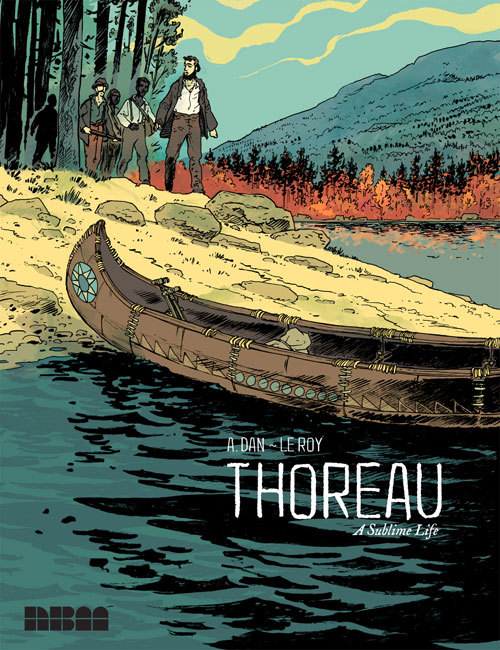
Thoreau: A Sublime Life

Thoreau: A Sublime Life by Maximilien Le Roy with art by A. Dan (2012) 88 pages

I loved this. Super short read since words are used sparingly. Many pages and panels visually show the world in which Thoreau lived with no dialogue or quotes from his speeches. The words Le Roy chooses to highlight are perfect for emphasizing Thoreau's thoughts through his adult life. In 1845 he begins to construct his cabin by Walden pond. Walden and the time he was arrested for not paying taxes as a protest of America's slavery are perhaps the most famous moments of his life. But these are very brief parts of it. 

Thoreau spoke against slavery many times and assisted with the underground railroad for a short time. We hear him speak against Capitalism. We see him express interest in Eastern philosophies. We see his enthusiasm for nature. This book also traces the contemporary events of abolitionist John Brown. We learn Thoreau's thoughts on Brown, which might surprise those who oversimplify his pacifism. Then we see the decline of his health due to tuberculosis. 

Following the sources of the quotes there is an excellent essay with a Thoreau specialist, Professor Granger, who spoke with author Le Roy.
 

Monday, December 5, 2022

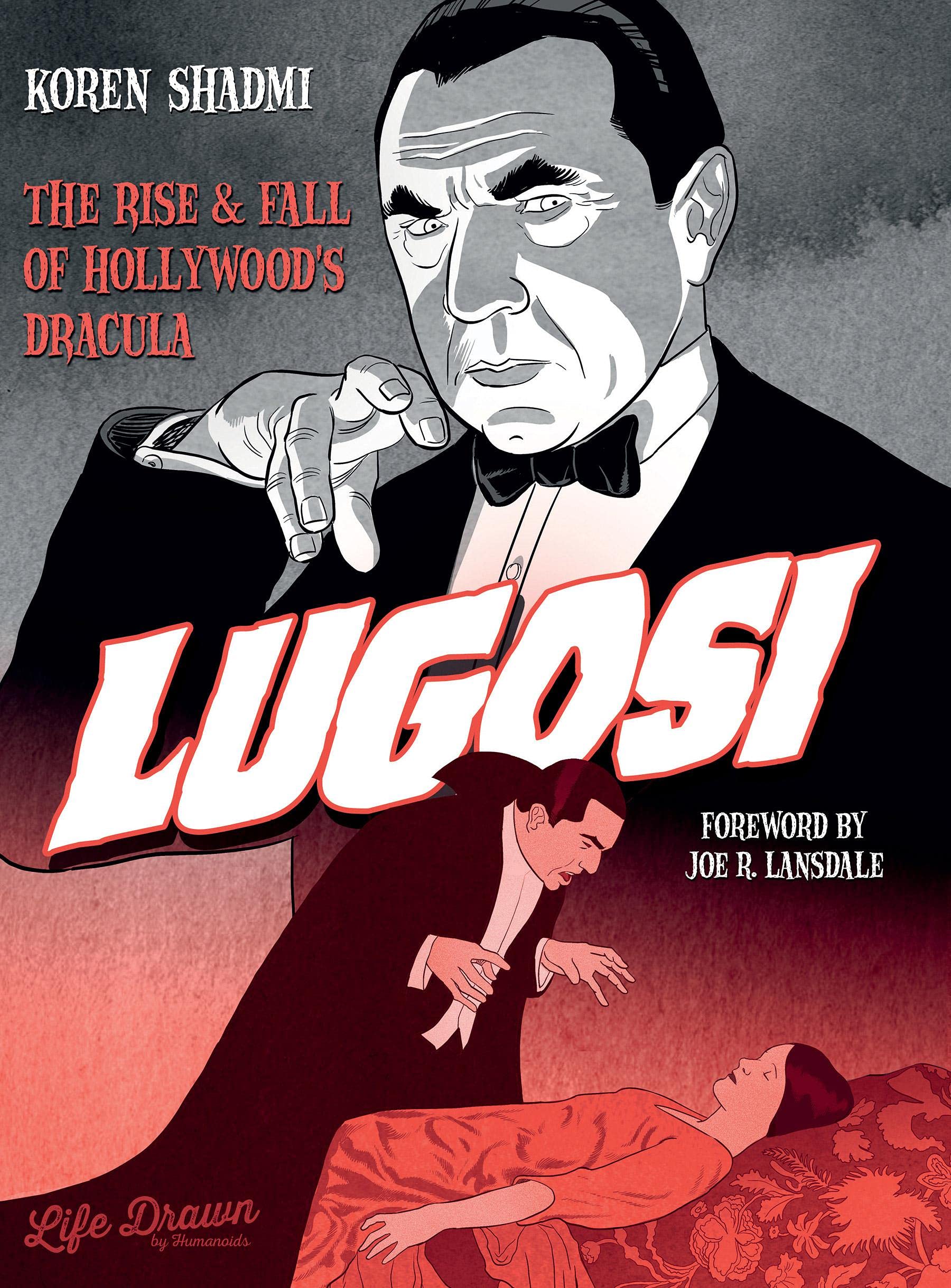
Lugosi: The Rise and Fall of Hollywood's Dracula

Lugosi: The Rise and Fall of Hollywood's Dracula by Koren Shadmi (2021) 161 pages

I have previously read Shadmi's graphic biography of Rod Serling, the creator of The Twilight Zone. I'm trying to get through several of these relatively short graphic novels available on Hoopla to complete my reading goal for the year. I was excited to see this graphic biography since I've seen all the old Universal horror films. I must admit, though, that I'm more of a fan of Boris Karloff than Bela Lugosi. Earlier this year I also read a biography of Michael Curtiz, the director of Casablanca and another Hungarian transplant to Hollywood. The structure of this book is classic. We start near the end of Bela's life when he was in a state rehab facility to fight his morphine addiction and flashback several times to tell about key moments in his life and career. The present is in sepia tones and the flashbacks are in black and white. The art work is realistic and energized by light and shadow. It fills in details I wasn't previously aware of, but follows an unsurprising arch with the rise and fall storyline. Solid and enjoyable.
 

Tuesday, November 29, 2022

Number One is Walking

Number One is Walking: My Life in the Movies and Other Diversions by Steve Martin, art by Harry Bliss, 256 pages

In this light and charming memoir-of-sorts, Steve Martin shares a few anecdotes from some of the many movies he made over the course of 40+ years in showbiz. What makes this a fantastic book, however, is the fact that New Yorker cover artist Harry Bliss provides the artwork that turns these short anecdotes into comic-strip-esque vignettes (the many appearances by Bliss's dog, Penny, is the cherry on top). About halfway through the book, however, the memoir stops and the rest of the book is filled with single-page "diversions," (written by Martin and illustrated by Bliss) that are guaranteed to raise a giggle or two. The memoir and the "diversions" make for an odd pairing, but otherwise, it's a delightful book. I'll have to check out their previous collaboration, A Wealth of Pigeons.

Monday, October 26, 2020

Woman Rebel


 Woman Rebel: The Margaret Sanger Story by Peter Bagge  104 pp.

This graphic novel biography of Margaret Sanger and her work to legitimize sex education and birth control during the early part of the 20th century in an effort to save women from having no control over too many children. After watching her own mother's health destroyed by 18 pregnancies, many of them miscarriages, Sanger became a crusader for the rights of women to control their reproductive health and was willing to be jailed multiple times in the process. Her efforts led to the creation of Planned Parenthood which is still battling adversaries who want to deny women's rights. Bagge's artwork is energetic but portrays Sanger as physically unattractive. Extensive footnotes provide historical documentation and includes photographs which show Sanger as a pleasant looking woman.