Showing posts with label race and racism. Show all posts

Friday, July 24, 2026

Interior Chinatown

Interior Chinatown by Charles Yu (2020), 270 pgs. 

Pan out on Chinatown. See the streets bustling with activity, with people performing the roles of their daily life. Zoom in. Close-up on Willis Wu in the background, today playing Generic Asian Man. Willis has always been an extra, an unnamed Asian character on the call sheet, but he longs to become the mystical Kung Fu Guy, the pinnacle of roles here in Chinatown. Casting for Kung Fu Guy is competitive--it is the role Willis sees all his peers aspiring toward--but Willis knows his time is coming soon. As he performs his role in Black and White, the long-running cop show offering bit parts, he meets someone who changes his career trajectory--and his life. Perhaps Willis does not have to play these roles forever. 

This book is masterfully written. The lines between performance and reality are blurred from the start, and the confusion that readers feel in discerning between the two mirrors that of the characters. Charles Yu weaves history and stereotypes and intersectionality all into a narrative somehow through metaphor and plain direct language. Readers cannot ignore the message of the harm in believing in and contributing to the propagation of these "roles" that Asian American people feel they must play in order to make it. Highly, highly recommend


Friday, May 15, 2026

Interior Chinatown

 Amazon.com: Interior Chinatown: A Novel: 9780307907196: Yu, Charles: Books

Interior Chinatown by Charles Yu, 288 pages.

Willis Wu is always playing the role of "Generic Asian Man," and in the world of Black and White, a procedural cop show eternally in production, he can't expect much more. Secretly he longs to be Kung Fu Guy, the ultimate for Asians who have made it. But these lofty, unreachable aspirations are just a restriction of a different sort, and Willis doesn't know how to dream a bigger American Dream.

I first reviewed this book here five years ago, and I definitely liked it better the second time. Perhaps it is more experience with contemporary literary fiction, but I found myself much more okay with the uncertainty on a reread, which left me in a better place to appreciate how phenomenal this book is thematically. Which I maybe should have guessed, since I've been thinking about it periodically for five years. This book deals with racism, assimilation, and the myth of the model minority in a way that is not only nuanced and thoughtful, but also frequently funny. Willis uses the structure of Hollywood to make sense of the nonsensical in life in a way that is very interesting, even if I found it deeply confusing on my first read. I would definitely recommend this book. 


Tuesday, April 28, 2026

Run: Book One

 Run: Book One by John Lewis and Andrew Aydin with art by Nate Powell and L. Fury (2021) 152 pages

This continues in the same style as John Lewis' graphic trilogy March, which I enjoyed. Well researched and intensely dramatic. Covers the three years John Lewis was chairman of SNCC, but the book is not just concerned with SNCC business. The coverage of events is broadly about the changes in the Civil Rights Movement during the mid-60s.

Thursday, April 23, 2026

Two graphic novels for fans of the movie Sinners

If you are a fan of Ryan Coogler's 2025 movie Sinners, these two graphic novels have elements that you might enjoy.

The Smell of Starving Boys by Loo Hui Phang with art by Frederik Peeters (2017) 112 pages

I don't fully understand what happened in this story, least of all the meaning of the title, which is used twice by one character. Still, if you were a fan of the movie Sinners, and one of many who want a further story exploring the Choctaw vampire hunters who are chasing Remmick, this might fill that niche. Instead we have Comanche who are fighting supernatural threats in 1872. The story is definitely dispelling the heroism of whites in the pre-settler American West. Our protagonists are a perverted surveyor who considers the West virgin land to be taken, a scam artist gay photographer, and a young woman disguised as a boy to escape her patriarchal family. There is a vampiric bounty hunter, wild mustang stampedes that are like natural disasters, and a silent Comanche in touch with the supernatural forces at play. The large format hardcover has gorgeous art with lots of horizontal vistas. Translated from French.

Bluesman by Rob Vollmar with art by Pablo Callejo (2008) 208 pages

This story is structured like a traditional twelve bar blues song, with three sections each made of four chapters. There is woodcut style artwork, which fits the late 1920s setting. Two itinerant musicians, Ironwood and Lem, are looking for a place to perform as well as room and board. Racial tensions lead to murders in a rural cabin and Lem, who is innocent, must go on the run. The middle section gets into the investigation of the crime scene. There is a black Sheriff of the county, who is trying to see justice done even as rich and powerful whites call on mob violence. Lem falls in with some railroad hobos, but the mob and the Sheriff stay on his trail. Some historical analysis of blues musicians is interspersed in the story. The dramatic thrills would also be appreciated by fans of Sinners.

Tuesday, April 14, 2026

The Vanishing Half

 The Vanishing Half by Brit Bennett, 343 pages.

Mallard, Louisiana is a black town obsessed with light skin. The Vignes twins feel crushed by the town, but after they run away from home the identical twins separate and begin leading lives that would be unrecognizable to each other. Desiree goes ends up in Washington DC, where she marries an abusive husband. She eventually runs back to Mallard with her extremely dark-skinned daughter, and learns to survive the life she once fled from. Stella takes a path that is simultaneously safer and more dangerous, passing as white to completely that her own husband and daughter don't know her secret. Many years later, the cousins come back together, and everyone has to reckon with the strange shapes their lives took. 

This book was very interesting, and I can see why it got so much attention when it came out a few years ago. The four perspectives across 40 years allows for a very nuanced examination of race in America. That being said, I do think the first half of this book is stronger than the second. It starts very strong, but then feels as if it just sort of fades out until the book ends. Still, I do think this is worth reading. 

Monday, March 23, 2026

Josephine Baker and Orlando

 Josephine Baker by José-Louis Bocquet with art by Catel (2017) 568 pages

I like that this writer/artist pair make hefty graphic bios. I previously read their graphic biography about Alice Guy. They are able to include so many details and episodes from Josephine's life. I've previously read the biography about Josephine's espionage work for the British and French Resistance during WWII. This graphic book provides a lot more depth about her early life and her work as an entertainer. The WWII period, by contrast, is quite brief. Her later life related to her raising the "Rainbow Tribe" of orphans was fascinating too. The biographical notes at the end on secondary historical figures that crossed paths with Josephine are extensive. In fact, I thought some did not need to be included, since they barely played a role in her story.


Orlando adapted by Susanne Kuhlendahl (2026) 224 pages

I really enjoyed Sally Potter's movie version of Orlando. And this is one of two graphic novel adaptations of Virginia Woolf's queer story coming out this year. I had not read any Woolf novels in school, so it is only through recent Wiki research that I learned Woolf is part of the Modernist literary movement with "stream of consciousness" passages. Kuhlendahl's adaptation definitely keeps this style front and center. However, instead of Orlando breaking the fourth wall like in the movie, Woolf, the "biographer," is present on the page and comments on being a biographer of this character. There is no scientific or magical explanation for how Orlando is able to live more than 300 years, nor for how Orlando transforms from a man into a woman. We are simply asked to ponder "what if" this is true. The story is episodic with changing art styles. It is full of commentary on gender, poetry, love and life, and changing fashions. I thought the chapter set in the Victorian 19th century was the weakest part and the finale set in the early 20th century (Woolf's era), while things truly move at a faster pace, still felt rushed after the depth of the earlier historical periods.

Tuesday, February 17, 2026

Surrounded

Surrounded: America's First School for Black Girls, 1832 by Wilfred Lupano (2021), Illustrated by Stephane Fert, 142 pgs.

In 1832, Sarah Harris entered the all white class of Prudence Crandall's boarding school. As a young Black girl in a time when slavery was only abolished in some states--like her home state of Connecticut--a formal education had not previously been available to Sarah, until she asked to join this class. After racist outrage followed Sarah's admittance, Ms. Crandall made the decision to make her boarding school for Black girls only. Girls from across the state traveled to learn together, and they faced many barriers from the white community, who stopped them from getting school supplies or other items in town, and from the local legislature, who passed laws making it illegal for Black girls to travel to the Crandall school. Nevertheless, Sarah and her classmates continued to learn and grow and challenge the stereotypes they had been taught.

This beautifully-drawn, fictionalized account of a true story is a quick, yet impactful read. The art style is very whimsical, but it also does a good job of emphasizing the gravity of dark moments. The story, at times, felt like it was teetering on the edge of being a white savior story focused on the teacher, but I do think the white author tried to avoid going that way entirely by including more moments focused entirely on the Black students. Overall, I would definitely recommend


Tuesday, June 24, 2025

A selection of June graphic novels

The Man in the McIntosh Suit by Rina Ayuyang (2023) 212 pages

1929, Bobot is one of many Filipino-Americans working as migrant fruit pickers in rural California. The synopsis on the back cover sells it as a "take on Depression-era noir featuring mistaken identities, speakeasies, and lost love." I never got the feel of noir. It starts a bit like a Steinbeck story. It is about immigrant dreams and whites not being welcoming. Bobot finds Manilatown in San Francisco as he searches for his wife, so most of the characters are Filipino-American. There is mistaken identity, a gangster owned speakeasy, and Bobot's lost love, but none of it developed as expected. Ultimately, that is a good thing. I was willing to go on the story's journey. How and why Bobot was misled into traveling to San Fran, the unexpected queer elements, and the A side and B side of music tracks from the 1920s provided as suggested listening made it an enjoyable read. The art feels like rough sketches and most sections are in a monochrome smudgy blue. I didn't like it at first (I think it is the main thing that doesn't read as noir), but I let my harsh judgment fade. The cover seemed more action packed and looks good with the multi-color scheme, but don't expect that on the inside and some surprises are in store for you.

The Magic Fish by Trung Le Nguyen (2020) 256 pages

The art style is so crisp and clear. And the color tells you exactly where you are in the story. Red for present day. Yellow for memories. And Purple for the fairy tale stories. The flow of thoughts, speech, and action on each page is so well done as well. Young Tien helping his parents, his mother in particular, learn English by reading fairy tales together works brilliantly. I appreciated the Author's Note and Between Words and Pictures essay at the end, the experiences of Vietnamese immigrants that are personal to the author and the fairy tales all blend very well. Two variations on a Cinderella tale are each distinct enough and full of surprises. Then a Little Mermaid tale is shared. Meanwhile, Tien is uncertain how to tell his parents that he is gay. His two best friends at school are accepting of who he is. When his parents are still more comfortable speaking Vietnamese and Tien has grown up with English, how do you communicate? The answer could lie in fairy tales!

ODY-C: Cycle One by Matt Fraction with art by Christian Ward (2016) 400 pages

I'll start by writing about the bonus essays at the end. The Kyklos: The Making of ODY-C is a treasure. I really appreciated Dani Colman's multiple essays. Anybody reading the full The Odyssey would also gain a deeper appreciation of Homeric verse, manly tears, the role of wives, the parallels between Penelope and Scheherazade, how storytelling changes lives, narrators, Clytaemnestra, and gender bending. I love that Dani describes the graphic adaptation as "less a gender-bent Odyssey than it is an Odyssey-flavored gender pretzel." ODY-C: Cycle One is kaleidoscopic. It is gruesome. It is X-rated at times. Not so different from The Odyssey. This version takes place in space with aliens and future tech for a twist. Issues 1-5 adapt the first part of Homer's epic poem. Further issues to adapt the rest of The Odyssey were planned at one point, but now almost ten years later a continuation seems unclear. Issues 6-10 will remind most readers of the 1001 Arabian Nights. Then issues 11-12, in a rhyming rap style, retells the story of the play Agamemnon. It is all still about gods and mortals, murder and revenge, sex and revenge, monsters and blood. The art is glorious. There are many two-page spreads that are mind-blowing.

Strange Fruit by J.G. Jones and Mark Waid (2017) 128 pages

Jones' art perfectly captures the Norman Rockwell aesthetic. And in the midst of this historical "Great Mississippi Flood" of 1927 with the KKK active in Chatterlee, Mississippi, a Superman arrives from outer space. This Superman is black and doesn't arrive as a baby. There are many racist slurs that the whites aim at the blacks. The knowledge of a black engineer from up north combined with the strength of the Superman is able to prevent the flooding Mississippi from destroying the whole town. Then, in a newsreel, Herbert Hoover takes credit. This is a solid historical fantasy, but it is only four issues and is over too soon.


Earthdivers, Vol. 1: Kill Columbus by Stephen Graham Jones with art by Davide Gianfelice (2023) 176 pages

I love the concept and will continue with the other volumes in this series. However, there are many moving pieces in the present 2112 and the past 1492 that are not completely clear. Different voices and narration as distinct from all the characters are something Stephen Graham Jones struggles with in this book. Time travel is timey-wimey, of course. It is weird that I would ask for more exposition, but I wish there was more introductory character development and world building. It is a bloody adventure right from the start. I like the talking goat, but there are many fantasy things like that, which come out of left field. So many strange phenomena are stacked on top of each other. Then history or fate is a strong force that resists change, but not really, and yet our hero fails at a larger goal even as he succeeds at the smaller goal. Such a bummer.

Tuesday, March 11, 2025

Nickel Boys

 Nickel Boys by Colson Whitehead (2019), 224 pgs.

For a young, Black boy growing up in 1960s Tallahassee, Elwood Curtis has a pretty good life--a grandmother who cares for him and a good job. He works toward an improved future for himself and his community, as he signs up to take advanced classes at the local college and participates in civil rights protests. This life that Elwood has set up for himself is completely upended when he is wrongfully incarcerated at Nickel Academy, a prison-like juvenile reformatory school. He befriends a fellow student named Turner who helps him make the best of a terrible situation, but Elwood soon realizes that this "school" is an institution of abuse and atrocities, the worst of which are inflicted upon Black students.

This book is haunting. The events of the story are horrifically reminiscent of real-life "reformatory academies" designed to abuse children of Color in the worst ways. Colson Whitehead crafts a somehow simultaneously subtle and overt condemnation of these institutions, through the switching perspectives of Elwood and Turner, both during and many years after the atrocities they experienced. Very well written and very heavy, with great characters and important perspective


Wednesday, February 26, 2025

Another selection of graphic novels read in Feb.

 Queenie: Godmother of Harlem by Elizabeth Columba and Aurelie Levy (2023) 160 pages


I was very intrigued by this history. Art in black and white is very realistic. Very traditional and symmetrical panels. The flashbacks to Stephanie St. Clair's childhood all deepen who she was as a person. A shadowy death always waiting for her is a great dramatic device. Astericks appear multiple times leading to a glossary in the back with historical context or translations of French at the bottom of the page. I love when Queenie and Bumpy, her right hand man, are in a movie theater and an indigenous character on screen breaks the fourth wall to address one asterisk right away. He explains a quote by James Baldwin. Black history is violent and often terrifying.


Ms. Marvel by Saladin Ahmed Omnibus by Saladin Ahmed with various artists (2021) 403 pages


This combines volumes 1-3. 
I had previously read volume 1, which is issues #1-6. The rest of this run by Saladin Ahmed felt like a smooth transition from G. Willow Wilson's series for this superhero. I love the further development of Kamala's family and high school friends. #7-18 had pretty good villains/monsters and fun uses of Ms. Marvel's powers to overcome the obstacles.


Roaming by Jillian Tamaki and Mariko Tamaki (2023) 443 pages


Second book I've read by Mariko Tamaki. This time she is working with her cousin Jillian Tamaki. Two friends and a new classmate, who are all in their first year of college, have different ways of being tourists in NYC. Over five days I love the way the story moves and how movement is illustrated across the page. The four tone color scheme works well. The relationship drama, the symbolic butterfly, the playfulness is all great and engaging.


Surrounded: America's First School for Black Girls, 1832 by Wilfred Lupano with art by Stephanie Fert (2025) 144 pages


Another great historical graphic novel for Black History Month! I'm not sure who is responsible for lettering, but it was tricky reading this font at times. Especially on my phone screen, but also on a desktop monitor, I had to really squint to make out some of the speech. I loved the way the story was told and the art. I could not find evidence that Stephanie Fert worked on the animated films Wolfwalkers or The Secret of Kells, but her art style reminded me of  those. The beauty of nature, the ugliness of racism, the promise of uplifting education are all explored. Crossing paths with Crandall's School for Girls is a young "feral" boy and a "witchy" woman who offer clever storytelling complications. There are pages with silent action, which work very well. And there are historical tidbits in an Afterword provided by the Crandall Museum.

Erased: A Black Actor's Journey Through the Glory Days of Hollywood by Loo Hui Phang with art by Hughues Micol (2024) 200 pages


This is a fascinating subject. Published in French first and translated. I just don't think the writer and artist were totally successful in delivering on the promise of the story. On one page director Josef von Sternberg, talking about exoticism, describes it as "a great big aesthetic shambles." I think that describes this graphic novel overall. It is trying to do so much tracing racism and politics in Hollywood. Maximus Wyld has Indigenous, African, and Chinese ancestry, so he is given many ethnic supporting roles. He is fictional, but he crosses paths with many real people who worked in Hollywood. He works on many real film projects. I didn't love the black and white art. Maybe the color scheme of the cover should have been used throughout. "Camera" angles change too abruptly and without the most logical flow. The likenesses of famous people aren't always recognizable. And sometimes the pages are too dark and cluttered. Writing-wise I wish there was more of a flow too. It is disjointed in attempting to cover so many faults in the way Hollywood operated. It is not always clear who is speaking, or what text bubbles are thoughts rather than speech. Purely non-fiction sketches of real people and films would probably have been more successful than this amalgamation of one guy linking all these different experiences.


Friday, November 1, 2024

Holy City

Holy City by Henry Wise, 344 pages

For unknown reasons, deputy Will has returned to his small hometown in rural Virginia, despite the fact that his estranged family is long gone and he has a barely functional house to live in. After Will pulls the body of a local man from a fire, the corrupt sheriff immediately pins the murder on a Black man who was seen running away from the scene, though Will is sure that he's not the culprit. Will grudgingly partners with a private investigator to start looking into the murder outside of proper channels, and the pair uncovers all manner of seedy corruption in the small town.

This was suggested to me as a mystery, and while yes, there is an investigation into who killed the guy found in the fire, it's pretty obvious who did it and it gets solved WAY before the end of the book. I wasn't a big fan of this one, as it was really hard to find any redeeming qualities in any of the characters, or to really understand their motives. If you want morally questionable characters in a gritty, racially charged crime novel set in the South, pick up S.A. Cosby and leave this one on the shelf.

Tuesday, October 15, 2024

The Humanity Archive

The Humanity Archive: Recovering the Soul of Black History from a Whitewashed American Myth by Jermaine Fowler (2023) 416 pages

I listened to the audiobook on Hoopla narrated by the author. The book was recommended by a friend. I was unfamiliar with the author's podcast that is also called "The Humanity Archive." I love that the author loves libraries. Fowler has read much about history and picks out gems of stories featuring Black experience from across the breadth of history. In America, in particular, many of these examples have been forgotten or actively whitewashed. Fowler is an excellent storyteller. There are both traumatic stories and stories of excellence. Both injustices and uplift are important for building empathy with our fellow humans.
 

Thursday, June 27, 2024

Smoke Kings

Smoke Kings by Jahmal Mayfield, 390 pages

Two years after their friend Darius was beaten to death by a privileged white teenager (who was, of course, declared innocent of the crime), Nate, Joshua, Isiah, and Rachel are seeking justice in their own way. They're hunting down the descendants of those who committed hate crimes and are charging them reparations, which then gets turned over to minorities in need. The methods they use for this scheme is dangerous, and when a couple of kidnappings go sideways, the quartet finds themselves running from the law and an angry (and organized) group of racists.

When I started this book, I had some trouble enjoying it, as there is no strictly "good" person in the large cast of characters. I appreciated what the four kidnappers/blackmailers were trying to do, and understood their motivations, but hoo boy, were they going about it in an extreme way. HOWEVER, as the story developed, so did my understanding of their complex relationships, and I ended up really loving this book. Recommended for fans of S.A. Cosby and for anyone who's mad about the continuing state of racism in this country.

Thursday, January 18, 2024

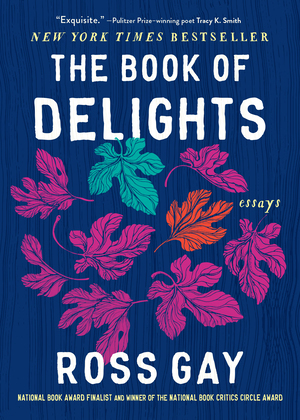
The Book of Delights

 The Book of Delights by Ross Gay, 288 pages.

This book of essays was born out of a challenge. Every day for a year, birthday to birthday, the author (a poet) wrote by hand a short essay about one of the day's delights. The essays meander through a variety of topics, but are consistently filled with a joy that's uplifting to read. This is especially impressive considering how often he also thinks of heavy topics, such as racism and grief. Overall the reading experience of this book is (if you'll excuse me for being obvious) delightful, and I think I would recommend it to pretty much anyone. 

Bonus: the audiobook (which I listened to) is read by the author, which adds a lot of personality to the essays.

Thursday, December 28, 2023

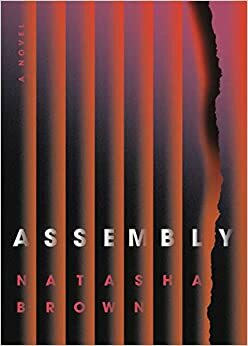
Assembly

 Assembly by Natasha Brown, 106 pages.

This novella follows an unnamed black British woman through the struggles of modern life in England. She works at a bank and constantly deals with racism, sexism, and the countless small and nameless ways the world tries to break her down. Her wealthy white boyfriend's parents invite her to an upscale garden party, where she spends more time thinking about her place in the world, and if she wants to remain there. 

This book is extremely non-linear, which makes it difficult to judge the order and scale that things are happening in. It also seems terrified of giving characters names, which makes it hard to tell many of the various men apart, making an already difficult to follow story even more difficult to follow. Overall this novella felt like it was more interested in being perceived as "literary" than anything else, and I'm afraid that that goal inhibited anything else it was trying to do.


Tuesday, October 10, 2023

The Heaven and Earth Grocery Store

The Heaven and Earth Grocery Store by James McBride  385 pp.

This is the latest book by the author of The Good Lord Bird which I think is an excellent historical fiction novel. This one is also historical fiction which begins in 1972 with the finding of a skeleton and a mezuzah in an abandoned well on Chicken Hill in Pottstown, Pennsylvania. The story of the body and mezuzah are then explained by a flash back to earlier in the century and the residents of Chicken Hill which were mostly hard working Jewish immigrants and African-Americans who weren't wanted in the white town. Moshe and Chona Ludlow are the main characters. Moshe runs a theater in town where popular vaudeville and musical acts perform. Chona grew up on Chicken Hill and runs the grocery store on the hill, a store which makes no profit because she makes sure to provide for those who cannot buy. She frequently angers the people in town with her left of center political activity. Nate, the African-American janitor at the Moshe's theater asks the Ludlows for help protecting his deaf nephew, Dodo, who the state wants to institutionalize. But when Chona is attacked by the town's evil doctor and Dodo defends her, he ends up in the horrible state home for the insane. The residents of Chicken Hill join together with the friends and family of the Ludlows to rescue Dodo. The mystery of the body in the well is explained at the end. In addition to the main characters there are many other residents of the hill with small but important parts to the story and interesting names like Fatty, Big Soap, Paper, Son of Man, Monkey Pants, Miggy, and more. All serve to flesh out the story and the plot which is far from linear.   

Thursday, September 21, 2023

To Kill a Mockingbird


To Kill a Mockingbird: A Graphic Novel
by Harper Lee, adapted & edited by Fred Fordham  288 pp.

This graphic novel version of the classic book is impeccably done. It is true to the novel as much as possible. Much of the wording of the original text is used. The artwork is realistic and true to the time period and small town local. Atticus is drawn with dignity, though not as handsome as Gregory Peck. Nothing in this graphic version is exaggerated or overdone. I found it to be an excellent version and good way to revisit the story without reading the original novel again. Also, Boo Radley wasn't as fearsome as Robert DeNiro in the in the film.

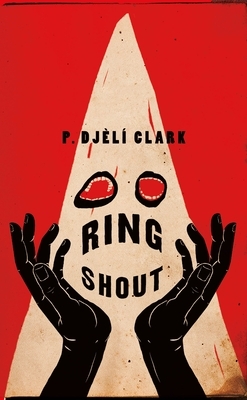
Ring Shout

 Ring Shout by P. Djèlí Clark, 185 pages.

Kara wrote about this book here before it actually came out, and I think she told me about it not long after, but I finally got around to reading it, and I don't disagree with anything she said. I will also add that I think that writing a classic monster hunting story and making it about racism is a very effective twist. Funnily enough, this is not the first book I read where people can get so hateful they turn into literal monsters that need hunting, that was Bitter Root, which you can read about here, although I think Ring Shout nailed the landing harder. This is a fascinating novella, and I would recommend it.

Sunday, September 17, 2023

Everything Within and In Between

 Everything Within and In Between by Nikki Barthelmess, 336 pages.

Ri Fernández’s grandmother has been very strict her whole life that she should be "American." Nevermind that her grandmother's definition of American is very narrow and means that Ri isn't allowed to speak Spanish, or hang out with the people in her neighborhood, or really engage at all with her grandmother's Mexican culture. Ri thinks things might have been different if her mom hadn't left, and when she finds a letter from her that her grandmother was hiding she is determined not only to see her, but to embrace every part of her identity. This means finally addressing a lot of things that she had never been willing to deal with, with her white friends, her grandmother, and herself. 

This was a really sweet book. I have a few criticisms (everyone seems to be very lacking in emotional intelligence only until the big confrontations when they convey their feelings perfectly), but overall I really enjoyed it. It's a pretty wholesome, introspective young adult novel that has a fair bit to say about identity.


Tuesday, June 27, 2023

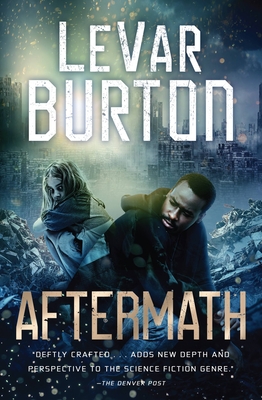
Aftermath


Aftermath by LeVar Burton (1997) 320 pages

The author, who is the same actor from Roots, Star Trek: TNG, and host of Reading Rainbow, wrote this in the '90s. In a way, he predicted a future America that would elect its first African American President in 2012, but within three short months the President was assassinated. Then a civil war over race in America collapses our society. This reminded me a bit of Stephen King's The Stand, which I've only read in graphic novel form, but this book has fewer characters. There are really four separate stories for three quarters of the book. Renee is a scientist who has invented a neuro-enhancer, and she is able to mentally call out for help when a rival scientist steals her invention and imprisons her. I wish the four characters' stories wove together sooner and that combining their skills to save Renee took more planning. As it is, it all wraps up in less than 50 pages and it doesn't seem like there is a great reason for each of the characters to be there. Still I mostly enjoyed the journey.