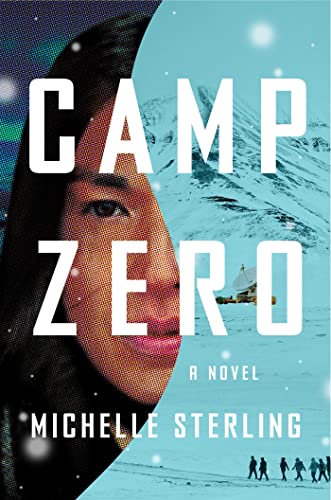
I listened to the audiobook on Libby. There are three narrators because there are three main parts of the story. This science fiction story is a subgenre called cli-fi, which means it is science fiction in the near future dealing with climate disaster. The globe is warming, the southern part of the U.S. is having record heat waves and wildfires (sound familiar?). Those that survive are pushing north into the previously frozen tundra of Canada. If you ever wanted to spend more time with the Jezebels in The Handmaid's Tale, this story might be for you. The main part of the plot follows Rose and other young women, all named after flowers, who work as "Blooms" in a far North mining/construction camp. Then there is a privileged college grad who takes a teaching job at the camp. His rosy outlook is quickly brought down by the harsh conditions at the arctic location. Third, we meet the women soldiers working at a military meteorological research station in another camp up north. Things get desperate and gruesome at times, since there is no escape for many of the characters. I didn't love the way the three plots are tied together in the end, but the journey leading up to those last chapters was pretty entertaining.
We are competitive library employees who are using this blog for our reading contest against each other and Missouri libraries up to the challenge.
Monday, April 8, 2024
Camp Zero
Tuesday, June 27, 2023
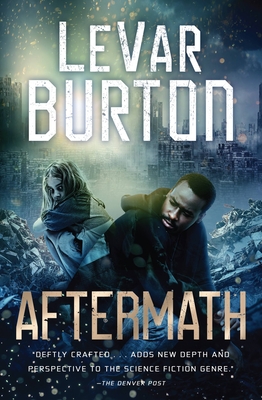
Aftermath
Aftermath by LeVar Burton (1997) 320 pages
The author, who is the same actor from Roots, Star Trek: TNG, and host of Reading Rainbow, wrote this in the '90s. In a way, he predicted a future America that would elect its first African American President in 2012, but within three short months the President was assassinated. Then a civil war over race in America collapses our society. This reminded me a bit of Stephen King's The Stand, which I've only read in graphic novel form, but this book has fewer characters. There are really four separate stories for three quarters of the book. Renee is a scientist who has invented a neuro-enhancer, and she is able to mentally call out for help when a rival scientist steals her invention and imprisons her. I wish the four characters' stories wove together sooner and that combining their skills to save Renee took more planning. As it is, it all wraps up in less than 50 pages and it doesn't seem like there is a great reason for each of the characters to be there. Still I mostly enjoyed the journey.
Thursday, May 9, 2019
The Emissary
Following an environmental disaster, Japan seals itself off from the world. Kids are so fragile and weak after being poisoned by the environment but the generation (or two) older than them seem oddly immortal. These great grand parents are easily in their hundreds and going strong. This sounds like a total bummer but it is oddly optimistic as the kids deal with their situation and figure out how to make it work. Perhaps this is foreshadowing the future after the environment becomes a total mess.
Thursday, March 28, 2019
Braiding Sweetgrass
Dr. Kimmerer is a botanist and plant scientist and a professor in the SUNY Environmental and Forest Biology Department. She is also a member of the Citizen Potawatomi Nation and learned about Native plant science from her family and tribal elders. Using her scientific and traditional knowledge, Kimmerer explains how living beings, including plants and animals, rely on each other for growth and survival, and how the current methods of farming, logging, industry, and construction have destroyed the fragile connections between all living things leading to environmental catastrophes and climate change. She also describes programs she has developed where botany students spend an extended time in a wilderness area studying and tabulating plant information while learning the ancient Native ways of survival and living a hunter-gatherer existence and the importance of being connected to the natural world. I have been recommending this book before I even finished it. I listened to the audiobook which is read by the author.
Thursday, August 31, 2017
Careers for Women / Joanna Scott, 295 pp.
But back to Joanna Scott's excellent, serious, and unique work. Narrator Maggie Gleason goes to work at New York's Port Authority at a time when working women were called girls. She works for Mrs. J., a public relations wizard who shows her staff what they (or their daughters) might be: powerful, ambitious, compassionate, and female. When Mrs. J. hires young Pauline Moreau, formerly a prostitute with a seriously disabled small child, she charges Maggie with helping Pauline to make the adjustment to her new life.
Pauline's backstory involves an executive from Alumacore, an upstate aluminum smelting plant that destroys its local water supply and the health of a Mohawk community while producing the aluminum used by the Port Authority to build Mrs. J.'s life passion: her 'twins,' those towers in lower Manhattan. Beautifully constructed and thoughtful, I will be thinking about this story for a long time.