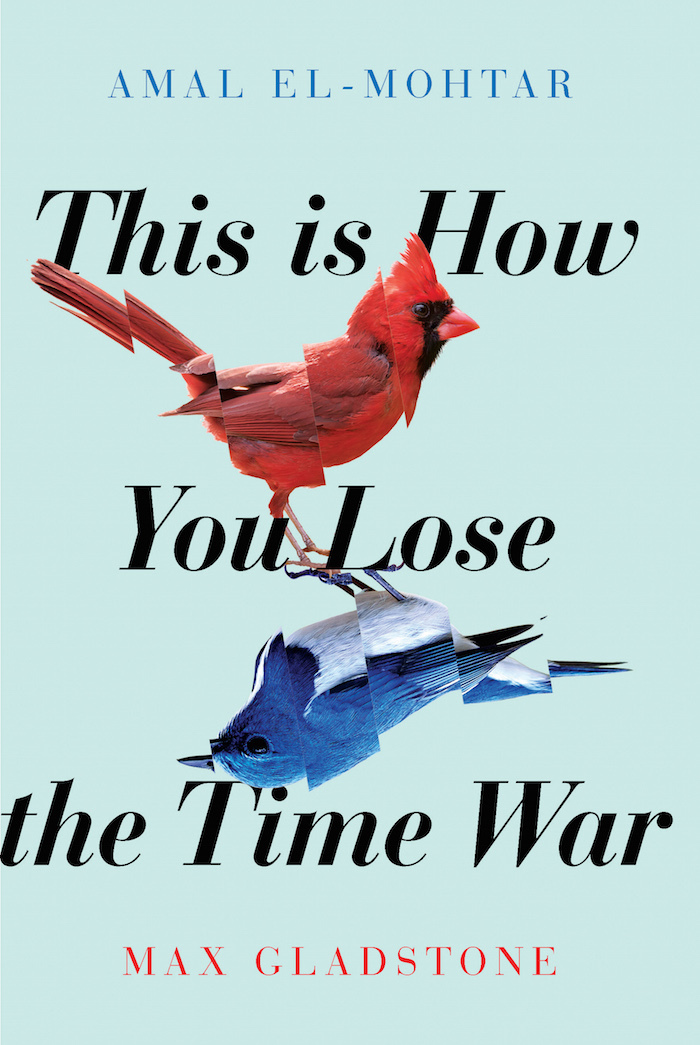
I listened to the audiobook on Libby narrated by Cynthia Farrell and Emily Woo Zeller. Amal answers a reader's question on Goodreads about how the two authors divided the writing with "In brief, Max wrote all of Red and I wrote all of Blue." I struggled to follow the story and understand what was really happening in the early chapters of the book. It is a very abstract book with lots of poetic language and mind-bending multi-verse time jumps. The two main characters named Red and Blue are female time agents from two warring factions. If you are a fan of espionage stories, I wouldn't recommend this because the spy work of these two time agents is left pretty vague, or, at least, it is difficult to follow the thread of the consequences of their actions forward and backward through time. There are letters that Blue and Red send to each other in this short book, which start as taunts between competitors and turn into proclamations of love. Red's world includes many more references to human civilizations throughout history and has a sci-fi bent. Blue's world has many references to plants and animals and has a fantasy angle. Ultimately, I think this is really talking about the competition between humanity and nature through the millennia, and a star-crossed couple representing these two things begins to see value in each other.


