Showing posts with label World War I. Show all posts

Friday, October 16, 2026

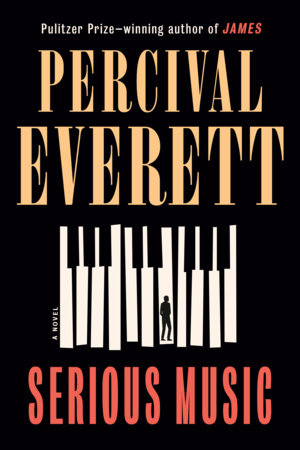
Serious Music by Percival Everett

Serious music by Percival Everett, 304 pages. This will be published on March 2, 2027.

Arthur is an African American music major and aspiring composer when circumstances lead him and his friends to serve in WWI. He returns to New York and Washington DC, where he uses his musical talents to fight racial injustice in unvonventional ways. This is standard Percival Everett, with plenty of "what might have been" alternate history and satirized people and institutions. It's not necessary to understand music theory to enjoy the book, but an appreciation for it definitely helps us understand Arthur and how he sees the world.

This was pretty good, at times beautifully written. The first third or so of the book is one of the best WWI narratives I've read (which admiitedly is not many). I'm definitely glad that I read it, though I found it really similar James and some other things I've read. If you like this one or James, I recommend a Everett's collection of western short stories Half and Inch of Water, which is sadly overlooked.

Friday, June 2, 2023

Maisie Dobbs


Maisie Dobbs by Jacqueline Winspear 304 pp.

This is the introductory book to the popular Maisie Dobbs series about a young woman private investigator in England. After being mentored by her former employer, sent to college, and then becoming a nurse at the front during the horrendous battles of World War I. After the war she starts her own private detective agency. Her first case leads her to another mystery, one involving veterans of the war who are physically and/or mentally maimed by their experiences and the strange "Retreat" supposed to be helping them. Just enough information is given about Maisie's and her story to make a perfect lead in to the later books. 

Monday, July 6, 2020

Cher Ami and Major Whittlesey

Cher Ami and Major Whittlesey by Kathleen Rooney, 336 pages

During World War I, homing pigeons were used by the allied forces to send messages when phone lines and other human constructs simply failed. In the case of a battalion that made it farther behind enemy lines than its neighboring troops, these pigeons were literally a lifesaver. This book tells the story of that "lost battalion" through the eyes of its leader, Major Charles Whittlesey, and Cher Ami, the pigeon that delivered the life-saving message.

I'll have to admit that I wasn't expecting to read a WWI story told as the memories of a taxidermied pigeon when I picked this up, and honestly, I kinda wish I'd known what I was in for. I loved the realistic treatment of Major Whittlesey's reminiscences as a gay man in the war, but when it came to Cher Ami's chapter, I found I had trouble believing her philosophical ruminations on human constructs of war, religion, bigotry, and so many other things. Perhaps if I'd read Rooney's previous novel, Lillian Boxfish Takes a Walk, I'd know what I was getting into. But this one was just too much.

Thursday, April 16, 2020

The Mysterious Affair at Styles

The Mysterious Affair at Styles by Agatha Christie  296 pp.

This was a re-read of the very first Agatha Christie mystery, written on a dare from her sister. I first read it in the 1970s-80s during which time I read all 80+ Christie mysteries. I decided to revisit it when I found an audiobook version read by Hugh Fraser, the actor who portrayed Captain Hastings in the David Suchet Poirot television series. The story itself is told from Hastings' point of view so it is ideal to have him read it. It takes place during WWI when Hastings is recuperating from injuries he suffered in the war. He is invited to stay at the manor house called Styles, by an old friend, John Cavendish, whose father owned it. During Hastings' stay Cavendish's stepmother is the victim of a poisoning. Hastings who believes himself to be a detective of sorts begins to investigate. Then he runs across Poirot, who he met while in Belgium. Poirot has relocated to England with other war refugees, Hastings then consults Poirot for assistance in solving the murder. Short and sweet and a good start to a long and successful mystery career for Christie.

Thursday, August 22, 2019

One for Sorrow

One for Sorrow by Mary Downing Hahn, 293 pages

It's 1918 and Annie Browne is the new girl at her school when Elsie Schneider decides to be her friend. Trouble is, Elsie is the "weird kid" that nobody else likes, and after an afternoon playing with her, Annie can see why: Elsie is rude, possessive, and mean. Annie is determined to drop her as a friend, and succeeds — until Elsie dies from the Spanish flu and becomes a possessive ghost determined to be Annie's only friends forever.

I read this on the recommendation of my 10-year-old son, who's on a bit of a horror kick. This was a good spooky tale, with plenty of creepy scenes and an ending that was very satisfying. I probably won't be reading more of Hahn's books (I'm far from her target demographic), but I'll happily watch my son devour them.

Monday, August 5, 2019

The Radium Girls

The Radium Girls: The Dark Story of America's Shining Women by Kate Moore  479 pp.

This is a well researched and written account of the tragic lives and deaths of the young women who worked painting luminous dials for watches, clocks, and military instruments. During World War I and into the 1920s and 30s young women (the youngest was 14) were hired to paint radium paint onto the dials of the timepieces and other gauges. Most of the women worked in plants in New Jersey, but their also factories in other places including the small town of Ottawa, Illinois. Unbeknownst to the young women the radium was insidiously entering their bodies ultimately causing a variety of ailments and death. The companies involved denied, and later lied, that the paint was safe and the women's illnesses had nothing to do with their employment. After many failed court cases the women from Ottawa were finally successful and received a small amount toward their medical bills. The lawsuits led to the development of the Occupational Safety and Health Administration (OSHA). Moore focuses on the lives and struggles of several of the women to personalize what could be a very dry story. As I said, this is a tragic story, and there were still industrial radium poisonings happening as late as 1978.  I remember my father talking about the young women who died from painting watch dials when production of them finally ceased in the 1970s.

Thursday, June 6, 2019

The Clockmaker's Daughter

The Clockmaker's Daughter by Kate Morton  485 pp.

Sometimes a good story gets bogged down in too much detail. That is my experience with this novel. The tale encompasses different time periods between the 1860s and present day, jumping back and forth in time with all the action connected in some way to Birchwood Manor and its ghostly resident, Albertine "Birdie" Bell, the clockmaker's daughter of the title. Two world wars, a shooting, a group of artists, a missing diamond, a drowning, a young woman planning her wedding, and a disappearance involve a myriad of characters over 200+ years. Every era visited has a connection to the Manor in some way. In spite of the richly expansive details and interesting plot, I found myself impatient for the book to end, possibly because I figured out part of the mystery of Birdie's death and the missing diamond before it was revealed. I listened to the audiobook version which may be the only reason I finished it instead of setting it aside to leave it neglected.

Saturday, April 6, 2019

The Woman Who Smashed Codes

The Woman Who Smashed Codes: A True Story of Love, Spies, and the Unlikely Heroine who Outwitted America's Enemies by Jason Fagone  444 pp.

Elizebeth Smith Friedman had no intention of becoming a master code breaker when she finished college and took a job working for an eccentric tycoon at his compound near Chicago. There she met William Friedman, the man who would be her husband. She also got her first taste of working on codes when the tycoon made a deal with the government to provide help during World War I. After the war ended Elizebeth worked for the Treasury Department and Coast Guard breaking coded messages of smugglers transporting illegal alcohol during prohibition. When the Second World War began, Elizebeth worked on cracking codes used by Hitler's Reich while William worked on the "Purple" code of the Japanese. Because of her sex, she was not given the credit for much of what she accomplished and had to watch while J. Edgar Hoover claimed it was the F.B.I. that had broken the codes that allowed them to catch spies. While dedicating herself to her work, Elizebeth raised two children and cared for her husband who, because of the stress of the work, was frequently hospitalized for depression. Much has been made public about Bletchley Park but little about its American equivalent which was run by Elizebeth Friedman. This is an interesting and little known piece of history.

Monday, February 25, 2019

Clementine: The Life of Mrs. Winston Churchill

Clementine: The Life of Mrs. Winston Churchill by Sonia Purnell  436 pp.

While there are masses of books about Winston Churchill not much exists on his wife of  56 years. Beginning with her birth to Lady Blanche Hozier there were questions as to who her father was with three men as possibilities including her legal father Henry Hozier. After spending her teen years in France she met and married Churchill at the age of 23. Her life from then on involved supporting her husband's political ambitions, having a brood of mostly unsuccessful children, championing social causes, and being a moral support to her countrymen during two world wars. As biographies go, this one is adequate but not without mistakes. During the battle of Dunkirk credit for rescuing many of the soldiers was given to the Royal Navy with no mention of the hundreds of civilian craft that assisted in the evacuation. My main quibble was with the classically British take on the U.S. failure to enter World War II early on. A number of times FDR was blamed for refusing to declare war on Germany when constitutionally it is Congress that declares war and a majority of Congress was isolationist at the time. 

Wednesday, September 26, 2018

In the Shadow of Blackbirds

In the Shadow of Blackbirds by Cat Winters, 404 pages
In the Shadow of Blackbirds cover

16-year-old Mary Shelly Black’s life is falling apart. The year is 1918 and between WWI and the Spanish flu, death breathes down everyone’s neck. Furthermore, her father has been arrested under the Sedition Act and she is forced to move to a new city to live with her overprotective aunt. The one silver lining to this is that she will once again be close to her childhood best friend, Stephen. It is only once she arrives in town that she finds out he has enlisted and will be leaving within the week. A telegram arrives shortly thereafter announcing that he has died a hero’s death on the battlefield. When Stephen appears to her and she herself has a near death experience, she is forced to re-think her entire worldview. She now must help him understand what has happened - and solve her own mysteries - in order for him to rest.

Winters brings this book to life through archival photos and descriptions so evocative, you can practically smell it (I will never look at an onion the same way again). I recommend this for anyone who likes strong female protagonists, historical fiction, or books about resiliency in the face of disaster.

Friday, April 6, 2018

A Beautiful Poison

A Beautiful Poison by Lydia Kang  350 pp.

In the days of World War I and the Spanish influenza epidemic, a young New York socialite joins with two old friends to investigate a series of suspicious deaths / murders of friends and family members. The murders have similarities but are all performed by different means. Following each murder a note saying "You're welcome." is received by a person closest to the victim. The wealthy Allene Cutter reacquaints herself with Birdie, daughter of a former servant in the Cutter household, and Jasper whose wealthy upbringing was shattered when his parents lost their money and committed suicide. Together the threesome use their respective talents, and Jasper's job in the city morgue to figure out and put a stop to the deaths while trying to avoid the flu and, in Jasper's case, the draft. Many parts of the story are unbelievable but the intrigues, twists, and unexpected identity of the killer make it worth reading to the end. The author is an M.D. with familiarity with Bellevue Hospital and her medical knowledge shows in details of the story. However, her history is not quite accurate but can be chalked up to creative license. Birdie works in a factory painting the dials of watches with radium paint and is suffering serious effects of the then unknown radium poisoning. During that time period there wasn't a factory in New York making those watches and the first death of a "radium girl" did not occur until 1920 while the Spanish flu was mostly in 1918. My only other complaint is the audiobook narrator's repeated pronunciation of "the grippe" as "the gripe." I cringed every time I heard it.

Wednesday, March 21, 2018

Sherlock Holmes (Unabridged) Part 6: His Last Bow

Sherlock Holmes (Unabridged) Part 6: His Last Bow read by Stephen Fry  308 pp.

This section comprised several short stories from Holmes' past and "The Last Bow" which puts Holmes into a spy story involving four years of British intelligence that has been gathered to be taken to Germany. After that episode Holmes retires to take up beekeeping and write a definitive book on investigation. The other stories are the usual whodunits involving Italian criminals, stolen plans, a missing person, poisonings, and one where Holmes is apparently near death but still gets his man. I've enjoyed listening to this set of audiobooks and I hope that eventually Audible will get the rights to the last part that is only available in Great Britain.

Thursday, August 31, 2017

The Summer before the War

The Summer before the War by Helen Simonson, 479 pages
Beatrice Nash, whose father died and left her with far less than she thought she would have, has to find a job in pre-World War I England. She finds a home, friends and possibly love in her new home in the village of Rye, but then the looming war intervenes.
By the author of Major Pettigrew's Last Stand.

Sunday, April 30, 2017

Hitler: Ascent, 1889-1939

Hitler: Ascent, 1889-1939 by Volker Urlich, 998 pages.

Ullrich provides a very thorough, well-researched account of Hitler's life, and his rise to power in twentieth century Germany.
I haven't read Ian Kershaw's or Alan Bullock's accounts of the megalomaniacal  dictator (though I did read Bullock's 1992 Hitler and Stalin: Parallel Lives, which was fascinating), but it is easy to believe that this work appears to be their equal. Ullrich is dispassionate, and shows the human side of Hitler, letters and diary entries of those who knew him and found him charming, but always lets the reader know how that charm was balanced out. Hitler seemed to love no one, at least not enough to leave a clear impression on anyone. If he loved his niece, Geli Raubal, her suicide marked it as a love of the creepiest kind. If he loved Eva Braun, then their very strict privacy, their joint suicides, and the lack of surviving letters between them, left no witnesses to that love. If he ever felt true compassion for anyone in the world (anyone non-Aryan anyway), then his duplicity, his manipulating those around him, his false words, and false acts ensured that no one knew of it.
An important book. A detailed account of how lies, lust for power and revenge, and complete lack of human feelings can lead one man onto the world stage and how the misreading of a leader and strange, strange political events can lead to destruction on an enormous scale.

Monday, October 17, 2016

The Summer Before the War

The Summer Before the War by Helen Simonson  479 pp.

While this story begins before the start of World War I, it encompasses a large part of the war also, so I am rather perplexed by the title. In 1914, young, well educated, and essentially penniless Beatrice Nash arrives in the East Sussex town of Rye to become an outrageous oddity, a woman Latin teacher at the local school. Such a thing has not been experienced in this small town with an overactive gossip machine. Beatrice just wants to teach her students and spend her free time writing. Soon the gossips have much more interesting fodder in the Belgian refugees that are brought in after Germany invades their country.  Beatrice develops an interest in the son of her sponsor, a young man who is an aspiring surgeon, currently enamored of his mentor's daughter. What begins as a light story of small town residents and class differences and prejudice turns darker with the advent of the war. Not a family, rich or poor, is left unscathed by the conflict. This novel is a well written and highly detailed tale of an important part of England's history.

Wednesday, January 20, 2016

The Summer before the War: a Novel / Helen Simonson 465 pp. (Advance Reader's Edition)

I very much enjoyed this author's Major Pettigrew's Last Stand.  This second novel was still a pleasure, but not quite up to the earlier mark.  Beatrice arrives in Rye in August 1914 to begin teaching Latin at the local grammar school.  She's cautiously accepted into local society by the good-hearted local mover and shaker Agatha Kent and her two nephews Hugh and Daniel.  The hot summer gives way to fall, war is declared, and things happen both silly and serious.  Busybodies gossip and plan a parade; the town takes in seriously traumatized Belgian refugees.  The first 75% of this novel moved extremely slowly and featured what I think of as 'Downton porn,'  that is, great dialogue and period detail without a lot of action.  The last 100 pages finally carried the narrative propulsion of Simonson's earlier novel and made the beginning worth the wait.

Tuesday, October 27, 2015

The Great Influenza: The Epic Story of the Deadliest Plague in History

The Great Influenza: The Epic Story of the Deadliest Plague in History by John M. Barry, 546 pages.
Barry does have an epic going here. He starts with some facts about the Great War and the flu, and then he doubles back and gives us the history of medicine up to that point. He then presents a fascinating section on William Welch and the other medical luminaries from the late 19th and early 20th centuries who were changing the way medical science was researched and the way in which medical care was given. Barry does a wonderful job of bringing these researchers and practitioners to life. As he takes us into the early stages of the epidemic, we also make acquaintance with the political movers and shakers of the time, so many of whom seemed to go out of their respective ways to make things worse when the "plague" hit. A really fascinating book, with so much detail, but with so much of the story still barely covered. Modern research indicates that as many as 100 million people died during the course of the pandemic, and most of those deaths took place far from the United States (though the Spanish Flu started here). Untold millions died in India, China, Russia (already wracked by revolution), and in parts of the world whose inhabitants rarely encountered flu. These regions are mentioned, but are not the focus of the book.
There is a fair amount of repetition in the text. I listened to a good deal of this book on audio, so that actually helped a bit with all the names, places, and numbers. Probably a better book to read so that you can keep the vast cast straight. A landmark book, ably read by Scott Brick.

Saturday, September 26, 2015

Catastrophe 1914: When Europe Went to War

Catastrophe 1914: When Europe Went to War by Max Hastings, 628 pages.

I always enjoy reading histories by Hastings because his works are detailed, balanced, and do a great job of giving a broader picture than many other contemporary historians. Catastrophe devotes a fair amount to the successes of the Russian army, to the battles between Serbia and Austria-Hungary, and to the hopeless meandering of the British Expeditionary Force under John French. There's no hagiography with Hastings, he points out the mistakes made by all actors in the drama and does not seem interested in assessing blame because of country of origin. German General Helmuth von Moltke is shown as a man out of his depth, clinging to a plan that was never practical. British Commander in Chief, Field-Marshal Sir John French is shown to be a defeatist, with almost no interest in cooperating with his allies. His subordinate and eventual replacement, General Sir Douglas Haig, while shown to be an opportunist and conniver, has his reputation as a military commander somewhat restored, with the excellent summation: "where no general of any nationality much enhanced his reputation, Haig was an abler soldier than caricature allows."
The text follows a loose chronology, moving through lead up to the war and the war itself, but following on account in one area through to the end before doubling back to cover a simultaneous, but geographically separate situation.
I enjoyed listening to the downloadable audio, admirably read by Simon Vance, but the scope of the book, the names and places covered during this one year (and mostly the last quarter of that year) made keeping it straight very difficult without the text to consult.

Sunday, August 30, 2015

Dead Wake: The Last Crossing of the Lusitania by Erik Larson

Dead Wake: The Last Crossing of the Lusitania by Erik Larson, 430 pages.
Larson is among the best at writing exciting, readable histories and Dead Wake is among his finest. There's plenty of detail about the Lusitania itself, and rare glimpses into the goings on in the German U-Boat that sunk the ship.
Diana Preston's 2002, Lusitania: An Epic Tragedy, is another great book on the topic.

Check our catalog.

Wednesday, March 25, 2015

A Test of Wills

A Test of Wills by Charles Todd  320 pp.

This is the first book in the "Inspector Ian Rutledge" mystery series. In 1919 Britain is recovering from the devastation of World War I. Inspector Rutledge has returned to work at Scotland Yard after serving in France and suffering shell shock, what we now call PTSD. For Rutledge it takes the from of a voice he hears in his head, the voice of a soldier he served with. When a popular colonel is killed on his estate in Warwickshire Rutledge is sent to investigate by a superior who hopes Rutledge will fail and be dismissed. The prime suspect is a decorated war hero and friend of the Prince of Wales. As Rutledge investigates he finds many other suspects including two other villagers suffering from shell shock. While Rutledge investigates the back story of the voice in Rutledge's head is revealed to the reader. The ending is a twist and I thought it a bit of a stretch but still left me wanting to read more in the series.