Friday, October 23, 2026

Brooms


Brooms by Jasmine Walls and Teo Duvall, 248 pages.

In a 1930s Mississippi slightly more magical than our own, illegal broom races fill the skies deep in the woods. These races are a vibrant gathering place for the people too marginalized for the national races, and an opportunity to win the money to change lives. Billie Mae is the leader of the Night Storms, and is determined to make enough money to get to one of the states where Black folks can legally practice magic. Sisters Mattie and Emma are trying to earn enough money to avoid getting sent to a residential school, a place where their cousin went and came back without her magic. Other members of the Night Storms have their own reasons to race, and as time runs out and the law draws closer, their desperation sends them to the most dangerous race of all. 

This was a really neat book! It draws on a lot of real history and extrapolates from there to make a world the feels real and believable. The art was expressive, and I think it did a good job helping to tell the story. A pretty cool historical fantasy graphic novel, definitely worth checking out. 

Wednesday, October 21, 2026

Up on Cove Mountain: Adventure, Tragedy, and a Quest for Meaning on the Appalachian Trail

Up on Cove Mountain: Adventure, Tragedy, and a Quest for Meaning on the Appalachian Trail by Early Swift (2026), 368 pages 

I seem to be on a kick of reading novels where middle-aged men revisit an adventure from their youth. Between Mississippi Solo, Walking with Sam and Up on Cove Mountain, I have found the latter to be the most interesting. BUT, if I was likely to actually undertake one of the three treks, it would definitely be the Camino de Santiago (then the Mississippi River with the Appalachian Trail a far third). Why? Because Swift does an excellent job of conveying just how hard and long the trail is. I cannot imagine doing it twice, with the second time being 66 years-old. Swift notes how the trail has changed over 34 years and how climate change has affected the availability of resources (especially water) for hikers. I learned a lot about how people hike the trail, trail culture, and what it means to thru-hike. I thought it meant you did the hike in one long fell-swoop. Apparently, it is not uncommon to leave the trail and come back many times and, as long as you complete it within a year, you are considered a thru-hiker. Swift also touches upon a tragedy that happened during his first thru-hike: the murder of a young couple on the trail. He had interacted a few times with this couple and their murder shocked him and the otherwise insular AT community. While this is an interesting sub-plot, the majority of the book is devoted to what it means to hike the trail and the self-discovery it brings along the way.

The Midnight Special

 The Midnight Special: The Secret Prison History of American Music by Colin Asher, 336 pages, © 2026


This was a great book, just nominated as a finalist for a National Book award. At first glance it seems like this might be a book about great albums inspired by prison but it's actually more of a mediation on policing and incarceration in America and how those systems influence and gatekeep artistic expression. Asher narrows the focus down to five artists, each from a different time period and genre, diving into each person's background and how they came to be ensnared in the carceral system--with the exception of Johnny Cash. Cash's story is the middle of the book as an intentional counterpoint to the other stories as it may surprise readers to learn that he spent less then a week in jail his entire life. Unlike artists like Tupac and Leadbelly, who were forced to rely on their criminal public personas to book performances and sell records, Cash was not beholden to his outlaw persona, despite having similar personal problems as the others in this book--he could always pivot to something else, like supporting Native American rights or singing gospel music--black artists often did not have that luxury. Elmo Hope was an incredible jazz pianist who fell into drugs and, because of New York City's insane Cabaret Card law (which was a legal way of criminalizing black jazz musicians), spent time in Riker's Island, where he recorded an album with the prison band. Perhaps the most unknown artist in the book is Ike White, the only one actually guilty of committing a violent crime. His natural talents as a musician were enough to attract the attention of larger celebrities who were invested in the prison reform movement of the 60s and 70s. He used that interest to help him  record an album in prison, which is now considered a lost soul record. Highly recommended. 


Tuesday, October 20, 2026

A Divided Duty


A Divided Duty by Seanan McGuire, 400 pages.
 
Toby Daye is finding a new normal in her makeshift family after her baby was born, a normal which may be upended as Rayseline Torquill original term of offense runs up and her mother tries desperately to pull her from October's home (where she has friends and a therapist) to her own domain. Raysel does in fact find herself kidnapped, and Toby has to return to the dark shadows of her past to get her back.
 
This is the 20th book in the October Daye series, and honestly it was mostly fine. I feel like it really needed another pass with the editors. Most of the book felt like rising action, and the payoff felt underwhelming, leaving the pacing sort of lackluster. It's not a terrible book, but if this was the quality of the earlier entries I probably never would have gotten into the series. 

Back After This


Back After This by Linda Holmes (2025) 304 pages

Cecily is a producer of audio podcasts for a company that sees its business model failing. Her boss, Toby, sees an opportunity to bring out a series that will help right the sinking ship. Cecily hasn't had a relationship since her last boyfriend dumped her, taking their shared podcast with him. She is being asked to work with relationship coach Eliza Cassidy on a series that will have Eliza setting Cecily up with 20 dates in order to find her a husband. Advertisers are lined up to support this program. It is not what Cecily really wants to do, but she agrees because she will be hosting, it will help save the job of one of her colleagues, and Toby has agreed to let her make a pilot for her own project after this is done.

As the series gets underway, Cecily runs into a guy she doesn't know, and helps him corral a Great Dane who had gotten away from his owner. Later she sees this guy, Will, again and again. He has had his own relationship woes, but he's funny and thoughtful and she is drawn to him, but knows that she needs to take the dating project seriously.

The characterizations are good and the dialogue feels real and is often funny. Readers get the inside scoop on audio project details from the author, who works for NPR. I liked the novel a lot, just as I liked a previous novel of Holmes', Evvie Drake Starts Over.

The Things We Never Say

The Things We Never Say by Elizabeth Strout (2026), 224 pages

I am not sure what to say about this book. I see what Strout was going for; Artie a middle-aged teacher struggles with his life, current political conditions, and what the future entails, but feel she really missed the mark. The book was almost painful to read as it clunkily tried to tackle big issues without garnering a whole lot of compassion and, really, any interest in the characters. I suspect the book would have been more compelling if Strout had written more and deep-dived some of the story lines. As is, it reads as a person trying to get their anger at the current state of the world out too fast and coming across frustrated and malcontent. I would pass on this if I was you.

Monday, October 19, 2026

I Hope This Email Finds You in Hell

 I Hope This Email Finds You in Hell by Mackenzie Reed, 352 pages. 

Brie has felt like a ghost of herself since her parents' deaths, living a sort of sad life as the receptionist for an insurance company, watching reality TV with her favorite coworker (and only friend), and nursing a small crush on her hot boss. But when she sees said boss performing an exorcism on a coworker after work hours, right before her friend and a rash of other women vanish, she forces her way into the rescue mission to hell. 

I'm afraid I wasn't impressed by this one. It's so aggressively by-the-numbers that it felt almost mass produced. Perhaps it's because I'm a little particular about my romance novels, but I found myself rolling my eyes pretty constantly, and some neat set pieces couldn't make up for a weak plot and prose that was very fine. Maybe read this if you want the most expected of romances, but honestly there are better things out there.


Friday, October 16, 2026

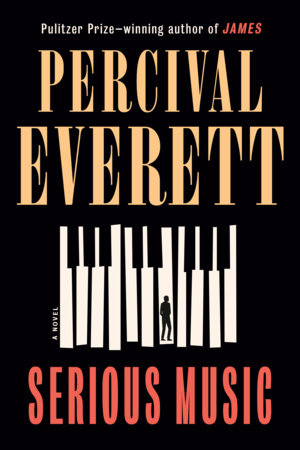
Serious Music by Percival Everett

Serious music by Percival Everett, 304 pages. This will be published on March 2, 2027.

Arthur is an African American music major and aspiring composer when circumstances lead him and his friends to serve in WWI. He returns to New York and Washington DC, where he uses his musical talents to fight racial injustice in unvonventional ways. This is standard Percival Everett, with plenty of "what might have been" alternate history and satirized people and institutions. It's not necessary to understand music theory to enjoy the book, but an appreciation for it definitely helps us understand Arthur and how he sees the world.

This was pretty good, at times beautifully written. The first third or so of the book is one of the best WWI narratives I've read (which admiitedly is not many). I'm definitely glad that I read it, though I found it really similar James and some other things I've read. If you like this one or James, I recommend a Everett's collection of western short stories Half and Inch of Water, which is sadly overlooked.

Japanese Gothic

Japanese Gothic by Kylie Lee Baker, 352 pages

In one house, 150 years apart, two young adults are living through their own horror stories. In 1877, Sen is a young female samurai, hiding from the imperial forces when her father takes a monstrous turn, placing her between the danger of her father and the soldiers, either one of whom could kill her whole family. In 2026, Lee has retreated to the same house with no recollection of why or how he killed his roommate, but sure that his father's new home will provide sanctuary from investigators half a world away. When the two meet, they discover that they may be able to help each other, whether it's through searching the archives to find out how and when Sen's family died or helping Lee sort through his untrustworthy memory.

The idea of this book is really interesting, and I thought it played out well. It was definitely atmospheric and creepy at times, and there was true horror as the falsehoods were stripped away. I don't know that it's the best example of the horror genre, as the plot beats were a bit too predictable, but it was definitely an enjoyable read.

The 10:12

The 10:12 by Anna Maloney, 320 pages

Retired art professor Claire was on the titular train between Manchester and London when it was hijacked by a group of armed men. When she encounters one of the hijackers near the restroom, she's faced with a choice: stand by passively or fight back. Claire chose to fight, and for the first half of the book, we have a fast-paced thriller akin to Speed in a train. But once the train reaches London, the pace slows down as Claire navigates the legal proceedings afterward in which she is seen as both a hero and a villain, depending on who's talking. It's an interesting way of presenting a hijack story, and one that I'm not sure I fully enjoyed, especially with the rapid slowdown. Meh.

This book will be published Oct. 20, 2026.

Wednesday, October 14, 2026

Fallow

 Fallow by Sarah Anderson | GoodreadsFallow by Sarah Anderson, 336 pages
Natalie hates working, so when a nurse at the blood bank mentions an experimental job opportunity to be a corporate surrogate with large compensation, she is thrilled. The contract is "simple", Natalie must deliver 7 babies in 10 years for high level women at The Company, so they can have the benefits of motherhood without pregnancy interrupting their work. The benefits seem endless, as Natalie gets to live in a luxury condo with a chef, a housekeeper, a personal trainer and premium healthcare, all provided by the company. In addition, she receives bonus compensation for certain things, like having a natural birth. Between pregnancies, she enjoys her time off and spends the money she earns on things like luxury coats and spa trips. Natalie finally likes working. During her last pregnancy, almost at the finish line of her contract, an unexpected employee issue arises, and everything falls apart. There is really not much else I can say without spoiling it. 

This book is divided into three parts, and I was so invested in the first two parts. The third part is where things started to put me off a bit, as it takes a strange turn and it feels like a completely different book and a completely different main character. The third part was still engaging, and I would still recommend this book, just not what I expected. 

Cultish


Cultish: The Language of Fanaticism by Amanda Montell, 310 pages

When he was a young man, Amanda Montell's father escaped from a cult. Growing up hearing his stories instilled in her an above average interest in cults, an interest she channeled into research on what makes a cult, where they draw their power, and what kinds of things unite them. What she found at the key to manufacturing the kind of intense communities and us-vs-them attitudes common in cults is language. She explores not only the kinds of huge and dangerous cults people think of when they hear the word (Jonestown, Heaven's Gate, Scientology, etc), but also the much more normalized organizations that use the exact same tricks of language (MLM schemes, "cult" fitness studies, Instagram spiritualists), giving a very clear picture of how exactly these linguistic traps work, and making it very obvious how easily anyone could fall into a cultish situation. 

I found this book insightful, thoroughly researched, and well-presented. I noted a few times when I was listening that some of the things she describes are also true of literally any close community, but Montell herself is also good at noticing such things and approaching them with nuance. The book is funny and consumable, while still treating serious tragedies with a sense of gravity and respect. I consider myself thoroughly impressed. 


Maus I


Maus: My Father Bleeds History by Art Spiegelman, 159 pages.

I read Spiegelman's famous graphic novel for the first time recently, and despite hearing plenty about it still found myself described. The comic weaves together his father's experiences during the holocaust with their troubled relationship in the present day, in a way that make both feel eminently personal. Spiegelman doesn't shy away from anyone's flaws, nor does he shy away from the multitude of small, everyday horrors of the holocaust. I'm glad I finally got around to reading this modern classic, and will definitely pick up the second half of the story soon.

Your Song Changed My Life: From Jimmy Page to St. Vincent, Smokey Robinson to Hozier, Thirty-Five Beloved Artists on Their Journey and the Music That Inspired It By Bob Boilen

Your Song Changed My Life: From Jimmy Page to St. Vincent, Smokey Robinson to Hozier, Thirty-Five Beloved Artists on Their Journey and the Music That Inspired It
, 288 pages

The author, a music journalist for NPR, interviews various musicians about how they got interested in music and found their respective styles. I give it an emphatic “meh”. It felt like reading a podcast, and I’m curious why the author created it in this format. It might have been more interesting if the artists included had appealed to a wider range of audiences, and hadn’t been so NPR-coded.

The Fabric of Civilization: How Textiles Made the World by Virginia Postrel

The Fabric of Civilization: How Textiles Made the World by Virginia Postrel, 320 pages

This is nonfiction, a combination of textile history and journalism(ish) regarding how textiles are changing in the present day. The author selects advances in chemistry, commerce, mathematics, and engineering that were driven by economic demand for better textiles. For instance, much of the math that would one day be applied to computer science began as patterns for weaving, and the consumer desire for bright colors that wouldn’t fade with washing led to advances in ancient chemistry.

This was a fun audiobook! It was episodic and the right balance of light-hearted and interesting, which made it ideal for listening while doing chores, etc. I recommend if you’re casually interested in textiles, or enjoy reading Popular Science or Popular Mechanics.

The Undressed Art: Why We Draw by Peter Steinhart

The Undressed Art: Why We Draw by Peter Steinhart, 272 pages

A patron recommended this collection of essays to me a while back. These are reflective musings on how drawing makes us feel, what it does to our brains, and the experiences of people who draw and are drawn.

I give TUA:WWD an emphatic “Sure it’s pretty good, check it out if that’s the kind of thing you like”. I found the most interesting bit to be about how the business of modelling for artists has changed over the years.

Tuesday, October 13, 2026

Sapiens: A Brief History of Humankind

 Sapiens: A Brief History of Humankind by Yuval Noah Harari (2011), 512 pages

I started this book many years ago and had a hard time getting into it. Mostly because the first long bit was not particularly revelatory and information I was already familiar with. For reasons unknown (as I was absent that meeting), my book club chose this book for October. So, I have now officially read the whole thing. This book is paradoxically both brief and expansive. You really can't sum up all of humankind in 500 pages, but the author does give you a lot to think about and makes interesting connections on how Sapiens went from foragers to empire builders. It is a fascinating read as it touches upon Sapiens' ability to imagine, develop religion, explore, innovate and potentially self-destruct. I would be curious (and maybe Harari has already written about this) about the author's thoughts in today's current clients. I know he has written a second book and perhaps I will read it, but that came out in 2015 and a lot has already changed. 

Monday, October 12, 2026

Main Characters


Main Characters by Bobby Palmer, 398 pages

A story of two people falling in love and their trials of life, but told from perspectives of everyone but the main characters. A barista, a downstairs neighbor, a best friend, a mother… the list goes on. 


This story was great, and the writing was so unique as you never got to read Clara or Seb’s thoughts, making all accounts of their relationship honest and blunt. I really have never read a book like this. It was difficult to support many of the main characters decisions, and as the book went on some parts felt too drawn out and I got tired of their choices by the end. Despite this, the writing was great and other relationships built in the story were beautiful to follow in addition to the main characters relationship. 

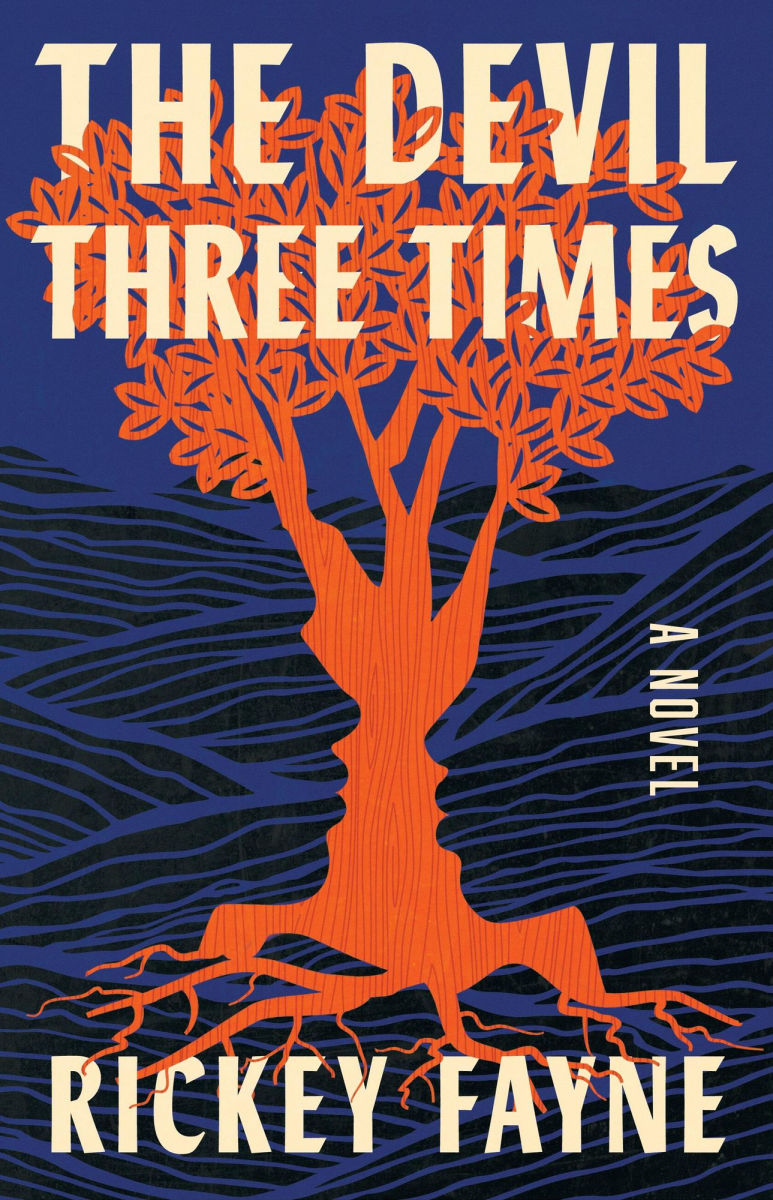
The Devil Three Times


The Devil Three Times by Ricky Fayne, 416 pages.

When the devil gets to feeling homesick, he asks his brother Jesus to put in a good word for him with their father. Jesus says he's willing to help him out if the devil will help him by putting his efforts to stopping the horror of slavery. So off the devil goes to a slave ship coming over from Africa, where he finds a woman stolen from her home with only the ghost of her dead sister to talk to. Through the generations the devil will go to her and her descendants in their time of need, long after slavery ends (although that does not save them from the racism of a former plantation town in West Tennessee), each generation with unique problems that often too unlike that of their forebears. 

Despite how that summery sounds, this book was a lot more historical fiction than magical realism. It is difficult to summarize, because there are so many characters in this book doing so many unrelated things, with most of the through-line being that they are all family, but I found the historical writing very solid throughout, and it kept me engaged. The synopsis mentions that this book draws on the spiritual traditions and oral history of the Black diaspora; so I picked up the audiobook, and I think it made the experience of reading this even stronger. I definitely recommend it. 

Friday, October 9, 2026

Roots of Madness

Roots of Madness by Stephanie Williams with art by Letizia Cadonici (2026) 144 pages

I am still reading, but I have been struggling to find time to write for the blog here. Roots of Madness is a brand new book that I read in just a couple days, and I had to share my excitement. The synopsis of this book with supernatural horror mixed with  a historical setting inspired by the life of Madam CJ Walker intrigued me. I met the author Stephanie Williams at a recent comic con and have been waiting for this trade paperback collecting the six comic issues into a single book. This year, Williams was nominated for an Eisner Award for writing this and other comics. 

Black generational knowledge about natural medicines have been passed down to character Etta Knight. She grows to love botany and chemistry. Like Frankenstein, she is full of ambition and wants to push the bounds of science despite many people warning her to be cautious. A mysterious Meridian Fellowship offers resources and opportunities to advance her knowledge. "Some knowledge takes time to carry," but Etta feels she is ready. A special plant with healing properties seems to hold a lot of promising applications. Little does she know there is an alien hivemind at work trying to control the situation. I love the art throughout this graphic novel. Many characters' eyes are penetrating in various colors. And the alien tendrils have such a creepiness.

Thursday, October 8, 2026

How To Seal Your Own Fate


How To Seal Your Own Fate
 by Kristen Perrin (2025) 309 pages

Like the first book in the Castle Knoll Murder Mystery series, How to Solve Your Own Murder, this book alternates between the past (1960s) and the present day. In the first book, Annie solved the murder of her mother's aunt Frances, a woman Annie never met, and was bequeathed the estate that Frances and her husband had lived on, Gravesdown Hall.

Annie is now trying to figure out how to fit into the village better, and is approached by Peony Lane, an old woman who had given Frances a fateful fortune years ago. When Peony Lane is later found murdered in Gravesdown Hall, Annie and her friend from London try to solve this case too. Meanwhile, Annie is learning from Frances's diaries about another murder that happened in the past, one which has some connections to the present.

The characterizations are mostly good, although a few are a bit stereotypical. Also, the wrap-up of the murder was a bit too drawn out for my taste. 

There is another book in this series now and I'm a bit torn whether to read it. However, some ureconciled tidbits in Annie's life are tempting me, so it'll probably happen eventually.

Muñeca


 Muñeca by Cynthia Gómez, 176 pages.

When Natalia Fuentes hears about Violeta Miramontes strange illness, which left her totally paralyzed shortly after her marriage, she recognizes immediately that it is not a disease, but a curse. She gets herself hired as Violeta's caregiver, hoping to use her long abandoned witchcraft to break her curse and earn some much needed cash. But once Nat is in the house, she quickly learns that things are darker and more complicated than she had guessed, and her growing feelings for the trapped Violeta, rendered into a convenient doll, don't make anything easier. 

I was really impressed by this book. It was creepy and gothic, and it shines in the "metaphor made literal" that gothic literature is so good at. It handled nuance well, Violeta comes from very old Spanish colonial money and Nat is Latina, a dynamic which I haven't seen explored much, and which the setting in 1968 Oakland really highlights. This is Gómez's debut, and I'm really excited to see what else she writes!

Dreadful

Dreadful by Caitlin Rozakis, 349 pages

I blogged about this book a couple years back when it first came out, and looking back at that post, I feel like it sums it up pretty well. I still dig the book, and I enjoyed chatting about it with the Orcs & Aliens last month. It's funny, it's quirky, it's full of garlic and fun. Highly recommend!

Wednesday, October 7, 2026

We Are Gathered Here Today

We Are Gathered Here Today by Bobby Finger, 320 pages

Finlay, Elaine, and Jacque have attended zillions of weddings, and can only make it through the cringiest moments by saving them until their traditional Hour of Disrespect, in which the three friends gather to complain about the most obnoxious little elements of the day. But now, Fin is heading to Elaine's elaborate Texas wedding weekend, where he's been asked to serve as the officiant. When he arrives, he's newly engaged himself, though still unsure on the concept of marriage, and has NOTHING written for his speech. Thrown with Jacque into the "queer table" of guests and plenty of free drinks, Fin must navigate the increasingly unhinged weekend while also navigating his feelings and writing a speech.

I picked this one up hoping that it fall somewhere in the range of The People We Hate at the Wedding meets The Wedding People, with lots of quirky characters and dry humor. And it kind of is... but it also felt a bit clique-y. Like, I don't know that I would've continued hanging out with this assigned group if they annoyed me as much as they seemed to annoy Fin and Jacque. It was OK, but nothing fantastic.

Listen for the Lie

 Listen For The Lie by Amy Tintera (2024), 336 pages

On the surface, it appeared that Lucy was living the dream. Handsome husband, nice house, beginning of a great career. All that came to a crashing halt when she was found bloodied on the side of the road with no memory of what happened and her best friend dead. She thought she escaped this nightmare after moving away, but it came crashing back as a podcaster comes to town and she is forced to return and confront what actually happened that night. 

This was a fun, twisty mystery that kept you guessing until the end. If you can, you must listen to the audiobook. The podcast portions were done perfectly and, at first, confused me as I thought my phone had actually switched to one of my podcasts. Were there a few holes and unbelievable bits? Yep, but it was entertaining and worth the listen. 

Tuesday, October 6, 2026

Didn't Nobody Give a Shit What Happened to Carlotta

Didn't Nobody Give a Shit What Happened to Carlotta by James Hannaham (2022), 352 pages 

After reading Sarah's review, I wanted to check this book out. It follows Carlotta on her brief parole stint as she rediscovers the world she was forced to leave behind twenty odd years ago. It is told through both first- and third-person narrative that can be a bit disjointing at first, but you will get into the swing of it. Overall, I enjoyed the book and Carlotta's surprisingly optimist look on life despite the unjust and horrifying things that have happened to her. My only quibble is sometimes I felt Carlotta was a just a bit to prescient about today's issues, especially for someone who has been locked away for such a long time. 


September Totals

 Jan: 4 books, 1315 pages

John: 1 book, 391 pages

Kara: 15 books, 5636 pages

Kevin: 3 books, 1224 pages

Margaret: 5 books, 1441 pages

Regan: 8 books, 2147 pages

Sarah: 3 books, 976 pages

Tracey: 8 books, 3163 pages

 Total: 47 books and 16,293 pages

Blood Over Bright Haven


Blood Over Bright Haven by M.L. Wang, 428 pages.

Sciona has never had the makings of a proper Tiranish lady, instead dedicating all of herself to becoming the first female mage admitted to the High Magistry. Unfortunately, all of her brilliance doesn't protect her from the slights and sexism of her colleagues, including being assigned a Kwen janitor instead of a proper assistant. But Thomil wasn't always a janitor, and his experiences with the world outside of Tiran combine with Sciona's once-in-a-generation talent have the potential to shake the very foundations of the city of Tiran, God's Bright Haven.

This was a great book, but I can't talk about most of the parts that hit me like a gut punch without lessening their impact. This is a fantastic and fantastical exploration of colonialism and exploitation that feels grounded and real enough to keep all of it's impact in a fantasy setting. Sciona is a great protagonist for the story, complicated and deeply flawed. I think this book is what I wanted Babel by R.F. Kuang to be. I can't wait to discuss this one with Orcs & Aliens next week!  

The Castle

 The Castle: Adventures in a World of Unraveling Men by Jon Ronson, 336 pgs. © 2026


This book was mysterious, hilarious and deeply disconcerting. One night, the author's son is invited to a party at a mysterious castle in New England owned by an eccentric millionaire, only to find the party is more of a dry run for a reality show. The evening is a bust but the author is intrigued by the eccentric millionaire and interviews him--but his questions only lead to more questions. What follows is Jonson's thoughtful critique on what has happened to men in our culture as he interviews other men who have become unmoored in society due to the changing times. Because of this, Jonson argues, men are increasingly trying to use social media to create fantasy worlds or present themselves in ways that are synchronous to ideas of traditional masculinity. But these worlds are built on sand, as Jonson displays throughout the book--divorce, public shamings, unfulfilled potential, lost friends and opportunities, federal investigations--the list goes on. Jonson recounts his now terminated friendship with TV writer Graham Linehan, who fell into adopting anti-trans rhetoric after a particular episode of his show, The IT Crowd, was deemed transphobic. Linehan, a man at the top of his field, hit the gas on those new found beliefs which consumed his life, resulting in losing his marriage and future work. Jonson's question is one we all ask ourselves everyday--why? I haven't really picked a favorite book for 2026 yet, but this is definitely a contender.