Showing posts with label shipwrecks. Show all posts

Wednesday, January 8, 2025

A Haunting in the Arctic

A Haunting in the Arctic by C.J. Cooke, 340 pages

A shipwreck on the northern coast of Iceland since a horrific incident in the 1970s, the Ormen is scheduled to be demolished soon. Travel Tiktoker Dominique has decided to make a midwinter trek to document the former whaling ship-turned-research vessel's history and last days. Not long after she arrives, three more influencers do too with the same idea, though none of them seem to be seeing or hearing any of the supernatural things Dominique does. Interspersed with Dominique's story is the tale of Nicky, the daughter of a whaling tycoon who wakes up aboard the Ormen in 1901, trapped on a boat full of men that only want one thing from her...

This book swings between horrific and eerie, depending on whose story is being told. It's chilling (literally — it's the Arctic, it's right there in the title — though there are definitely a few questionable elements as the twists at the end are revealed. Not a bad book to read, though I much prefer Cooke's The Lighthouse Witches.

Wednesday, November 29, 2023

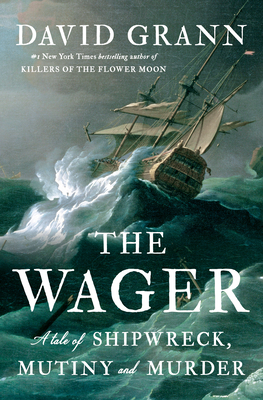
The Wager

 The Wager: A Tale of Shipwreck, Mutiny and Murder by David Grann, 352 pages.

In 1740 The Wager left England with a fleet of other British warships to hunt Spanish treasure vessels in the South Seas. Two years later a tattered boat packed with 30 dying men washed up on the coast of Brazil. The tales the shipwrecked sailors told of their troubles entranced people for miles around, and the men were hailed as heroes. But then, six months later, another ramshackle boat carrying only a few men washed up off the coast of Chile with a grave accusation, the first group of men were mutineers and should be hung for their crimes. 

Grann covers the whole story, from the building of the ship to the court martial that would decide every survivor's fate, with both astounding historical detail and driving narrative force. I felt on the edge of my seat for most of the story, which is astounding for a nonfiction account of an event that happened nearly 300 years ago. Even more astounding is that he managed to pull turning real events into a thrilling story with very little speculation, relying heavily on the many first-hand accounts the survivors wrote after they got back in an attempt to shift the narrative in their favor. I was really impressed by this book, and am definitely planning on picking up more by the author.


Monday, July 25, 2022

The Story of a Shipwrecked Sailor

 The Story of a Shipwrecked Sailor by Gabriel Garcia Marquez, 106 pages. 

This book collects a series of newspaper articles that Gabriel Garcia Marquez wrote in 1955 about a sailor in the Colombian navy who fell overboard and was stranded at sea for ten days. The story is very exciting, and allegedly true (although there are some details that range from extremely implausible to completely impossible). This was also the selection for UCPL's Read the Classics book group, and everyone seemed to like it, so I'll count that as a vote of confidence as well. The story is well told, and at 100 pages it's definitely worth the time.


Tuesday, April 25, 2017

The Island of the Day Before

The Island of the Day Before by Umberto Eco  515 pp.

This is a historical novel full of the oddities and quirks that tend to populate Eco's works. It takes place in 1643 and an Italian nobleman, Roberto della Griva is the only survivor of a South Pacific shipwreck. After floating on a plank he runs into an abandoned ship, the Daphne, anchored near a small island. Roberto cannot get to the island because he is unable to swim and there is no lifeboat on board the ship. The ship seems deserted although there is plentiful food and water, live chickens and other animals, and plants growing on board. Soon he realizes he is not alone but it takes him awhile to find the other ship's resident, an old Jesuit. Amidst Roberto's reminiscences and dreams of events of his past, there is a story of the Daphne's journey to attempt measuring the elusive longitude. The priest convinces Roberto that they are stranded on what we now call the International Date Line with the island on the other side of the line. The author's pondering at the end on the possible ways Roberto's papers with the story were recovered are interesting and somewhat amusing -- Captain Bligh is included in one of them. In my opinion this isn't Eco's best work, but it isn't his worst by far.