Showing posts with label neanderthals. Show all posts

Tuesday, December 31, 2024

Kindred: Neanderthal Life, Love, Death and Art

Kindred: Neanderthal Life, Love, Death and Art by Rebecca Wragg Sykes (2020) 400 pages

Archeology is fascinating to me. This is a well-written science book that is not too academic. Sykes presents a great overview of the latest findings and new interpretations of old findings to thoroughly explore all that we know and understand about Neanderthals currently. Each chapter begins with an italicized paragraph to put you in the mindset of our stone age kin, and these can be quite poetic in describing their environment. I found the chapter on the variety of stone knapping techniques to be a bit difficult to push through. However, all the chapters are great at challenging our assumptions of what we think we know about their lives.
 

Tuesday, August 1, 2023

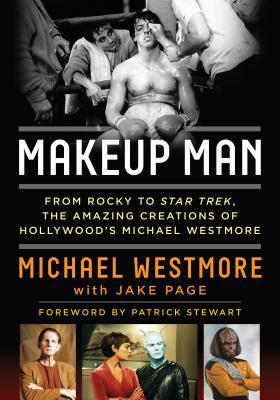
Makeup Man

Makeup Man: From Rocky to Star Trek The Amazing Creations of Hollywood's Michael Westmore by Michael Westmore with Jake Page (2017) 320 pages

I added this to my collection because of the Star Trek connection. Only about 60 pages deal with his time designing aliens for Roddenberry's franchise. I loved the early part of the book covering his family's history in hair and makeup. His apprenticeship with John Chambers of Planet of the Apes makeup fame was interesting. And establishing his special effects makeup cred by working on both Rocky and later Raging Bull was significant. There are stories of his work experience on many other lesser known projects too. He's made a lot of Neanderthal character makeups. Each story is pretty short, maybe too short, and draws on his memory. There are some cases where my film history knowledge makes me doubt that his memories are totally accurate. Hollywood's history of sexism is also revealed in some of his narrative. This wasn't quite all that I was hoping it would be.
 

Monday, April 10, 2023

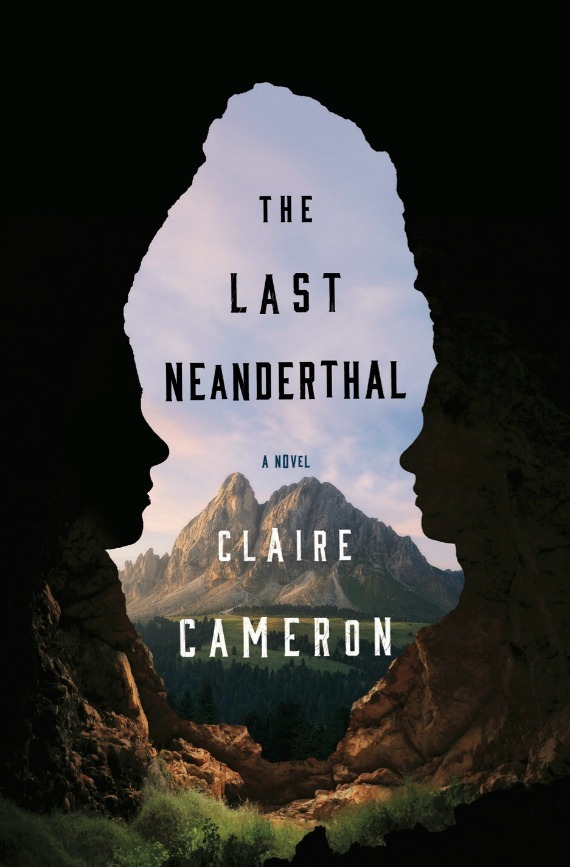
The Last Neanderthal


The Last Neanderthal by Claire Cameron (2017) 288 pages

I listened to the audiobook through Libby narrated by two women's voices. There are two parallel stories being told: one in prehistoric times, and one in modern day. The tale of prehistoric survival is given more time in, maybe, a 70/30 distribution. I do love imagining the lives of prehistoric people. I've read Jean M. Auel's whole "Earth's Children" series and a prehistoric adventure by Kim Stanley Robinson called Shaman. I've watched some PBS NOVA documentaries about the latest archeological findings. And I generally enjoy the mostly silly films set in prehistoric times with the '80's The Clan of the Cave Bear and Quest for Fire being pretty great. This book explores a lot of themes related to motherhood. The modern day story is about an archeologist navigating the academic/museum world after she uncovers two skeletons in France. The two skeletons appear to be a Neanderthal and a Homo Sapien who were buried together facing each other. The archeologist wants to stretch our understanding of the relationships between Neanderthals and Homo Sapiens. Are we really so advanced? How did they die out and we survived? I found the prehistoric part of the story more intriguing. We meet a small Neanderthal family who has adopted a young lost or orphaned Homo Sapien boy. He is thought of as a runt to the more stocky Neanderthals. We see one way that the Neanderthals could have died out, and how relationships could be built between the two very similar types of humans. I kind of wish the prehistoric story had gone further into the end of the lives of the two main characters who are found by the archeologist, but the author leaves us with a more open ending in the middle of their lives.

Wednesday, February 15, 2017

Sapiens: a Brief History of Humankind / Yuval Noah Harari, 443 pp.

A look at the arc of human development with a point of view that weaves biology, anthropology, history, and, in truth, other disciplines I probably can't even name. Effectively, Harari shows us our species as if he were a far-wiser life form from another galaxy, and after reading this, I will never think of human life in quite the same way.  Harari divides human history into revolutions: the cognitive, which saw great leaps forward in behavior and our spread across the planet; the agricultural, the scientific, the industrial, the information, and the biotechnological.  We've all heard these categories before, but it's Harari's analysis of the how and why of each of these stages that make this such a fresh and exciting read.  He is an original thinker and a first-rate writer; if you appreciated Guns, Germs and Steel you need to read Sapiens.

Thanks to my friend John for nagging me to read this!