Showing posts with label pop culture. Show all posts

Monday, July 6, 2026

The Secret Public


The Secret Public: How Music Moved Queer Culture From the Margins to the Mainstream by Jon Savage, 784 pages.

This hefty book does pretty much what it says on the cover, tracing the intersection of queer history with music and pop culture. More specifically, from 1955 to 1979. I found this book a little lacking in focus, although supposedly about music, it also spent quite a bit of time on Hollywood and Andy Warhol. I'm also not entirely sure why the author decided to stop in 1979 after the fall of disco, when I think the 1980s might be one of the more interesting decades for this topic. 

That being said, it was still very informative, and I do feel like I learned a lot. This is indisputably a slow book, but everything in it is also thoroughly researched. I think I would recommend this more to people interested in the pop culture of the 1950s-1970s than anyone else. 

Monday, June 3, 2024

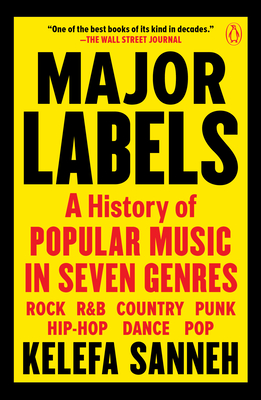
Major Labels

Major Labels: A History of Popular Music in Seven Genres by Kelefa Sanneh (2021) 496 pages

This has been on my reading list for a couple years, so I moved it to the top when I saw the Rhythm & Books book group was reading it. I did not finish it in time for the discussion, but I did enjoy it. I learned a lot. The Rock, R&B, and Country chapters were very informative and the most like a broad history. The author was a big fan of Punk and Hip-Hop, so those chapters switch to a more first-person point of view. Then the chapters on Dance music and Pop music are much shorter. Through the author's record store job as a teen, to his college radio DJ experience, to his work as a music critic for a couple different newspapers he shows how deeply he understands the business and art of popular music. The research and analysis is fascinating. My reading pace was a bit slow getting through it, but it could have been even slower if I stopped to make or find a playlist for all the songs mentioned.
 

Monday, July 3, 2023

The Birth of Loud

The Birth of Loud: Leo Fender, Les Paul, and the Guitar-Pioneering Rivalry that Shaped Rock n' Roll, by Ian S. Port, 340 pages


This is a fantastic read for music lovers, guitar players, and pop-culture historians alike, documenting the early lives and creative lightning bolts that brought us the beginning of the modern guitar era. In the 1930s and 40s, after archtop guitars had been electrified with pick-ups and became regular fixtures on big band stages, it became clear that the electrified, hollowbody archtop could only be turned up so loud before the guitar would begin to produce the awful, overloaded signal known as feedback. Western swing guitarists especially, who wanted to compete more with the other instruments on stage, would typically try to crank up the volume on the amplifier to get a louder, more distorted sound, but it always ended in ear-crushing noise. Leo Fender, not a musician but more of a self-described engineer and tinkerer, began to workshop an idea for a solid body guitar. At roughly the same time, Les Paul, a top-jazz and swing player at the time, was also having a similar epiphany. He began workshopping his own ideas, hoping that a more solid-body style guitar would end the feedback problem. Fender's guitar designs would revolutionize the instrument landscape in the mid-1950s, while Paul got a sweet deal with Gibson guitars, sponsoring their newest solid body guitar that bore his name (the Gibson Les Paul) that would eventually become an iconic piece of equipment for 60s and 70s hard rock bands like Led Zeppelin and Cream. This book reads easy and action packed, with short chapters and guitar inventions that quickly became canon for any aspiring player. As much as these two did for guitars in this era, country-picker Merle Travis might be most responsible for the solid body design. He sketched his idea on a bar napkin and gave it to his friend Paul Bigsby, another musician and inventor, who essentially created one of the first solid-body designs. The same design that Leo Fender would shamelessly steal from. With Fender's designs sweeping the country, they stole the market share out from under Gibson and helped influence the golden age of guitars. 

The Number Ones

The Number Ones: Twenty Chart-Topping Hits that Reveal the History of Pop Music by Tom Breihan, 342 pages

This reads like a book of non-fiction short stories. Like a VH1 Behind The Music episode for the literary crowd. Each chapter focuses on a seminal single from the Billboard Hot 100, which began in 1958 and still continues today. Every single is an outlier; a song that came from nowhere to dominate the charts and influence the culture. Breihan, senior editor at the music blog Stereogum, dives briefly into the backstory of hit songs like Chubby Checker's The Twist, Prince's When Doves Cry--all the way up to Korean pop phenomenon BTS and their hit "Dynamite." As with most behind-the-scenes stories, there are so many interesting anecdotes and trivia-like bits of information that really help inform the popularity of a song. Some notable surprises for me included Vanilla Ice inadvertently funding the label Death Row Records, Brian Wilson spending $13,000 to record "Good Vibrations," (at the time the most expensive single ever made), and the  runaway success of Michael Jackson's "Billie Jean" finally forcing MTV to play more African-American music. You can follow along with Breihan as he continues to blog about every #1 Billboard hit in history, but this book is a really fun dive into some songs we all know and love. 

Monday, July 30, 2018

Ready Player One

Ready Player One by Ernest Cline  374 pp.

This is such a fun book. I enjoyed its geekiness even though I'm not a gamer. The premise of a future where real life is so awful everyone prefers to live in a virtual world called the "OASIS (Ontologically Anthropocentric Sensory Immersive Simulation)" provides the setting for the ultimate video game with billions of dollars at stake. What makes this novel so enjoyable is the stream of pop culture references from the 1970s & 80s. Songs, movies, and early video games are all a part of the contest game set up by the designer of the the OASIS as his legacy. Protagonist Wade Watts and a few others have taken the lead in the contest. But an evil corporation enters the contest pitting multiple players against the individuals playing on their own and the contest turns deadly. The audiobook version is read by Wil Wheaton who does an acceptable job but I kept waiting to hear the line "Shut up, Wesley!"

Thursday, October 22, 2015

Luka and the Fire of Life

Luka and the Fire of Life by Salman Rushdie  240 pp.

After seeing the horrendous treatment of the animals of the "Great Rings of Fire" circus, young Luka Khalifa curses the circus owner. The curse causes the destruction of the circus. A month later Luka's father falls into a coma as a result of a curse placed by the owner of the destroyed circus. Luka heads off on a quest to retrieve the "Fire of Life" which is the only way to save his father's life. Accompanying Luka on his journey are a dog named Bear and a bear named Dog, two of the escaped circus animals. They are led by Nobodaddy, a hologram-ish representation of Luka's father who gains more substance as his father grows closer to death. Along the way they join up with a variety of magical beings who assist him in his quest against sinister rats, old Aztec gods, deities of extinct civilizations, and others. Rushdie includes elements of mythology, video games, and pop culture throughout the story at random moments. At one point there is a brief reference the White Rabbit from Alice in Wonderland, Dr. Who and his Tardis appearing, vanishing, and reappearing, Doc Brown from "Back to the Future," and the dwarves from Time Bandits dropping from the sky all along the River of Time. This was closely followed by the Eddies in the river, specifically known as Nelson, Duane, and Fisher. These and other random bits of humor pop up in the story but you have to be paying close attention to catch them. Somehow this mashup of fantasy, mythology, magical realism, and heroic quest all works to make a fascinating, if sometimes confusing story. It was written as a children's book but I know of few children who would really "get" it.

Monday, September 21, 2015

You too can have a body like mine

You too can have a body like mine / Alexandra Kleeman 283 pgs.

Not an easy book to summarize, I can say that there are many issues that are featured including consumerism, body image, roommate relationships and disappearing dads.  The dads are disappearing then reappearing a town or 2 away with no memory of their previous family but often living with a new one.

B is A's roommate, C if A's boyfriend.  Both relationships are a little fraught.  A seems in love with C but they mostly spend time together watching TV, porn or having sex.  B is slowly becoming A by cutting her hair in the same style and using A's make-up.  She is a bit needy and always wants to know where A is spending her time and what she is doing.

Kandy Kakes is a product that is often being advertised throughout the book while A is watching TV or grocery shopping.  However, there is a shortage of Kakes when it becomes apparent that someone is emptying all the boxes before they are delivered. A ends up in a cult-like religion that exclusively consumes Kandy Kakes.

Why is any of this important to the story?  I'm not sure I know the answer. This was certainly a unique book and I'm still trying to decide what to think about it.

check our catalog

Monday, December 9, 2013

Legends, Icons & Rebels

Legends, Icons & Rebels: Music That Changed the World by Robbie Robertson, Jim Guerinot, Sebastian Robertson, Jared Levine  128 pp.

I'll start by saying I rarely watch Tavis Smiley's talk show but when I saw that Robbie Robertson was the guest I had to watch. Robertson, musician, songwriter, member of the iconic group The Band, was promoting this book. This book was inspired by a conversation Robbie and his son, Sebastian about how the children he worked with responded better to good music by great artists instead of the usual "kiddie music" they were offered. From that conversation the concept of introducing children to some of the greatest musical artists of all time was born. Louis Armstrong, Billie Holiday, Ella Fitzgerald, The Beatles, Johnny Cash, Carole King, Marvin Gaye, and many others are featured in brief articles about their unique contributions to popular music. The book is lavishly illustrated by fifteen different artists. Included are two cds containing performances by each of the twenty-seven legends in the book. I may have to buy this one for my niece's children.

Sunday, August 11, 2013

I Wear the Black Hat: Grappling with Villains (Real and Imagined) by Chuck Klosterman

I Wear the Black Hat: Grappling with Villains (Real and Imagined) by Chuck Klosterman, 214 pages.

Klosterman is someone that I have always assumed that I would have read. I have thumbed through his books, and checked them out from the Library, but I have (until now) never actually read them. Cindy recommended this one, and though she no longer blogs about her reading (why is that, Cindy?) she is still a force to be reckoned with in competitive reading circles, and her recommendations are not to be ignored.
I Wear the Black Hat is witty and well-thought out, but could have been expanded. It is basically a series of essays on villains such the Eagles, The Oakland Raiders, NWA, Bill Clinton vs. Linda Tripp vs. Monica Lewinsky, and O. J..
Sort of tongue-in-cheek, and funny, and insightful-Klosterman is a fine writer. After I was done, though, it seemed that Klosterman could have said more.

Check our catalog.

Monday, May 6, 2013

Days That I'll Remember

Days That I'll Remember: Spending Time with John Lennon and Yoko Ono by Jonathan Cott  240 pp.

Jonathan Cott interviewed John Lennon and Yoko Ono for the first time in 1968 when Cott was the first European editor for a fledgling magazine called Rolling Stone. It was the beginning of a lifetime friendship. His last interview with Lennon was just three days before his death. His most recent interview with Ono was in 2012 shortly before her eightieth birthday (OMG, she's 80!). In addition to his reminiscences about their meetings and what was going on socially and musically at the time, Cott includes the full transcripts of his recorded interviews. The interviews were published in part in Rolling Stone and other periodicals but reading them in their entirety is fascinating (at least to a John Lennon fan). Lennon talks candidly about his life, fame, The Beatles, his relationship and work with Yoko, the "bed-ins" for peace, and other performers/songs that influenced his music. Two haunting parts of the 1980 interview stood out for me. In one part, when talking about future plans Lennon said, "But there's time, right? Plenty of time." followed by "it will be fun to be on the cover of Rolling Stone, It will be fun, won't it, to start 1981 like 1968?" And when talking about the critics he said, "What they want is dead heroes, like Sid Vicious and James Dean. I'm not interested in being a dead f***ing hero...." Three days later, December 8, 1980, he became one. Those who aren't fans may not care about this book but I just might have to buy a copy for my personal library.

Wednesday, October 31, 2012

Footnote*

Footnote  by Boff Whalley (296 pages)

FOOTNOTE is the autobiography of Boff Whalley, who was one of the founding members of the anarchist pop group, Chumbawamba. Like his band, which broke up earlier this year after 30 years of playing together, FOOTNOTE is unconventional and unique. It's also straight forward and unpretentious. The book takes its title from the notion that Chumbawamba were but a footnote in the annals of pop culture, breaking through to mainstream success after the release of "Tubthumping" in late 1997, leaving 15 years of indie obscurity behind them and selling millions of records.* The massive success of "Tubthumping" overshadowed (and outsold) everything the band had done up to that point. FOOTNOTE is a first-person account of Chumbawamba's early years, from forming in a squat in Leeds in the early 1980's, to playing countless benefits, releasing noisy punk records, and making the decision to move in a more pop-oriented direction in the early-1990's. Whalley writes about his own life, and the lives of his band mates, in the years before and during Chumbawamba in a mostly linear fashion, with occasional forays into related subjects (the music industry, politics, etc.). It's not the typical rock&roll memoir, which is what makes it so great.

I first read this book in 2008. My old copy was lost in a bizarre gardening accident so I asked the librarians at the UCPL to buy one for the collection. As soon as it was cataloged I read it again. I enjoyed it as much as I did the first time around.

* It's also an acknowledgment of the book's numerous digressive footnotes. Whalley weaves much of his narrative between the main body of text and a series of footnotes much like this one.