Friday, August 30, 2024

Funeral of Figaro


Funeral of Figaro
by Ellis Peters  192 pp.

Ellis Peters, the pseudonym of British author Edith Mary Pargeter, is best known for her series of mysteries featuring the medieval monk Brother Cadfael. This mystery is not part of that series. Instead it features an opera company homed in the Leander Theatre. Because of the death of the previous bass-baritone a replacement was hired for the roll of Figaro, one known to the European opera world. But Marc Chartrier has a problematic history involving his actions during WWII. Those actions affected multiple members of the cast in different ways. When Chartrier is stabbed with a rapier in a hidden part of the scenery during a performance the culprit has to be narrowed from several cast members. In fact, the number of suspects increases rapidly as the police investigate. In the end the police name the killer, one who may or may not have been the true murderer. I'm not sure I'm happy with the way this one ended.

Thursday, August 29, 2024

African Trilogy


Big Book Challenge: The African Trilogy
by Chinua Achebe 562 pp.

Things Fall Apart: This book takes place in the late 1800s in the southeastern region of what is now Nigeria. The main character, Okonkwo, is a powerful leader of his Igbo clan. He worked hard to create a new life after having a weak and lazy father who left him no inheritance. After the death of a young man by Okonkwo's hand, things begin to go wrong. The arrival of Christian missionaries to the area creates further conflict as the missionaries lure the people away from their traditional beliefs. As problems among the people escalate Okonkwo realizes that the society he once knew was lost. He commits suicide which is against the indigenous beliefs, leaving the white Christians to deal with his body. The parting shot by the colonizers was the comment that this story will make a nice paragraph in the book he is writing about area.

Arrow of God: This novel takes place in colonial Nigeria in the 1920s. It concerns Ezeulu, the chief priest of the god Ulu who is worshipped by several Igbo villages. Ezeulu comes in conflict with the white, Christian colonizers who want him to abandon his beliefs and lead the villagers toward believing in Christianity. After being imprisoned by the colonizers for failure to cooperate, Ezeulu returns home to wait for guidance from Ulu. Following the death of his son, the people begin to turn away from Ezeulu because he will not allow the yam harvest because he has received the message from Ulu. The missionary steps in and urges the people to have their harvest and dedicate it to the Christian god. It's a further progression in the move to control by the white missionaries. This book struck a nerve in me because of the attitude that non-Christian beliefs should be wiped out. But I think this was the best one of the three.

No Longer at Ease: This installment centers on Obi Okonkwo, grandson of the protagonist in the first book and takes place in the late 1950s prior to Nigerian independence. It begins with Obi standing trial for bribery and then flashes back to the events leading up to the trial. Obi was sent to England to attend college with a grant from the local Union of villagers who have settled in the city of Lagos. When Obi returns he has a job with the agency that gives scholarships for study in England to the local young people. He soon learns that his salary isn't quite enough to live in the style expected of him while paying back his college loan, paying rent, and car expenses. However, he refuses bribes he is offered by those wanting scholarships. Obi begins a romance with a young woman named Clara who is considered an outcast by the Igbo and wants to marry her. However, the objections of his parents conflicts with his plans. Things get worse when Clara gets pregnant and Obi must find the money for an abortion. Clara leaves him afterward. When Obi's mother dies he choses to use the money he would need for travel to the funeral to help fund the funeral expenses and doesn't attend. At this point he decides that the only way for him to make it in the city is to become one of the officials who accepts bribes. He gets caught which results in him being tried.

Wednesday, August 28, 2024

End of Active Service


End of Active Service by Matt Young (2024) 292pp

A war novel -- by definition a dark one.  After a few pages I thought – this is a variation on War: As Soldiers Really Live It by Sebastian Junger who was embedded with a military outfit in Afghanistan, but this book is a love story, not creative non-fiction. Young’s view on modern warfare, is captured by the paragraph, “The draft was gone a long time and we were all there by choice – officers wanted to build clout to get into politics; enlisted dirtbags told everyone they wanted money for school but mostly just wanted to get paid to do some goddamned violence.” A cynical (and accurate) tone that differentiates novels set in earlier wars, before PTSD was a diagnosis and after the draft. Brief summary: Lance Corporal Pusey, freshly back in Indiana after two tours as a Marine in Iraq, finds love and happiness. To get to love and happiness the reader must navigate the flashback horrors of Marine life. To get to love and happiness one must feel the horror of the dumpster fire that is the American Midwest for those not in the top echelon; broken marriages, drugs, alcohol abuse, and general dystopia. Young is an excellent writer.  At first, I thought, uh-oh, this guy is an Iowa Writers’ Workshop grad (the book bogs down a bit with a repetitive literary tropes), but he writes calmly without forced drama about life in a combat zone and I quickly sank into the “suck” with his protagonist as his corps comrades struggle in situations that would be comical back in “world”, but are too often tragic when played out wearing olive drab and toting a machine gun. Navigating civilian life as a 20-something after years of stress is not easy for Pusey but he slowly rebounds -- simply (not so simple) getting through the day. Eventually he finds a path through the domestic maelstrom, falls/fails in love, becomes a father and the novel ends – with some love and a modicum of happiness.

Batman: The Dark Knight Detective, Vols. 1-8


Batman: The Dark Knight Detective, Vol. 7 by Louise Simonson, Kelley Puckett, Peter Milligan, Alan Grant, et al. (1991) 282 pages

I read eight volumes of this comics series that ran from the 1980s to the early '90s, but I'll just recommend one. I enjoyed the first story, "The Third Man," with two "armchair detective" older ladies getting involved in one of Batman's cases. Then there is a good three-parter. Video game monsters are coming to life in the real world and Robin/Tim Drake's knowledge of these games comes in handy. Even Gordon gets addicted to video games. Batman's research finds a kid in Arkham with the ability to project "video hallucinations," but is he really responsible. This is followed by a curious two-parter with a flashforward story featuring Ra's Al Ghul and Talia. Batman is unable to walk after a fall, Alfred is in an exoskeleton, and Robin/Tim is older. Through desperation Batman makes himself a cybernetic suit, and eventually returns to Ra's mountain lair. Next, the military wants Batman's help with a monster who has the ability to telekinetically set off explosions. In a bit of social commentary, it turns out the person is a black woman that the military has been experimenting on. The head officer is trying to use fear to set Batman and the woman against each other, but they both approach each other with an open mind and catch the officer in lies. Then there is another three-part adventure. An explosives expert is demolishing certain buildings around Gotham. Batman learns some Gotham history. The guy blowing up buildings is a fan of the architect who built Gotham's original skyscrapers and thinks the old architecture "keeps the demons at bay." In part three, Batman sets a trap. Finally, in "The Library of Souls" we get a mystery where Batman gets help from a librarian. They figure out that a recent pattern of dead bodies is based on the Dewey Decimal system and, so, the killer is also a librarian. I thought the writing was particularly good in each of these and the art by various artists helps tell the story well.


Tuesday, August 27, 2024

Earthly Remains


Earthly Remains
by Donna Leon 308 pp. 

Commissario Guido Brunetti returns in the 26th book in the series. During an interview of suspect, Brunetti does something completely out of character causing a medical incident. As a result Brunetti and the doctor decide he needs at least a two week break from his job. Through his wife's connections, Brunetti goes to stay in a small villa on an island at the outskirts of Venice. There he partakes of the three "Rs," Relaxation, Reading, and Rowing. The rowing leads to a developing friendship with Davide Casati, a man who knew and rowed with Brunetti's late father. The two become companions who enjoy their time paddling on the Laguna and visiting Casati's beehives scattered on small islands. Casati is concerned because his bees are dying and is trying to find the cause. One night Casati goes out alone in his small boat and is lost in a storm. Brunetti joins the search for the boat, hoping that Casati managed to make it to shore. Brunetti launches his own, unofficial investigation into his new friend's past in spite of his orders to be relaxing. Once again corruption is at the heart of story.

A Short History of Nearly Everything


A Short History of Nearly Everything by Bill Bryson 544 pp.

Bill Bryson takes on the history of our world from before the beginning. The focus begins with the creation of the universe and the various theories leading to and about the Big Bang. The story then moves on to the solar system, the Earth's changing geology, plate tectonics, volcanos, etc.. Finally Bryson moves on to the evolution of the first creatures and eventually Homo sapiens. Interspersed in these scientific theories are the stories of the scientists who spent hundreds of years trying to explain it all and the conflicts and arguments over who was correct. I found the science in this book fascinating because of the bits I didn't know and anecdotes about the personalities of those who did the research. But I admit that, had I not listened to the unabridged audiobook version, I probably never would have finished it.  

Mirrored Heavens


Mirrored Heavens (Between Earth & Sky #3) by Rebecca Roanhorse (2024) 597 pages

There are reviews of the first and second part of this trilogy on this blog. After the middle part of the trilogy took the main characters to different parts of the world of the Meridian, it was great that this book has them all converging in the same climactic battle. This series is consistently full of intrigue as leaders and gods vie for power, characters try to understand cryptic prophesies, and they discover hidden magic within. Serapio, the Crow God Reborn, and Xiala are such captivating main characters. Balam is a great tormented villain hungry for power. Naranpa, Iktan, and Okoa are the major supporting characters, who are fully brought to life. I enjoyed that the world building is bigger than the city of Tova, which was the focus of the first book. I love that the characters continue to be three-dimensional with faults and heroic aspects. There is a lot of action, exploration of gruesome darkness, and also love stories. 

Monday, August 26, 2024

The Queen of Poisons

The Queen of Poisons by Robert Thorogood, 261 pages

When the  mayor of a small English town is murdered during a planning council meeting, the suspect pool is somewhere between tiny and nonexistent — after all, there were only four other people in the room when he died and the man was universally beloved. But the Marlow Murder Club — crossword creator Judith, quirky dog-sitter Suzie, and vicar's wife Becks — are determined to figure out who poisoned the poor man's coffee and why in the world they did it.

This is the third book in this popular series, and even though I haven't read the first two, I had no trouble falling in with this winning trio of amateur detectives and their sneaky sleuthing. The characters are delightful, and the mystery kept me guessing until the very end. I will definitely be checking out the first two books in this series, as well as any others that come after.

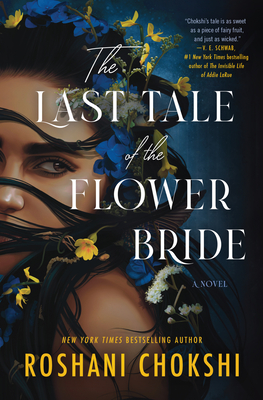
The Last Tale of the Flower Bride

 The Last Tale of the Flower Bride by Roshani Chokshi, 289 pages.

A man who has spent his life studying fairy tales, and also believing in them, marries a wealthy but strange heiress, and together the two live on the boundary between fantasy and reality. The one promise she extracts from him is that he never look into her past, or it will destroy their marriage. But when they have to go back to her childhood home to tend to her dying aunt it becomes harder and harder not to pry, as the house holds secrets it desperately wants to be known. Meanwhile, decades in the past, two little girls sharing the same soul descend down an ever darker path. 
This novel had an extremely gothic feel. The prose was lush, and the general atmosphere is of a slowly strangling dread. It was compelling and terrible to see how things inevitably fell apart. I would strongly recommend this to fans of dark fairy tales, modern gothic books, and people who enjoyed Starling House by Alix E Harrow. 


The Tree Collectors

 The Tree Collectors: Tales of Arboreal Obsession by Amy Stewart, 336 pages.

This collection follows fifty individuals who are, in some way or another, obsessed with trees. Some of them are obsessed with having a wide and diverse collection, others with a single species of tree. Amy Stewart breaks this collection down into approximate categories of collecting motivations, although as she notes people's reasons for collecting trees are nearly as diverse as the collectors themselves. This book is beautifully illustrated, and presents an engrossing global record of collectors.

When I first picked this up I was expecting more of a historical record of naturalists, but this is instead (mostly) a collection of people the author actually managed to interview, with a few historical naturalists thrown in. I also really wasn't expecting how lovely and plentiful the illustrations are. This is a book of bite-sized little vignettes that nevertheless managed to pull me in entirely and create just a touch of arboreal obsession in me as well. I would definitely recommend this as a casual read and a peak into a world most people are completely unaware of.